
How to Verify Beneficiary Details Before an International Transfer
EXPAT BANKING
Blog > Expat Banking > How to Verify Beneficiary Details Before an International Transfer
How to Verify Beneficiary Details Before an International Transfer
EXPAT BANKING
BANKEAZ | Expats Team
8/19/2026 - 4 min read


An international payment can be delayed by something as small as one incorrect account digit or a beneficiary instruction copied from an old invoice.
The difficulty is that a beneficiary record contains several pieces of information, and the exact combination depends on the destination, bank, currency, and payment route. A familiar recipient is not automatically a verified recipient: bank details can change, accounts can be replaced, and a beneficiary may use different accounts for different currencies.
Bankeaz’s existing transfer guidance already recommends checking relevant account fields and independently confirming unexpected changes to payment instructions.
Before making a bank transfer, use a repeatable verification process. The objective is not to guarantee that a payment will succeed—banks and payment networks can still perform their own checks—but to remove mistakes that you can identify before sending.
Confirm who should legally receive the money before checking where it should be sent.
Start With the Recipient, Not the Account Number


> Match the Beneficiary Name to the Payment Instruction
Begin with the beneficiary’s name.
Use the legal or account-holder name supplied in the official payment instruction rather than relying on a nickname, abbreviated contact name, or the label saved in your banking app.
For an individual, compare the spelling carefully. Look for:
missing surnames;
reversed first and family names;
middle names or initials;
accents or transliteration differences;
business names entered instead of personal names.
For a company, check the legal entity receiving the payment. A trading name may differ from the name attached to the account.
Do not automatically “correct” unfamiliar formatting yourself. International naming conventions vary, and the recipient may know exactly how their bank records the account.
If the beneficiary name on a new invoice differs materially from information you previously used, treat that as a reason to verify the instruction rather than simply replacing the saved beneficiary.
This first check establishes a basic question: Are you paying the person or organization you actually intend to pay?
Long international account identifiers are easy to mistype and difficult to recognize visually.
Compare Every Account Character


> Verify the Account Number or IBAN Character by Character
The next step is the destination account identifier.
Depending on the country and payment system, this could be an IBAN, a domestic account number, or another local identifier. Do not assume that every international payment uses the same format.
Compare the account information with the source document supplied by the beneficiary. When possible, avoid manually retyping a long identifier.
After pasting or entering it, compare the beginning, middle, and final characters against the original instruction. This helps catch:
omitted digits;
transposed numbers;
accidental spaces;
characters copied from the wrong line;
old details stored in a beneficiary template.
Saved beneficiaries deserve particular attention. An account that worked six months ago may no longer be the account the recipient wants you to use.
Bankeaz has separately highlighted that previously used details should not automatically be assumed to remain active.
For a significant or time-sensitive international transfer, ask the recipient to reconfirm the destination account if you have any doubt rather than treating past payment history as verification.


Correct account details can still be incomplete if the required routing information is missing.
Check How the Payment Reaches the Bank


> Confirm the Bank and Routing Information
An international payment can require more than a beneficiary name and account number.
Depending on the corridor, your provider may request information such as:
bank name;
SWIFT/BIC;
routing number;
sort code;
branch or clearing code;
beneficiary bank address;
intermediary information.
Use the fields requested by your provider and compare them with the beneficiary’s current payment instructions.
Avoid guessing a routing code from an old transfer or searching for one and inserting it without confirming that it applies to the beneficiary’s specific account and payment type.
This distinction matters because international payments can move through several institutions. Bankeaz has explained that cross-border transfers may involve sending banks, intermediary banks, clearing systems, and receiving banks rather than a single direct movement between two accounts.
If your payment form asks for information that the recipient has not supplied, ask for clarification before submitting the payment.
The right beneficiary can still have different instructions for EUR, GBP, USD, XOF, or another currency.
Match the Currency to the Correct Account


> Check That the Account Matches the Transfer Currency
Do not verify beneficiary information without checking the currency.
A recipient may hold several accounts or different receiving instructions for different currencies. Sending the correct currency to the wrong set of account details could introduce extra processing, conversion, rejection, or a need for clarification.
Before you send money abroad, ask two separate questions:
What currency am I sending?
and
Which account has the beneficiary provided for receiving that currency?
Bankeaz’s guidance on avoiding double currency conversion also recommends asking recipients for account details corresponding specifically to the currency being delivered.
Do not assume that an account previously used for one currency is automatically suitable for another.
Also distinguish between the currency you pay with and the currency the recipient is expected to receive. An international money transfer can involve currency conversion before the funds reach the beneficiary, so the expected receiving currency should be clear before confirmation.
A message announcing new bank details should be checked independently before you replace an existing beneficiary.
Treat Changed Instructions as a Verification Event


> Independently Confirm Unexpected Changes
Changes to beneficiary instructions deserve more scrutiny than routine transfers.
Suppose a landlord, supplier, family member, university, or business contact suddenly sends a new account number and asks you to use it for the next payment. Do not treat the message itself as sufficient verification.
Use a separate channel you already trust.
For example, if new details arrive by email, confirm them through a known telephone number, an established messaging conversation, a secure portal, or another contact method you previously used.
Bankeaz’s existing transfer guidance specifically advises independently verifying unexpected account changes through a trusted channel.
When confirming, compare more than the last few digits. Ask the beneficiary to validate the full instruction that matters for your payment: account holder, account identifier, bank, routing information, and currency.
This is especially useful before replacing a saved beneficiary. Keeping old and new details visible during the comparison can make the change easier to review.
The practical rule is simple: new payment instructions should trigger a new verification process.
Re-read the complete instruction once more before pressing the final confirmation button.
Run a Final 60-Second Review


______________________________________________________________________________________________________________________________________________________
> Key Takeaways
✓ Confirm the beneficiary’s legal or account-holder name against a current payment instruction.
✓ Compare the account number or IBAN carefully rather than relying automatically on saved details.
✓ Verify required SWIFT, routing, sort, branch, or clearing information instead of guessing missing fields.
✓ Match the intended receiving currency with the account details supplied for that currency.
✓ Independently confirm unexpected changes using a trusted channel that is separate from the message announcing them.
✓ Recheck the complete beneficiary instruction before authorizing the bank transfer.
✓ Keep current payment instructions when making recurring cross-border payments instead of assuming old data will remain valid.
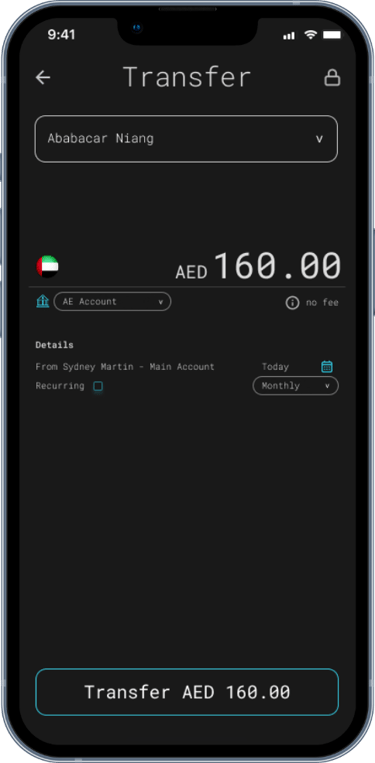
Review the beneficiary, destination, amount, and currency together before confirmation.
A clear transfer summary can make inconsistencies easier to notice.
Always verify the payment instruction independently when something has changed.
Keep the Transfer Details in View
> Conclusion
Verifying a beneficiary does not mean checking a single account number.
A reliable pre-send process starts with the recipient name, continues through the account identifier and required routing information, checks that the details match the intended currency, and applies additional scrutiny whenever payment instructions change.
For recurring cross-border payments, repeat the check when circumstances change rather than assuming previously used information remains current.
These actions can reduce avoidable mistakes and make an international payment better prepared before it leaves your account. Even then, international payments can still involve multiple banks, different payment networks, compliance checks, and country-specific infrastructure, so some cross-border complexity remains outside the sender’s control.
> Related reads
Why International Payments Pass Through So Many Banks
Explains the intermediaries and checks that can exist behind a cross-border payment.
Why Your Transfer Stays “Pending” for Days
Explores reasons international transfers may remain pending, including incomplete or incorrect beneficiary information.
How to Confirm a Bank Account Is Still Active Before Sending Money
Useful when previously saved beneficiary information may no longer be current.
How to Use Payment References to Avoid Transfer Delays
Explains how references fit into the wider payment instruction and why recipient details still need to be correct.
______________________________________________________________________________________________________________________________________________________
by BANKEAZ
On demand banking services for all


______________________________________________________________________________________________________________________________________________________
Learn more about Expat Banking

Global lives deserve simpler banking.





Download the BANKEAZ app for a 100% mobile banking experience. Available on iOS and Android.
Bankeaz is designed for people living between countries. Availability may vary depending on the user’s jurisdiction of residence.
The Bankeaz app is developed by Arcadia, a company currently being incorporated in Switzerland.
Bankeaz does not provide banking services in its own name. Financial services are provided by licensed and regulated partner institutions, in accordance with applicable laws and regulations.
Copyright © 2026 - Arcadia | Bankeaz - All rights reserved
Address
____________________






__________________________________________________________________________________________________________________________________________________


(- - -) - - - - - - - - - -
Zurich - CH
__________________________________________________________________________________________________________________________________________________
___________________________________________________________________________________________________________________________________________________
__________________________________________________________________________________________________________________________________________________
Learn
____________________