
How to Confirm a Bank Account Is Still Active Before Sending Money
EXPAT BANKING
Blog > Expat Banking > How to Confirm a Bank Account Is Still Active Before Sending Money
How to Confirm a Bank Account Is Still Active Before Sending Money
EXPAT BANKING
BANKEAZ | Expats Team
8/15/2026 - 4 min read


You may have sent money to the same person several times without a problem.
Their details remain saved in your banking app, so the next transfer appears simple. Select the beneficiary, enter the amount, and confirm.
But bank-account details can become outdated.
The recipient may have closed the account, moved to another bank, changed country, opened a new currency account, or lost access after a compliance review. A bank may also merge, change routing arrangements, or issue different receiving instructions.
Sending money to outdated details can result in rejection, return, delay, or a payment that requires manual investigation. Bankeaz notes that incorrect beneficiary names, incomplete account identifiers, and missing information can stop a transfer automatically.
Before sending—especially after a long period without payments—confirm that the bank account is still active and suitable for the intended transfer.
Reconfirm beneficiary information when the account has not been used recently or the recipient’s situation has changed.
Treat Saved Details as Unverified


> Ask The Beneficiary To Confirm The Current Account
Begin with the recipient.
Ask them to confirm that:
the account is still open;
they can access it;
it can receive incoming payments;
the account details have not changed;
the account is held in their name or the stated beneficiary name;
it accepts the currency you plan to send;
there are no known restrictions on incoming transfers.
Do not simply send the saved details back and ask, “Are these correct?” That approach can lead someone to approve the information without reviewing every field.
Instead, ask the beneficiary to provide or independently confirm:
legal account-holder name;
account number or IBAN;
routing, sort, clearing, or branch code;
SWIFT or BIC code where required;
bank name;
account currency;
any intermediary instructions;
required payment reference.
Use a trusted communication channel. Be cautious when new bank details arrive unexpectedly by email or messaging app, particularly when the payment is large or urgent.
When details change, verify them using a separate known method. For example, call the recipient using a number you already hold rather than relying only on the message that announced the change.
This protects against both outdated instructions and payment-redirection fraud.
Ask the recipient to review every account field and independently verify unexpected changes.
Confirm Through a Trusted Channel


> Check Whether The Account Can Receive The Payment Type And Currency
An open account is not necessarily able to receive every payment.
The account may be active for local payments but not for international transfers. It may accept one currency and automatically convert, reject, or reroute another. Certain account types may also have incoming-payment limits or restrictions.
Ask the beneficiary to check:
whether international incoming transfers are permitted;
whether the account accepts the sending currency;
whether a local-currency payout is preferable;
whether the bank requires specific correspondent details;
whether incoming-transfer fees apply;
whether the beneficiary must complete verification first;
whether the account has an incoming limit;
whether the expected sender name or purpose needs to be declared.
The destination country alone does not reveal the account currency.
A person living in the United Kingdom may hold GBP, EUR, and USD accounts with different details. Sending USD to their GBP account may trigger conversion, while using EUR details for a GBP transfer may lead to rejection or rerouting.
International payments can also pass through correspondent banks when the sending and receiving institutions lack a direct relationship. Each participating bank may check the recipient, currency, destination, and payment instructions.
Confirm the exact receiving route rather than checking only that the account exists.


Verify that the account can receive the intended payment type and currency without rejection or unintended conversion.
Match the Currency to the Account


> Look For Changes That May Have Affected The Account
Some events make an account-status check particularly important.
Reconfirm the account when the beneficiary has:
moved to another country;
changed residence or tax status;
changed their legal name;
changed employer or immigration status;
reported a lost identity document;
stopped using the account regularly;
opened a replacement account;
changed bank;
experienced a frozen or reviewed account;
received notice of a bank merger or branch migration.
Relocation can be especially relevant. Bankeaz explains that moving abroad may cause a bank to reassess a customer’s address, tax status, employment, and transaction patterns. Accounts may remain usable, but certain services can also be reviewed or restricted.
Ask whether the beneficiary has recently received requests to update:
proof of address;
tax-residency information;
identity documents;
employment information;
expected account activity;
source-of-funds information.
An account shown as open in an application may still have limitations on receiving or withdrawing money until a review is completed.
Do not ask the beneficiary to hide their change of country or personal circumstances from the bank. Accurate information is important when determining whether the account can continue to receive the planned payment.
Relocation, identity updates, tax changes, and account reviews can affect how an account operates.
Recheck After a Major Life Change


> Use A Small Test Transfer When The Details Remain Uncertain
When the account has not been used for a long time or the payment is large, a small test transfer may help confirm the route.
Before doing this, make sure:
the beneficiary expects the test;
the test amount is permitted;
fees do not make the test impractical;
the recipient knows the payment reference;
the test uses the same account details and currency as the planned payment;
the provider does not apply a different route to small and large transfers.
After sending, ask the recipient to verify:
the amount received;
the currency received;
the sender name displayed;
the payment reference;
any fees deducted;
the date the funds became available.
A successful test can provide useful evidence, but it is not an absolute guarantee. A larger payment may trigger limits, source-of-funds requests, fraud checks, or additional review that did not apply to the smaller amount.
Bankeaz notes that transfers can be reviewed when the amount changes, the country changes, or the recipient appears new. Multiple institutions may also apply separate checks.
Use a test to validate basic account and routing information, not to assume that every later transaction will be identical.
When uncertainty remains, use a small agreed transfer to verify the account, currency, reference, and receiving result.
Test Before a High-Value Payment


> Know What To Do If The Account Is Inactive Or The Transfer Fails
If the beneficiary confirms that the account is closed or restricted, do not send to it.
Request current details and verify them through a trusted channel before replacing the saved beneficiary.
When a payment has already been sent, possible outcomes include:
automatic rejection;
return to the sender;
temporary holding by an intermediary;
manual review;
a request for corrected beneficiary information;
credit to the account despite uncertainty.
Do not assume that the payment will immediately return.
Bank-transfer statuses may not show the full position of the funds. Bankeaz explains that a payment can involve the sending bank, intermediary banks, clearing systems, and the receiving bank, while status updates remain incomplete or delayed.
Take the following steps:
keep the transaction receipt and reference;
ask the beneficiary to check with their bank;
contact the sending provider;
confirm whether the payment was rejected, returned, or still processing;
request a trace when appropriate;
record any return fees or exchange-rate differences;
do not send a replacement until the first payment has been located.
If the provider asks for corrected information, confirm whether the transfer can be amended or must first be returned.
A returned international payment may arrive later than expected and may not equal the original debit if fees or currency conversion occurred.
Update or remove the inactive account from your saved-beneficiary list only after the new details have been verified.
Remove obsolete details and record when the new account information was independently confirmed.
Update the Beneficiary Record


______________________________________________________________________________________________________________________________________________________
> Key Takeaways
✓ Confirm what must happen before the payment deadline.
✓ Do not assume that previously used account details remain active.
✓ Ask the beneficiary to confirm every relevant account field.
✓ Independently verify unexpected changes through a trusted channel.
✓ Confirm that the account can receive the intended payment type.
✓ Match the delivery currency to the correct account details.
✓ Recheck the account after relocation, identity changes, or bank migration.
✓ Ask whether any verification or incoming-payment restriction remains unresolved.
✓ Consider a small test transfer when the details are old or uncertain.
✓ Treat a successful test as evidence of the route, not a guarantee for every amount.
✓ Keep the receipt and trace a failed payment before sending a replacement.
✓ Remove or archive inactive beneficiary details after verifying the replacement.
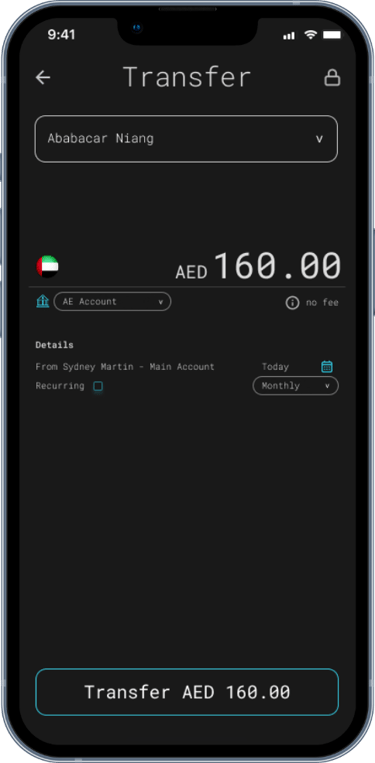
See the account, currency, and beneficiary information together.
Check when the details were last confirmed.
Keep a clear transfer record for follow-up.
Review Beneficiary Details Before You Send
> Conclusion
Confirming that a bank account is still active requires more than checking that the details remain saved in your payment application.
Ask the beneficiary to confirm the current account information through a trusted channel. Verify that the account can receive the intended currency and transfer type, and recheck it after relocation, identity changes, account reviews, or a move to another bank.
When uncertainty remains, a small test transfer may help validate the basic route. For a payment already sent to inactive or outdated details, retain the transaction evidence and trace the funds before sending again.
These actions can reduce avoidable payment errors. However, cross-border banking still depends on fragmented account systems, separate verification processes, multiple intermediaries, and limited shared status information. As a result, senders cannot always confirm account availability across institutions through one reliable process.
> Related reads
Why Your Transfer Stays “Pending” for Days
Explains how missing beneficiary information, processing stages, and additional checks can interrupt a payment.
Why Bank Transfers Have No Clear Status
Explains why basic labels such as pending or completed do not reveal every stage of a cross-border payment.
How to Compare International Transfer Providers
Explains how to compare processing times, fees, exchange rates, limits, payment methods, and recipient outcomes.
How to Check the Real Cost of an International Money Transfer
Shows how to review transfer fees, exchange rates, intermediary deductions, delivery timing, and the final amount received.
______________________________________________________________________________________________________________________________________________________
by BANKEAZ
On demand banking services for all


______________________________________________________________________________________________________________________________________________________
Learn more about Expat Banking

Global lives deserve simpler banking.





Download the BANKEAZ app for a 100% mobile banking experience. Available on iOS and Android.
Bankeaz is designed for people living between countries. Availability may vary depending on the user’s jurisdiction of residence.
The Bankeaz app is developed by Arcadia, a company currently being incorporated in Switzerland.
Bankeaz does not provide banking services in its own name. Financial services are provided by licensed and regulated partner institutions, in accordance with applicable laws and regulations.
Copyright © 2026 - Arcadia | Bankeaz - All rights reserved
Address
____________________






__________________________________________________________________________________________________________________________________________________


(- - -) - - - - - - - - - -
Zurich - CH
__________________________________________________________________________________________________________________________________________________
___________________________________________________________________________________________________________________________________________________
__________________________________________________________________________________________________________________________________________________
Learn
____________________