
How to Review Banking Access Before Spending Months Abroad
EXPAT BANKING
Blog > Expat Banking > How to Review Banking Access Before Spending Months Abroad
How to Review Banking Access Before Spending Months Abroad
EXPAT BANKING
BANKEAZ | Expats Team
9/16/2026 - 4 min read


You arrive abroad and your card works on the first day. Your banking app opens normally. There seems to be nothing to worry about.
Six weeks later, your bank asks you to confirm a payment. The verification code goes to a phone number you stopped using. Or your card expires during the trip and the replacement is sent to your home address. Perhaps you change phones and discover that activating the banking app again requires information or a device you left behind.
For someone spending several months away, banking abroad is not only about whether a card works internationally. It is about whether the entire chain behind your bank account remains accessible.
Before leaving, review how you sign in, authenticate payments, recover access, receive replacement cards and correspondence, contact support, and reach alternative funds.
The objective is simple: find weak points while you are still in a position to fix them.
Write down everything that must work for you to reach and use each important account.
Map Every Access Dependency


> Map How You Actually Access Every Important Account
Start with each bank account, payment account, savings account, or card you may need during the trip.
For every one, record how you normally sign in and what happens when additional verification is required.
Your access map might include:
banking-app login;
website login;
registered smartphone;
mobile number;
SMS verification;
push notification;
authentication application;
email account;
physical security device;
biometric login;
password-recovery method;
customer or membership number.
Then look for dependencies.
If your bank sends authentication codes to your usual mobile number, will that number remain active abroad? If you use an eSIM for your destination, will changing SIM settings interfere with the number your bank knows? If your banking application is tied to one specific device, what happens if that device is lost or damaged?
Do not change authentication settings simply because you are travelling. Instead, understand the existing process and ask the institution what alternatives it officially supports.
Pay particular attention to accounts used for housing costs, emergencies, tuition, business expenses, or other payments that cannot easily wait.
The purpose of this exercise is to expose single points of failure. A bank balance is not fully useful if reaching it depends on one phone, one SIM, or one recovery channel you cannot replace while overseas.
A normal login proves very little about what happens after a lost phone, forgotten password, or security check.
Test Recovery, Not Just Login


> Test the Difficult Scenarios Before Departure
Opening your banking app at home is not a complete access test.
Ask a more useful question: What would I need if something changed?
Review the official recovery procedure for each important account. Determine what happens if you forget a password, replace your phone, reinstall the application, lose access to biometrics, or need to authorize a transaction from a new device.
Where possible, confirm your recovery information through the institution’s official application, website, branch, or verified support channel.
Check whether your email recovery settings are current as well. If your banking password can ultimately be reset through an email address, losing that email account can become a banking-access problem.
Avoid deliberately locking yourself out simply to test the system. You can usually learn what the recovery process requires without triggering it.
Keep sensitive credentials secure. Do not create an unencrypted document containing complete passwords, PINs, card security codes, or authentication codes.
Instead, record the process: which official channel to use, which identifier may be requested, and where essential reference information is stored securely.
This is especially important for mobile banking during a long absence. A device that works today may not be the device you are using three months from now.


Compare your travel dates with card expiry dates, identification validity, and other time-sensitive banking dependencies.
Check What Changes While You Are Away


> Review Cards, Documents and Physical Dependencies
A three-day trip rarely exposes the same problems as a four- or six-month absence.
Put your departure and expected return dates on a timeline. Then compare them with anything that may expire, change or require physical delivery during that period.
Start with payment cards. Check expiry dates and find out how your institution handles replacements. Do not assume a replacement can automatically be sent internationally or redirected after issuance. Policies vary by institution and destination.
Review the validity of identification documents linked to your account as well. A passport or residence document approaching expiry may matter if the institution requests updated identity verification while you are away.
Next, consider physical correspondence. Does your bank still send important letters, replacement cards, security devices or other notices to a registered address?
If somebody remains at your home address, do not simply ask them to open financial correspondence unless you are comfortable doing so and it is appropriate. Consider whether official digital statements or secure electronic communications are available instead.
Also review any equipment you could accidentally leave behind: card readers, security tokens, secondary devices or stored customer numbers.
Long trips turn future dates into banking risks. Check them before the calendar makes the decision for you.
Confirm what your institution expects when a customer uses an account from another country for an extended period.
Ask the Long-Absence Questions


> Check the Institution’s Rules for Extended Use Abroad
Different banks, card issuers and payment providers operate under different geographic, security and customer-information rules.
Before departure, check the official information relevant to your account.
Useful questions include:
Can I continue using online and mobile banking from my destination?
Are any app functions geographically restricted?
Does the institution recommend or require a travel notification?
How are cards replaced if I am outside my usual country?
Which number should I call from overseas?
Are there different international calling instructions?
What happens if my registered phone number becomes unavailable?
Does a long temporary stay require any customer-information update?
Distinguish a temporary stay from an actual change of residence. Do not change your address, tax residence or other customer information merely to make your profile look more convenient. If your circumstances genuinely change, follow the institution’s official process.
Keep a dated note of any important answer received from support, including the official channel and reference number where applicable.
This step also helps separate general travel assumptions from the rules that apply to your specific bank account. What worked with another bank—or on your previous trip—may not describe your current institution’s procedure.
Decide how you would pay for essentials if your main card, phone, or account became temporarily unavailable.
Remove the Single Point of Failure


> Build a Practical Access Fallback
Preparation should not depend on making every possible problem disappear. Some events remain outside your control.
Instead, decide how you would function for several days if your primary banking route stopped working.
Depending on your situation and local rules, this might mean maintaining another usable payment card, access to another account in your own name, an appropriate emergency cash reserve, or another lawful source of liquidity.
Independence matters. Two cards connected to the same inaccessible account may provide less resilience than they appear to. Likewise, two financial applications on the same lost phone may fail together.
Keep verified support contact details somewhere accessible without relying entirely on the banking app. Record how to report a lost card and how to contact the institution from another country.
Consider your most important expenses: accommodation, transport, food, medical needs, tuition, insurance or business commitments. Estimate how you would cover them if normal access were interrupted for several days.
If you intend to rely on another person for emergency help, discuss the arrangement beforehand. Never share passwords, PINs or authentication codes. Where another person genuinely needs authority over an account, use whatever formal authorization process the institution and applicable law provide rather than informal credential sharing.
Good international banking preparation is not about creating a complicated collection of accounts. It is about making sure one broken access point does not immediately become a financial emergency.
Keep non-sensitive banking reference information, support routes, expiry dates, and contingency actions together.
Create a Departure-Ready Access Sheet


______________________________________________________________________________________________________________________________________________________
> Key Takeaways
✓ List every important account and identify the device, phone number, email address and authentication method needed to reach it.
✓ Check account-recovery procedures before you need them.
✓ Confirm that the mobile number and email connected to essential accounts will remain accessible throughout the trip.
✓ Compare card and identity-document expiry dates with your return date.
✓ Check how replacement cards or security devices would reach you during a long absence.
✓ Review official rules for using each important account from your destination.
✓ Treat a genuine relocation differently from a temporary stay and keep customer information accurate.
✓ Keep verified overseas support and lost-card contact information outside the banking app.
✓ Maintain an appropriate independent payment fallback for essential expenses.
✓ Never give another person your password, PIN or authentication code as a substitute for formal account authorization.
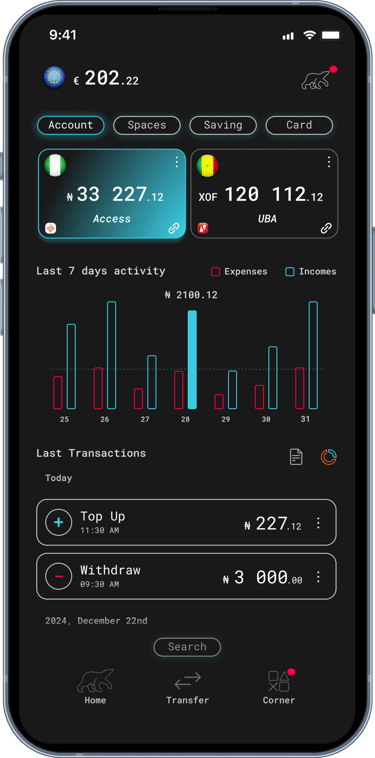
Map your accounts.
Identify payment routes.
Use tools to organize, not replace banks.
Keep Your Cross-Border Account Structure Simple
> Conclusion
Before spending months abroad, review more than whether your cards currently work.
Map the full access chain behind each important account. Test how recovery would work if your normal device disappeared. Check card and document expiry dates against your travel timeline. Confirm the institution’s procedures for extended overseas use, and create an independent fallback for essential expenses.
Complete these checks while you still have easy access to your normal phone number, devices, correspondence and local support channels.
The objective is not to predict every possible banking problem. It is to remove avoidable surprises and understand exactly what you would do when normal access fails.
That preparation can make banking abroad considerably easier to manage. Even so, international financial access continues to depend on separate institutions, authentication systems, country-specific processes and fragmented infrastructure. A mobile life can therefore remain more complicated than the financial systems supporting it.
> Related reads
Why Moving Abroad Makes Banks Reassess Your Account
Useful for readers whose extended stay becomes an actual relocation and changes their residence, employment or banking profile.
Temporary Addresses and Banking Friction for Expats
Explains why temporary accommodation can create additional banking and documentation difficulties.
How to Reduce the Risk of Bank Account Restrictions When Living Abroad
A follow-on guide for readers concerned about profile changes, verification requests or account restrictions after moving.
How to Protect Salary Payments and Direct Debits When Moving Abroad
Useful when the reader is relocating rather than temporarily travelling and must manage payroll and recurring-payment transitions.
______________________________________________________________________________________________________________________________________________________
by BANKEAZ
On demand banking services for all


______________________________________________________________________________________________________________________________________________________
Learn more about Expat Banking

Global lives deserve simpler banking.




Download the BANKEAZ app for a 100% mobile banking experience. Available on iOS and Android.
Bankeaz is designed for people living between countries. Availability may vary depending on the user’s jurisdiction of residence.
The Bankeaz app is developed by Arcadia, a company currently being incorporated in Switzerland.
Bankeaz does not provide banking services in its own name. Financial services are provided by licensed and regulated partner institutions, in accordance with applicable laws and regulations.
Copyright © 2026 - Arcadia | Bankeaz - All rights reserved
Address
____________________






__________________________________________________________________________________________________________________________________________________


(- - -) - - - - - - - - - -
Zurich - CH
__________________________________________________________________________________________________________________________________________________
___________________________________________________________________________________________________________________________________________________
__________________________________________________________________________________________________________________________________________________
Learn
____________________