
How to Protect Salary Payments and Direct Debits When Moving Abroad
EXPAT BANKING
Blog > Expat Banking > How to Protect Salary Payments and Direct Debits When Moving Abroad
How to Protect Salary Payments and Direct Debits When Moving Abroad
EXPAT BANKING
BANKEAZ | Expats Team
7/25/2026 - 4 min read
Your relocation date may be fixed, but your financial life rarely moves on the same schedule.
An employer may need several payroll cycles to update your salary account. A landlord may collect rent from the old account after you leave. Insurance, loans, taxes, mobile contracts, subscriptions, and utilities may each follow different procedures for changing bank details.
At the same time, your existing bank may ask for a new address, tax information, employment documents, or proof of identity after you move. Bankeaz notes that a change of country can alter several elements of a customer profile and lead to additional review.
The safest approach is therefore not an immediate account replacement. It is a managed transition.
This guide explains how to protect salary payments and direct debits while establishing a new banking abroad setup.
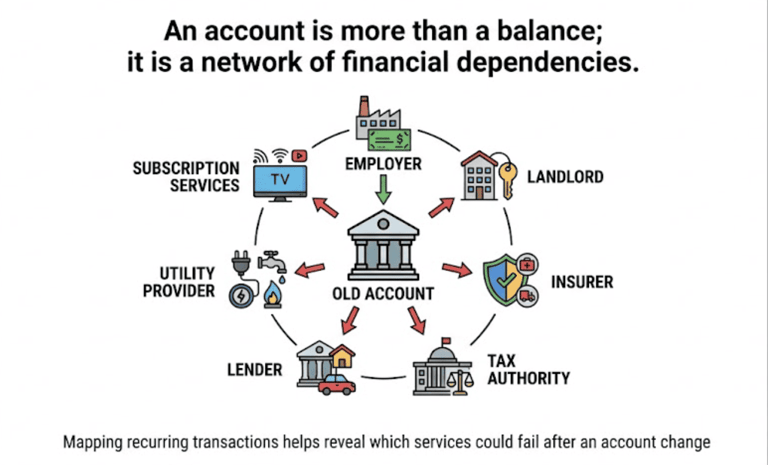
List every organization that sends money into your account or takes money from it before changing any banking details.
Start With a Payment Dependency Map
> Audit Every Incoming And Outgoing Payment
Begin by reviewing at least six to twelve months of transactions from the account affected by the move.
Separate them into two groups.
The first group contains incoming payments:
salary;
freelance or consulting income;
pension payments;
government benefits;
scholarships;
refunds;
rental income;
family contributions.
The second group contains outgoing commitments:
rent or mortgage payments;
utilities;
insurance premiums;
loan or credit repayments;
tax payments;
school fees;
phone and internet contracts;
memberships;
software subscriptions;
charitable donations.
Do not rely only on your memory. Some direct debits occur quarterly or annually and may not appear in the most recent statement.
For each payment, record:
organization name;
amount or expected range;
frequency;
usual payment date;
old account details;
procedure for changing the account;
notice period;
contact information;
confirmation status.
Also identify payments initiated through a card rather than a direct debit. Replacing a bank account does not automatically update recurring card subscriptions.
This audit creates the foundation for the move. It shows which relationships depend on the former account and which changes require action before departure.
Bankeaz’s guidance on banking across multiple countries similarly recommends understanding where income, spending, and savings occur and giving each account a clear purpose.
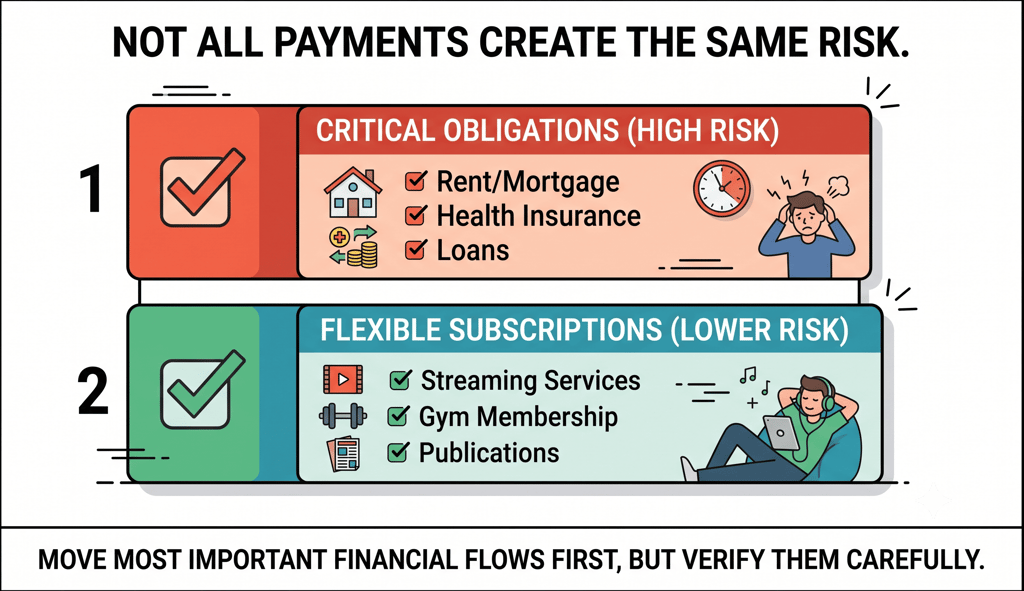
Prioritize salary, housing, insurance, debt, taxes, education, and utilities before moving lower-risk subscriptions.
Separate Essential and Non-Essential Payments
> Confim Where Your Salary Can Be Paid
Do not assume that an employer can send salary to any account you provide.
Payroll requirements may depend on the employer’s country, payroll provider, payment network, account currency, employment contract, or internal policy.
Ask the payroll or human-resources team:
whether a foreign account is accepted;
which account identifiers are required;
whether the account must be in your name;
which currency the salary will be sent in;
whether transfer or conversion charges could be deducted;
when new details must be submitted;
which payroll period will use the new account;
what happens if the payment is rejected.
Provide the new details through the employer’s official and secure process. Avoid sending sensitive account information through an informal messaging channel.
Request written confirmation that the change has been recorded. The confirmation should state the effective payroll date, not simply that the request was received.
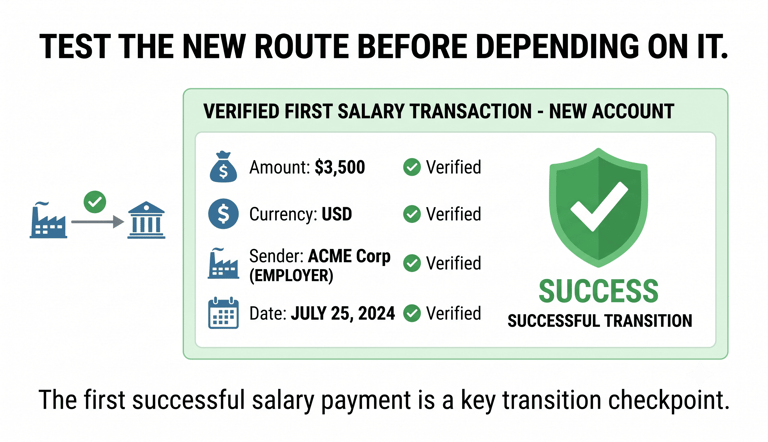
Keep the former account active until at least one full salary payment has reached the new destination correctly. Check:
the amount sent;
the amount received;
the currency;
the payment date;
any fees or deductions;
the employer name displayed on the transaction.
If the salary crosses borders, the payment may involve additional banking relationships or checks. International payments can pass through intermediary institutions when the sending and receiving banks do not have a direct relationship.
Where possible, discuss the payment route with payroll before the first transfer rather than investigating it after a delayed salary.
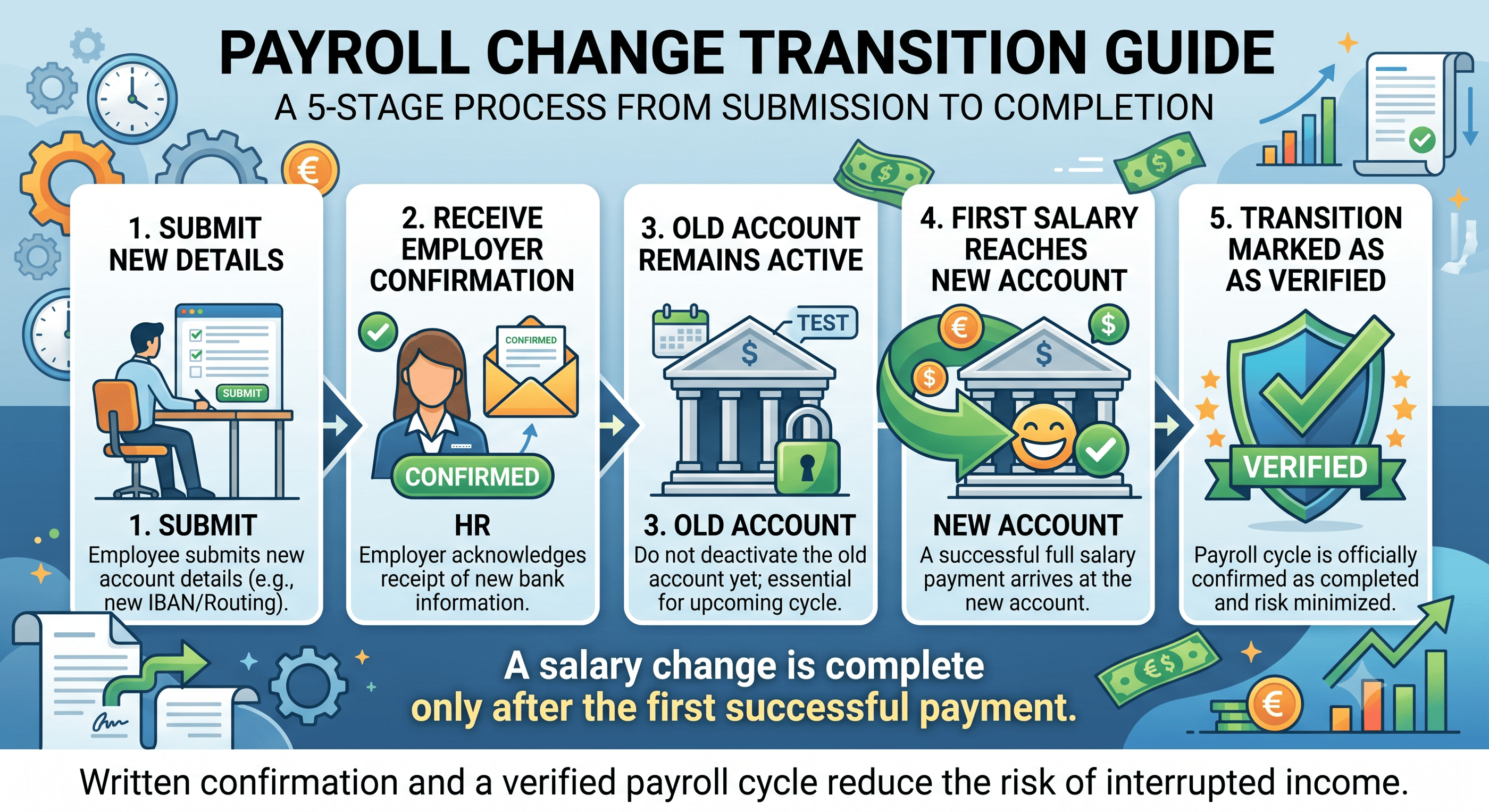
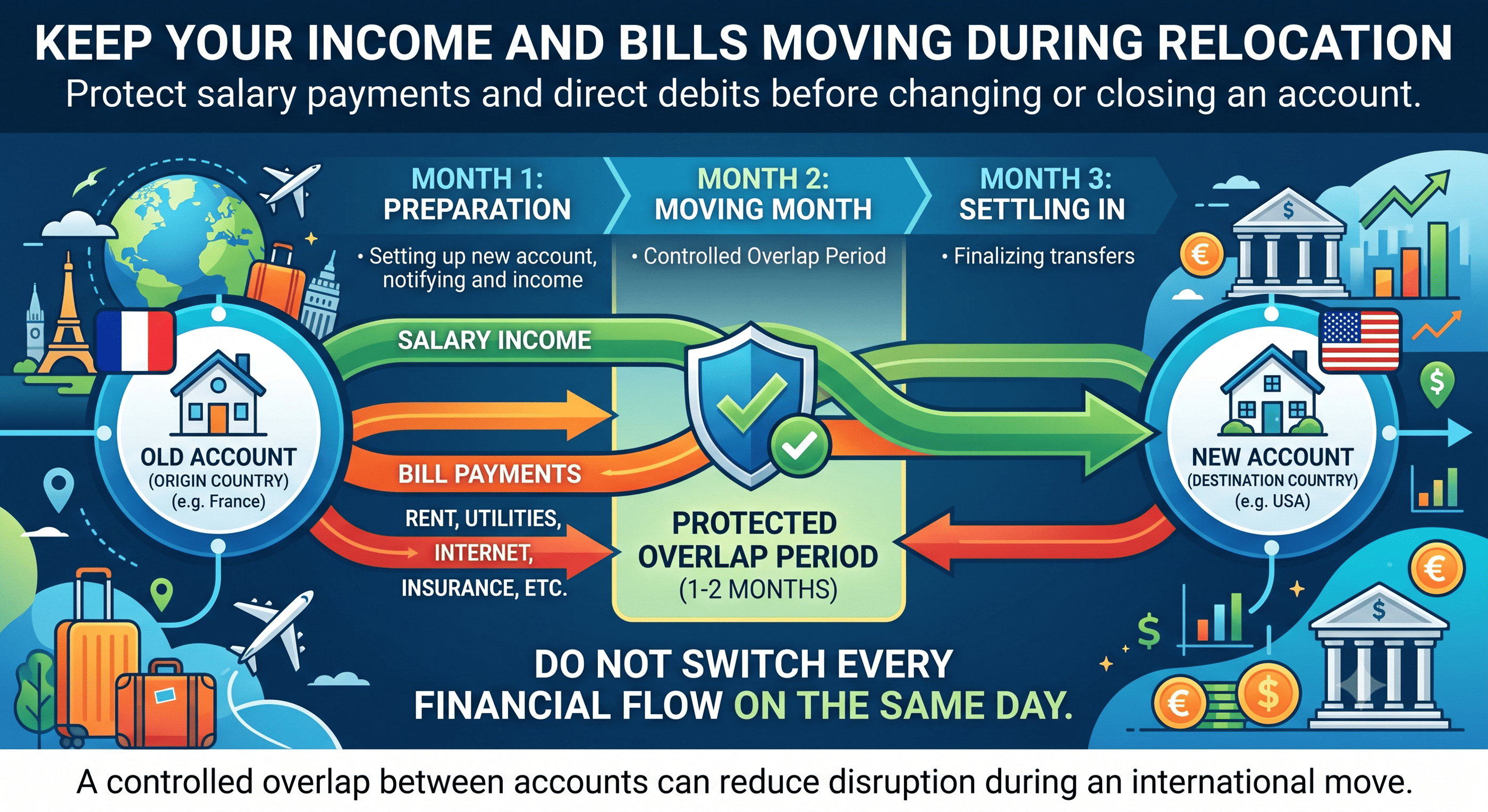
Keep both accounts available until the new account has received the correct salary amount on the expected date.
Verify One Salary Cycle First
> Move Direct Debits In Controlled Groups
Changing all direct debits at once can make errors harder to detect.
A better approach is to migrate them in groups.
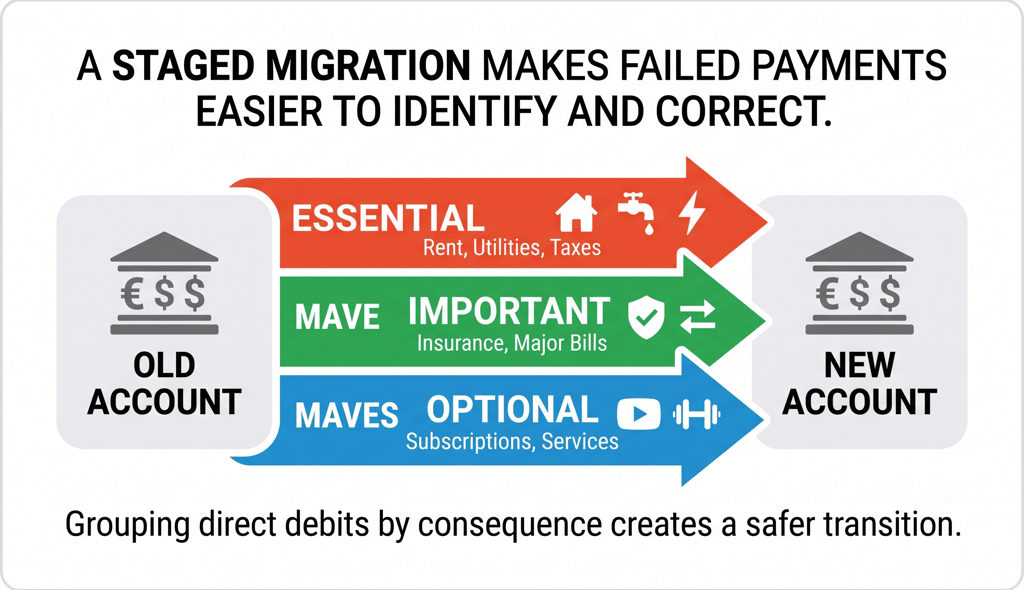
Start with payments that could create serious consequences if missed:
housing;
essential utilities;
insurance;
loans and credit;
taxes or official payments;
education and childcare.
Then move lower-risk commitments such as media subscriptions, memberships, cloud storage, or entertainment services.
For every organization, use its official account-change process. Depending on the creditor, this may involve:
an online customer portal;
a signed mandate;
a bank-detail form;
identity verification;
a telephone request;
a local account requirement;
advance notice before the next collection.
Ask for the effective date of the change. A creditor may update its records immediately but still send the next collection request to the previous account because the payment file has already been prepared.
Keep evidence of every request and confirmation.
After each expected collection date, verify that the payment left the correct account. Do not treat a confirmation email as proof that the first debit succeeded.
Also check whether the creditor permits a foreign account. Some services remain closely connected to domestic banking arrangements, even when the customer has moved. Bankeaz’s broader analysis notes that banking systems and requirements often remain country-specific, which can create difficulties for people whose financial lives cross borders.
Transfer critical obligations first, verify each collection, and then proceed to lower-risk services.
Move Direct Debits in Waves
> Maintain An Overlap Period And Cash Buffer
Closing the old account immediately after opening a new one creates unnecessary risk.
Maintain a temporary overlap period during which both accounts remain open and usable.
The appropriate duration depends on your payment schedule. A practical overlap may need to cover:
at least one verified salary cycle;
one monthly direct-debit cycle;
quarterly payments;
annual insurance or membership renewals;
pending card refunds;
deposits or reimbursements;
tax or benefit payments.
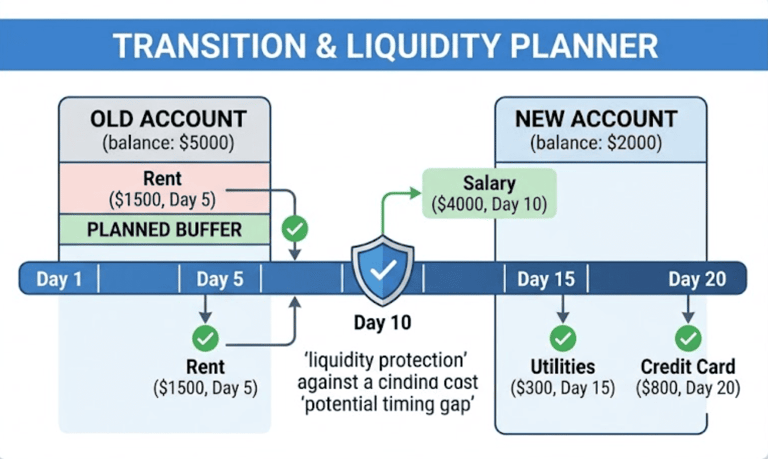
Keep enough money in the former account to cover expected debits, possible timing changes, bank charges, and a small safety margin.
At the same time, maintain sufficient funds in the new account for migrated commitments. This may temporarily divide your cash between two locations, but it can help prevent overdrafts and rejected payments.
Monitor both accounts frequently.
Turn on transaction alerts when available and review:
failed direct debits;
unexpected debits from the former account;
duplicate collections;
returned salary payments;
charges caused by insufficient funds;
payments that still use an old card.
The overlap should be planned, not indefinite. Give it a target end date and review progress weekly.
People managing accounts in several countries can easily lose visibility as balances, currencies, and commitments become distributed. Bankeaz’s multi-country banking guide recommends assigning each account a purpose and monitoring all accounts regularly.
Keep a controlled buffer in each account until essential income and payment routes have been tested.
Fund Both Sides of the Transition
> Close The Old Account Only After A Final Review
An account is not ready to close simply because most visible payments have moved.
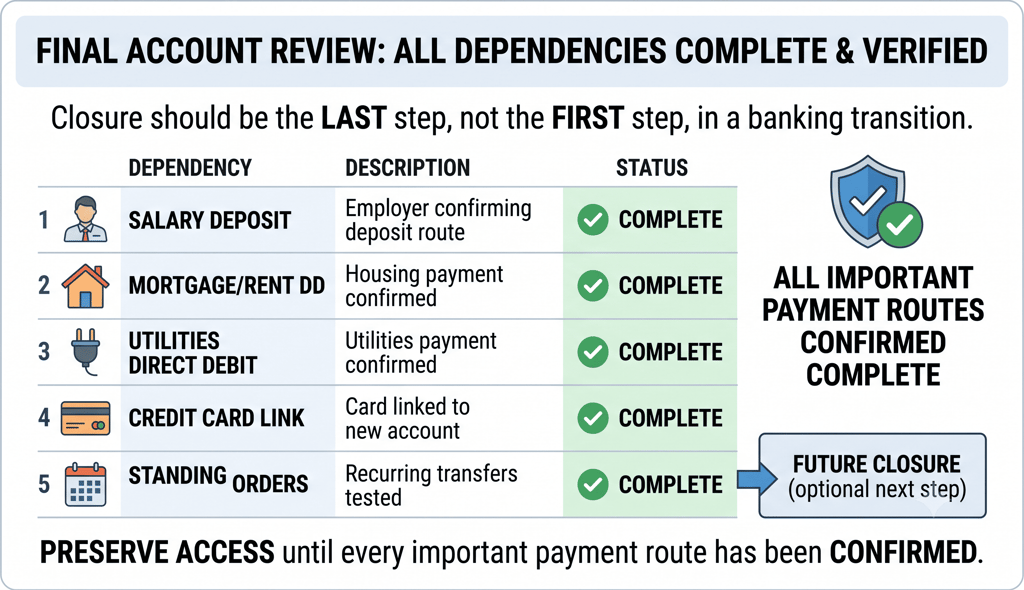
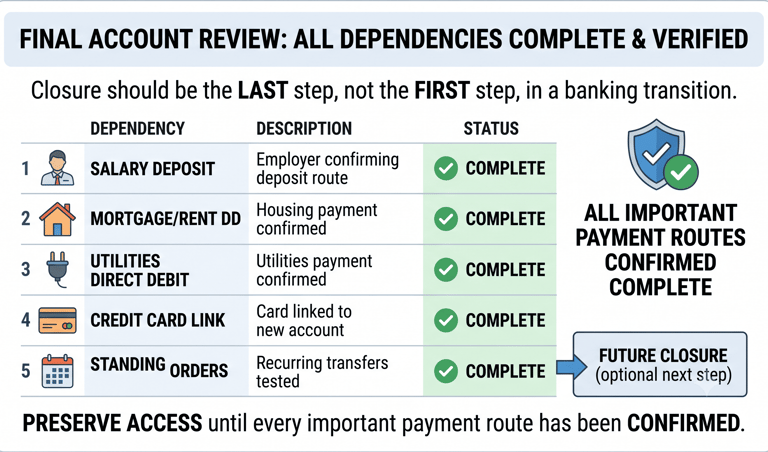
Before closure, complete a final account-dependency review.
Confirm that:
at least one salary payment has reached the new account;
all essential direct debits have been collected successfully;
no employer, client, authority, or benefits provider still uses the old details;
no card refund is pending;
no cheque or transfer is outstanding;
no annual payment still depends on the account;
the balance is sufficient for any remaining charges;
statements and tax documents have been downloaded;
the bank has your current contact information;
you understand the account-closing procedure.
Inform relevant parties of the final closure date when needed.
Download statements before access ends. You may need them later for taxes, rental applications, immigration files, proof of income, source-of-funds checks, or disputes.
Ask the bank for written confirmation that the account has been closed and that the final balance has been transferred.
Where appropriate, consider keeping the former account rather than closing it. It may still be useful for local obligations, property expenses, taxes, or income in the previous country. However, first verify that the bank permits customers to retain the account after becoming non-resident.
Relocation can cause a bank to reassess the account because the customer’s address, tax status, employment, and transaction patterns have changed.
Do not conceal the move to preserve access. Provide accurate information and ask what services remain available under your new circumstances.
Review income, bills, refunds, annual payments, records, and residency requirements before closing the former account.
Complete the Final Dependency Check
______________________________________________________________________________________________________________________________________________________
> Key Takeaways
✓ Review six to twelve months of transactions before changing accounts.
✓ List every organization that sends money to or collects money from the account.
✓ Confirm whether your employer can pay salary into the new account.
✓ Obtain a clear effective date for the payroll change.
✓ Keep the old account active until the first salary payment succeeds.
✓ Move direct debits in groups, beginning with essential obligations.
✓ Verify the first collection from the new account rather than relying only on confirmation emails.
✓ Maintain a temporary cash buffer in both accounts.
✓ Monitor for rejected, duplicated, delayed, or unexpected transactions.
✓ Download records and complete a final dependency review before closing the old account.
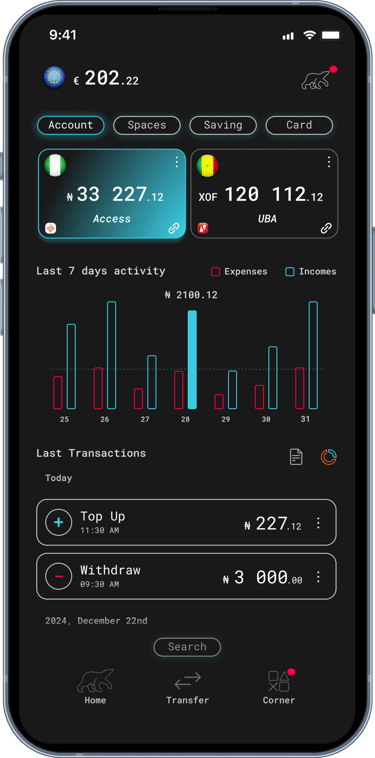
Understand where salary enters your financial setup.
See which account supports each recurring payment.
Review dependencies before changing or closing an account.
View Your Accounts and Recurring Flows Together
> Conclusion
Protecting salary payments and direct debits during an international move requires more than opening a new account and transferring the remaining balance.
Begin by mapping every dependency attached to the old account. Confirm the employer’s payroll requirements, update salary details early, and wait for the first successful payment. Move direct debits in controlled groups, keep evidence of each change, and verify the first collection from the new account.
A temporary overlap period and cash buffer can provide time to correct delays, rejected payments, or administrative errors. Close the former account only when no essential income, payment, refund, or record still depends on it.
These actions can reduce part of the disruption associated with expat banking and relocation. However, salary systems, direct-debit networks, compliance processes, and account rules still depend heavily on national infrastructures. That fragmentation continues to create complexity for people whose work and financial responsibilities extend across borders.
> Related reads
Why Moving Abroad Makes Banks Reassess Your Account
Explains why a change in residence, tax status, income, and transaction activity can trigger additional bank review.
Why International Profiles Confuse Banks
Explores why income, residence, identity, and banking relationships across different countries can be difficult for national systems to interpret.
How to Bank Across Multiple Countries
Provides a broader method for assigning purposes to accounts and organizing income, spending, savings, currencies, and compliance documents.
How to Reduce the Risk of Bank Account Restrictions When Living Abroad
Your bank account should support your life abroad—not become another source of uncertainty.
______________________________________________________________________________________________________________________________________________________
by BANKEAZ
On demand banking services for all


______________________________________________________________________________________________________________________________________________________
Learn more about Expat Banking

Global lives deserve simpler banking.





Download the BANKEAZ app for a 100% mobile banking experience. Available on iOS and Android - public testing by invitation.
Bankeaz is designed for people living between countries. Availability may vary depending on the user’s jurisdiction of residence.
The Bankeaz app is developed by Arcadia, a company currently being incorporated in Switzerland.
Bankeaz does not provide banking services in its own name. Financial services are provided by licensed and regulated partner institutions, in accordance with applicable laws and regulations.
Copyright © 2026 - Arcadia | Bankeaz - All rights reserved
Address
____________________






__________________________________________________________________________________________________________________________________________________


(- - -) - - - - - - - - - -
Zurich - CH
__________________________________________________________________________________________________________________________________________________
___________________________________________________________________________________________________________________________________________________
__________________________________________________________________________________________________________________________________________________
Learn
____________________