
How to Reduce the Risk of Bank Account Restrictions When Living Abroad
EXPAT BANKING
Blog > Expat Banking > How to Reduce the Risk of Bank Account Restrictions When Living Abroad
How to Reduce the Risk of Bank Account Restrictions When Living Abroad
EXPAT BANKING
BANKEAZ | Expats Team
7/18/2026 - 4 min read
Your salary has just arrived from a new country. You use part of it to pay a rental deposit, transfer money to another account and book several weeks of temporary accommodation.
These transactions may be perfectly legitimate. However, they may look different from the activity your bank previously associated with you.
A bank may request updated information, pause a transaction or temporarily limit certain account functions while it reviews the activity. Relocation can also create mismatches between your recorded address, tax residence, phone number, employment situation and actual location. Existing Bankeaz research shows that moving abroad can trigger renewed customer checks and requests for updated documents.
No checklist can guarantee that a bank account will never be restricted. Banks apply their own legal, operational and risk procedures. You can nevertheless make your situation easier to understand, reduce avoidable inconsistencies and protect essential payments while a review is taking place.
The following five actions create a practical continuity plan for banking abroad.
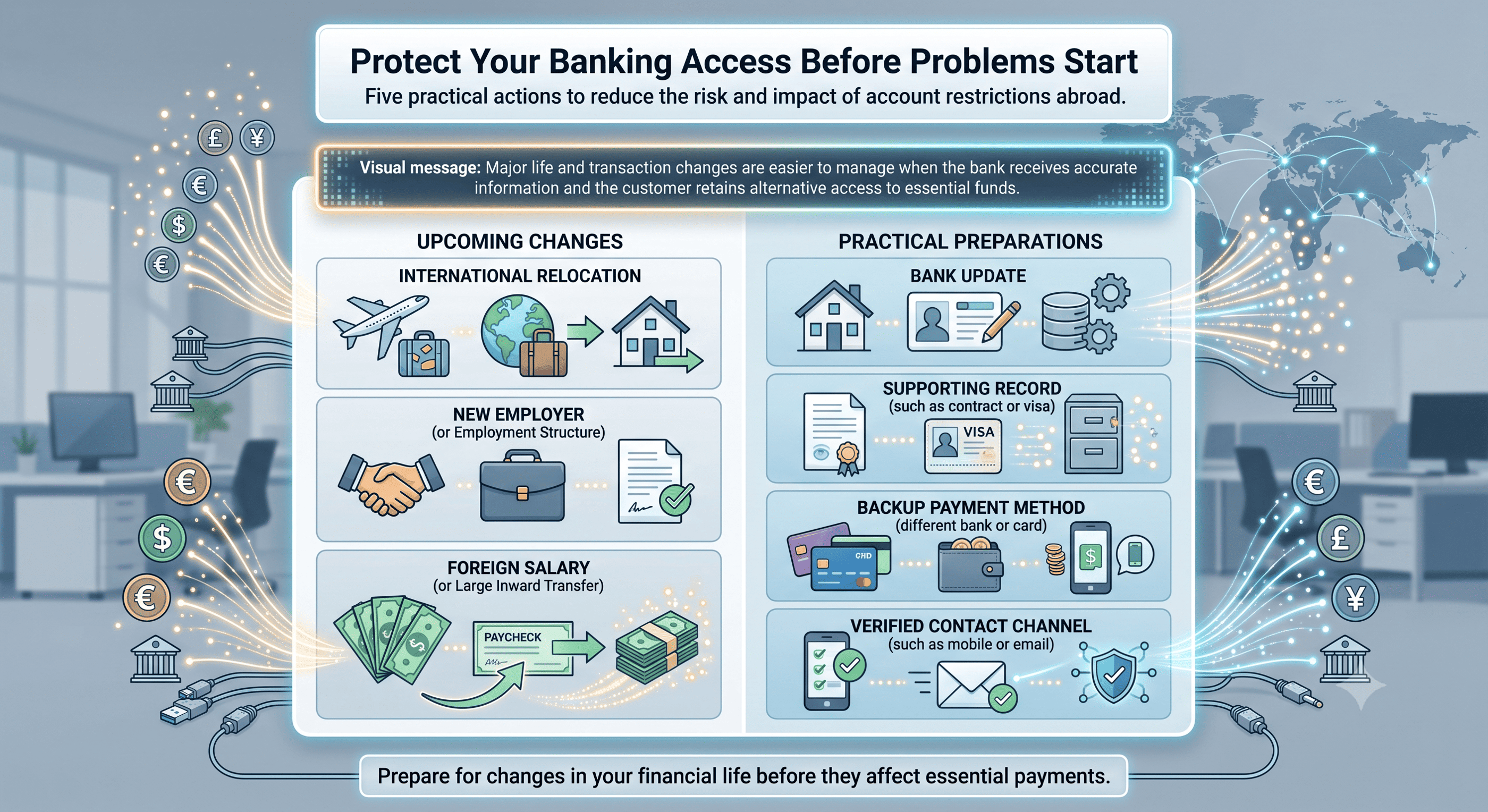
List any upcoming change that could alter how your financial activity appears, including relocation, new employment, foreign income or larger transfers.
Identify Changes Before They Reach Your Account
> Inform Your Bank About Material Changes
When you move, start a new job or become tax-resident in another country, do not assume that ordinary account activity will automatically update your customer profile.
Review the information held by each important bank or payment provider. Pay particular attention to:
Residential and correspondence addresses
Mobile number and email address
Country of residence
Tax residency
Employment status
Main expected source of income
Validity of identity and residence documents
Use the institution’s official update process. Avoid sending sensitive records through an unverified email address or informal messaging channel.
Ask what supporting document is accepted before uploading it. A temporary accommodation receipt, rental agreement or government registration certificate may be treated differently by each institution.
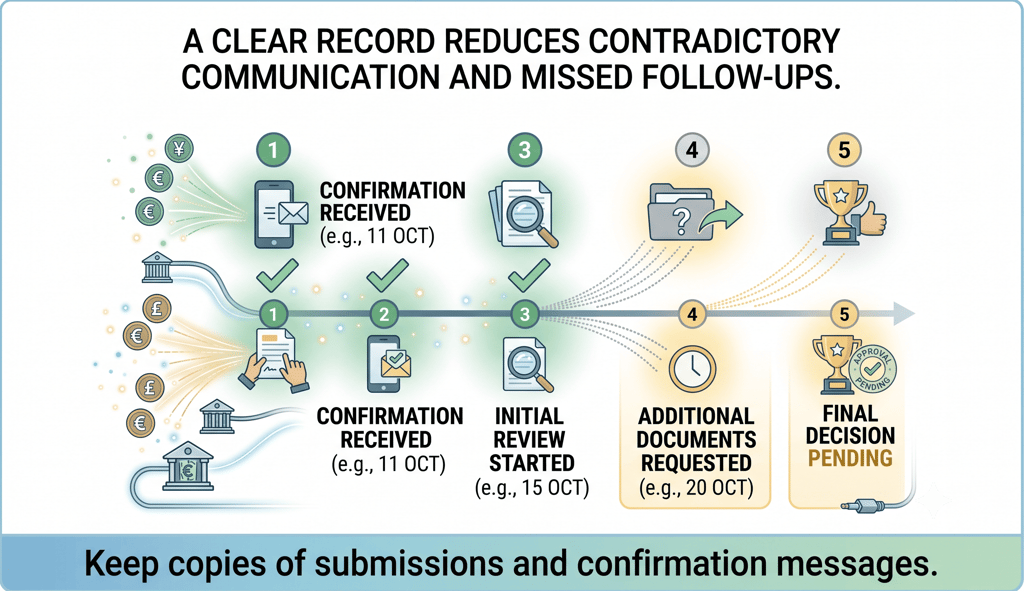
Keep a dated record of the update, including confirmation emails, case numbers and the information submitted. This does not prevent a review, but it helps demonstrate that you reported the change rather than allowing the account information to become outdated.
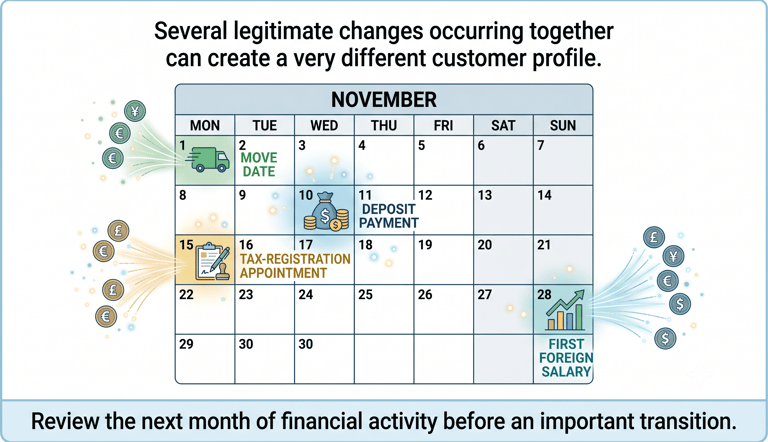
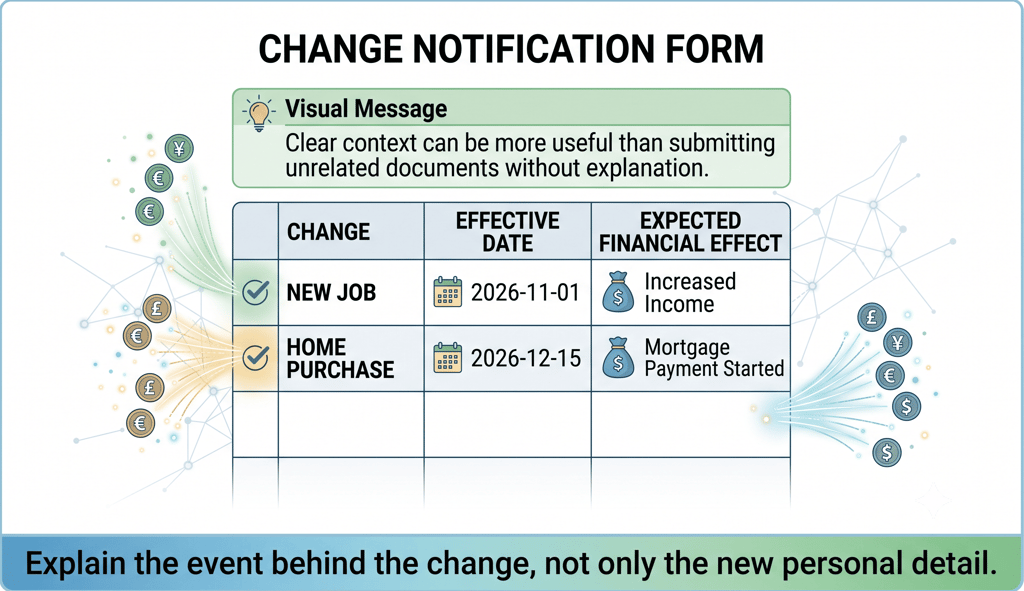
This section differs from merely maintaining a consistent profile. The objective is to connect a life event with the financial activity likely to follow it.
Tell the institution what changed, when it changed and which account activity may look different as a result.
Match the Update to the Life Event
> Create Evidence for Unusual or High-Value Transactions
A restriction may occur after activity that differs from the account’s established pattern. Examples may include a foreign salary, a property deposit, a large movement between your own accounts, tuition fees or repeated family-support payments.
Before completing an important transaction, assemble a small evidence file. Depending on the situation, it might include:
Employment contract and recent payslip
Invoice or purchase agreement
Rental contract or deposit request
University fee notice
Sale agreement
Transfer confirmation from your other account
Tax or inheritance documentation
A short explanation of the payment purpose
The objective is not to send every document to the bank in advance. It is to ensure that you can respond quickly if the transaction is reviewed.
Use accurate payment references. “Transfer” or “personal” provides little context. A reference such as “September tuition invoice 1048” or “transfer to own savings account” is clearer, provided it truthfully describes the payment.
Avoid splitting a legitimate payment into a series of smaller transactions merely to attract less attention. That behaviour can itself look unusual and may make the activity harder to explain.
For recurring international payments, keep a simple transaction log recording the sender, recipient, purpose, amount, currency and supporting document. This can be particularly valuable when your bank account is used across several countries.
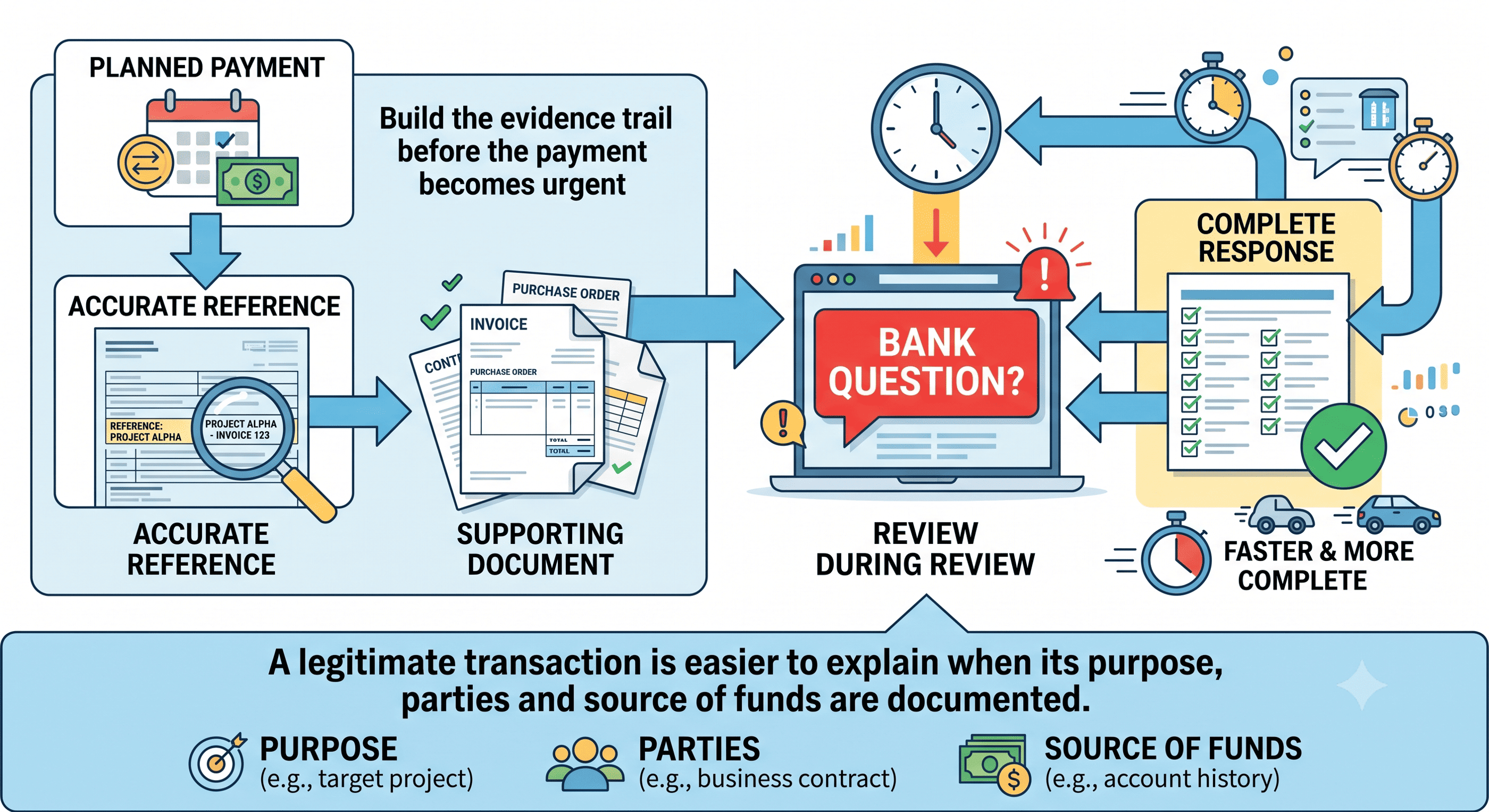
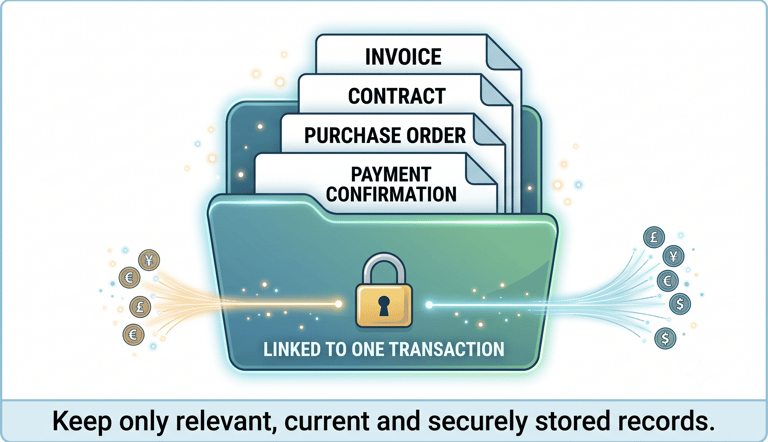
Store the contract, invoice, payment reference and source-of-funds record connected to major transactions.
Build a Transaction Evidence File
> Protect Your Communication and Verification Access
A bank cannot complete bank verification efficiently if it cannot reach you or if you cannot access the authentication method attached to the account.
International moves regularly disrupt:
Mobile numbers
Postal addresses
App access
Device registrations
Email accounts
One-time-password delivery
Card replacement delivery
Before cancelling your old phone contract, determine whether it is still linked to any financial account. Where the institution permits it, replace the number with one you can reliably access abroad.
Check whether the bank app works on your new device and whether you remember the login and recovery process. Do this before travelling, not while attempting an urgent payment.
Keep your email account secure with a strong password and recovery method. Review spam and filtered folders during a move, because requests for identity verification may have response deadlines.
Never provide passwords, complete card details or authentication codes to someone who contacts you unexpectedly. When a message requests documents or urgent action, open the official banking app or use a verified number from the institution’s website or your account documentation.
A restriction can become more disruptive when the customer misses the initial request. Reliable communication is therefore part of account continuity, not just an administrative detail.
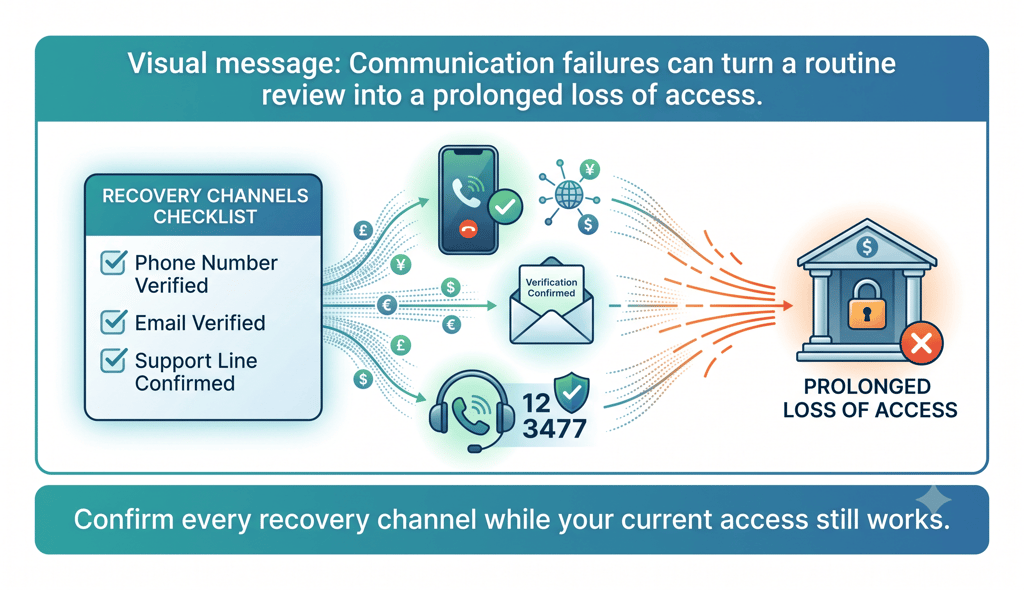
Confirm that you can receive alerts, sign in, complete authentication and use the bank’s secure support channel from abroad.
Test Your Access Before Travelling
> Separate Essential Payments From a Single Account
Even well-prepared customers can face a temporary review. The practical question is therefore not only “How do I prevent a restriction?” but also “What happens to my rent and daily expenses if one occurs?”
List the payments that cannot easily wait:
Housing costs
Utilities
Food and transport
Insurance
Tuition
Tax obligations
Medical expenses
Family support
Business payroll or supplier payments
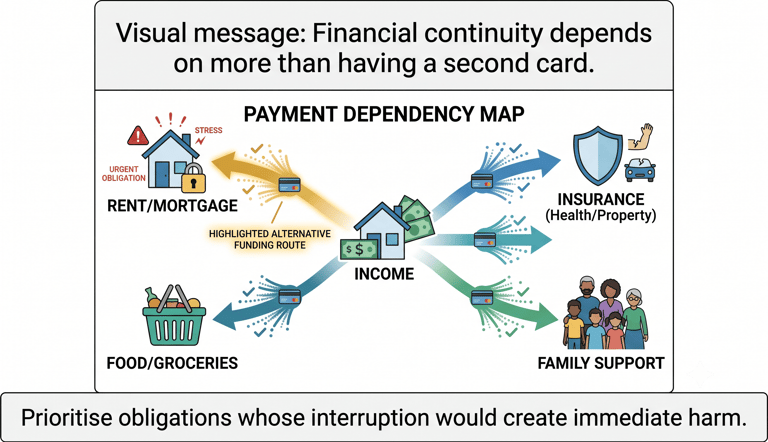
Where legally and practically appropriate, avoid making one account the only route for every essential payment.
You might keep a modest emergency balance with a separate regulated institution, retain a second usable payment card or maintain access to funds in another account in your own name. Confirm fees, eligibility, local rules and deposit protection before choosing any provider.
Do not move all available money immediately after receiving a review notice unless the institution permits normal withdrawals and you have a legitimate reason. A sudden attempt to empty the account may create further questions.
The purpose of backup liquidity is resilience, not secrecy. Funds and accounts should remain properly declared where tax, residency or other reporting rules apply.
Review your automatic payments before relocating. Record which account pays each bill and how the payment can be changed. A backup account provides limited protection if you cannot redirect the rent or utility payment when needed.
Identify essential obligations and establish a lawful alternative payment route before an account problem occurs.
Protect the Payments That Cannot Wait
> Prepare a Clear Escalation Record
When an account is restricted, repeatedly contacting support without a structured record may produce confusion rather than progress.
Create a case file containing:
Date and time the restriction began
Exact functions affected
Messages shown in the app
Transactions involved
Documents already submitted
Dates of each submission
Support case numbers
Names or departments contacted
Response deadlines
Essential payments placed at risk
When contacting the institution, describe the practical issue precisely. For example:
“My card payments and outgoing transfers have been unavailable since 14 July. My salary was received from my new employer on 12 July. I submitted the requested employment contract and proof of address under case 7842. Please confirm whether any additional information is required and how I can address my rent payment due on 20 July.”
Do not exaggerate, threaten staff or submit conflicting explanations. A calm, consistent timeline is easier to review.
Ask what is restricted: the entire account, one payment, card usage or a particular service. Also ask whether incoming payments, direct debits or essential outgoing payments will continue.
Use the institution’s formal complaint route when ordinary support does not resolve the issue. Depending on the institution and jurisdiction, external complaint or ombudsman options may also exist. Verify the correct process through official regulatory or institutional sources rather than relying on social-media advice.
This preparation does not guarantee immediate restoration. It does, however, help you communicate the facts, track the review and avoid repeatedly starting the explanation from the beginning.
Record the timeline, affected functions, submitted evidence and next required action in one place.
Turn the Restriction Into a Trackable Case
______________________________________________________________________________________________________________________________________________________
> Key Takeaways
✓ Notify important financial institutions when your residence, tax status, employment or contact details materially change.
✓ Connect each major account update to the life event and transaction activity likely to follow it.
✓ Keep relevant evidence for foreign income, deposits, transfers between your own accounts and other unusual payments.
✓ Use truthful, specific payment references that make the purpose of a transaction easier to understand.
✓ Confirm that your phone, email, device and secure support channels will remain accessible after relocation.
✓ Keep a lawful backup route for essential expenses instead of depending entirely on one account.
✓ Map direct debits and recurring obligations so they can be redirected when necessary.
✓ Record restriction notices, submissions, case numbers and deadlines in one escalation file.
✓ Respond through verified channels and never disclose passwords or authentication codes.
✓ Remember that preparation can reduce risk and disruption, but it cannot prevent every compliance review.
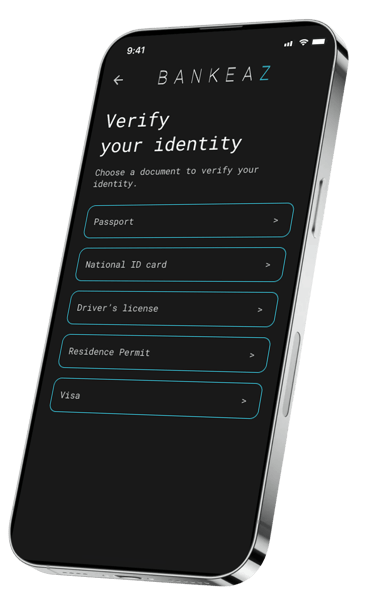
Maintain a clear overview of your identity information and supporting documents.
Use it as a reference when reviewing accounts or responding to verification requests.
Use tools to support preparation, not replace financial institution requirements.
Keep Verification Information Organised
> Conclusion
Reducing the risk of an account restriction requires more than uploading a passport when a request appears.
Start by informing your financial institutions about material changes. Prepare evidence for transactions that may differ from your previous activity. Protect access to your contact and authentication channels. Establish a lawful backup for essential payments, and maintain a clear record for escalation.
These steps are especially valuable in expat banking, where income, residence, identity records and financial obligations may be spread across several countries.
They cannot guarantee uninterrupted access. Banks may still need to review an account or transaction under their internal procedures and applicable compliance obligations.
Preparation can nevertheless make your activity easier to explain and reduce the damage caused by a temporary interruption. Many cross-border financial processes still rely on separate institutions, country-specific rules and fragmented identity systems, so internationally mobile customers continue to face complexity even when their activity is legitimate and well documented.
> Related reads
Why Moving Abroad Makes Banks Reassess Your Account
Explains why a change of residence can lead to renewed KYC checks, document requests and restricted services.
Why Global Lives Still Break Banking
Examines why nationally organised banking systems struggle to maintain continuity for customers whose lives cross borders.
How to Keep Your Financial Profile Consistent
Practical guidance on aligning names, addresses, contact information and documents across financial providers.
How to Avoid Verification Delays
Practical guidance on preparing documents, maintaining accurate information, and reducing delays during identity verification across financial providers.
______________________________________________________________________________________________________________________________________________________
by BANKEAZ
On demand banking services for all


______________________________________________________________________________________________________________________________________________________
Learn more about Expat Banking

Global lives deserve simpler banking.





Download the BANKEAZ app for a 100% mobile banking experience. Available on iOS and Android - public testing by invitation.
Bankeaz is designed for people living between countries. Availability may vary depending on the user’s jurisdiction of residence.
The Bankeaz app is developed by Arcadia, a company currently being incorporated in Switzerland.
Bankeaz does not provide banking services in its own name. Financial services are provided by licensed and regulated partner institutions, in accordance with applicable laws and regulations.
Copyright © 2026 - Arcadia | Bankeaz - All rights reserved
Address
____________________






__________________________________________________________________________________________________________________________________________________


(- - -) - - - - - - - - - -
Zurich - CH
__________________________________________________________________________________________________________________________________________________
___________________________________________________________________________________________________________________________________________________
__________________________________________________________________________________________________________________________________________________
Learn
____________________