
How to Protect Pending Refunds When Changing Bank Accounts Abroad
EXPAT BANKING
Blog > Expat Banking > How to Protect Pending Refunds When Changing Bank Accounts Abroad
How to Protect Pending Refunds When Changing Bank Accounts Abroad
EXPAT BANKING
BANKEAZ | Expats Team
10/07/2026 - 4 min read


A hotel deposit is being returned next week. An airline has approved a ticket refund. A retailer is still processing a return. At the same time, you are moving abroad and preparing to replace or close the bank account linked to the original payments.
That timing matters. A refund is not always a new incoming payment that can simply be redirected to any account you choose. Depending on how the original purchase was made, the merchant, card network, payment provider, and issuing bank may all influence where the money is sent and what happens if the original card or account has changed.
The practical goal is not to keep an old account open forever. It is to know which refunds are still outstanding, understand how each one is expected to return, and close or replace banking relationships only after the relevant credits have been reconciled.
This guide explains how to build that transition safely when banking abroad.
List every amount that may still return to the old card or account before changing your banking setup.
Build a Pending Refund Register


> Identify Every Refund Before You Change the Account
Before changing an account, create a refund inventory rather than relying on memory.
Review recent purchases, cancellations, returns, deposits, and reimbursements. Include items that may not look like ordinary merchant refunds, such as hotel or rental deposits, airline cancellations, utility account credits, insurance reimbursements, tax refunds, university deposits, employer expenses, or marketplace returns.
For each expected refund, record the merchant or organization, the original transaction date, amount and currency, the payment method used, the last four digits of the relevant card when available, the refund approval date, the expected processing window, and the reference or case number.
Separate refunds that are already issued from those that are only promised. A merchant saying that a refund has been approved is not the same as a credit appearing on your statement.
This distinction becomes especially useful if you are changing countries. Your old account may still be active while your new international bank account is already handling salary, rent, or daily spending. Without a clear inventory, a small credit can arrive unnoticed or a larger refund can become difficult to trace after account access ends.
Determine whether each refund is returning through the original card transaction, a bank transfer, or another reimbursement process.
Find the Route Back


> Confirm How Each Refund Will Reach You
The route matters because different refunds depend on different payment instructions.
A card refund may be linked to the original card transaction. Mastercard documentation describes refunds as typically linked to the original capture or payment, while Visa merchant guidance instructs merchants to process a refund to the account number used for the original purchase. Exact handling can vary by merchant, issuer, card-replacement status, country, and payment setup. (Mastercard Gateway)
A bank-transfer reimbursement may work differently. The sender may need current account details, a beneficiary name, local routing information, an IBAN, or other instructions. A tax authority, insurer, landlord, university, or employer may use its own process and may not update destination details automatically when you change banks.
That means you should identify the refund rail before asking someone to “send it to the new account.”
Ask the merchant or payer how the refund will be returned. If it is tied to the original card transaction, confirm what they need if that card has expired or been replaced. If it is a bank-transfer reimbursement, confirm whether the destination can still be updated before payment is released.
Do not assume that replacing a physical card automatically breaks a refund route. Equally, do not assume that a closed account will automatically receive or redirect every future credit. The issuing bank or payment provider is the right place to confirm what happens in your specific case.


Maintain controlled access to the former account while material refunds remain unresolved.
Keep the Bridge Open


> Keep the Old Account Accessible During the Refund Window
If several refunds are pending, avoid closing the old account simply because your everyday payments have moved.
Instead, choose an overlap period based on actual outstanding items. Keep the former account accessible long enough to monitor pending credits, answer verification questions, retrieve statements, and contact the bank if a refund is rejected or cannot be identified.
The correct overlap is not necessarily a fixed number of days. A hotel deposit may clear quickly. An airline, insurer, tax authority, or international merchant may take longer. The useful question is: what is the latest unresolved credit still connected to this account or card?
During the overlap, keep your contact details current. If the bank needs to verify a credit, send an alert, or request updated information after your relocation, access to the registered email, phone number, and secure banking channel may matter.
Also verify whether the institution continues to serve customers after they become non-resident. Keeping an account open temporarily is useful only if the account remains permitted and operational under your updated circumstances.
Bankeaz has separately documented how relocation can trigger reassessment of address, tax status, employment information, and account activity, so the accessibility of an old account should not be taken for granted after a move
Keep the transaction, approval, amount, currency, dates, and references together in case the credit does not arrive.
Turn Every Refund Into a Traceable Case


> Preserve Evidence Before Access Disappears
Create a small evidence file for every material refund.
Save the purchase receipt or original transaction, the cancellation or return confirmation, the merchant’s refund email, the amount and currency, the expected date, any refund reference, and the account or card information used for the original payment.
When a merchant says that a refund has been processed but the credit does not appear, ask for a traceable reference if one is available through that merchant or payment route. Then provide that information to the issuing bank rather than starting with a vague request to “find a refund.”
Evidence becomes more important after a bank change because several events may happen close together: a card replacement, an account closure request, a change of residence, a currency conversion, or a new banking relationship. A written timeline helps separate these events.
Avoid sending full card numbers, authentication codes, passwords, or other unnecessary security information through ordinary email or messaging. Use the merchant’s or bank’s official secure channel for sensitive data.
Before closing the old account, reconcile the refund inventory line by line.
Mark each item as received, cancelled, redirected, disputed, or still pending. Match the amount and currency received against the amount expected. If the credited amount differs, check whether the merchant issued only a partial refund or whether currency conversion affected the amount.
Do not treat a merchant confirmation as final evidence that the money reached you. The operational endpoint is the credit appearing in an account you can access and identify.
If a refund is still missing, resolve it before closure where practical. Ask the merchant whether the payment has been released. Ask the issuer or bank whether it can identify the incoming refund or explain what happens when a refund reaches a replaced card or closed account. The answer can differ across institutions and countries.
Finally, download the statements covering the original purchase and the refund period. If access to the old account disappears later, those records may help with reconciliation, disputes, taxes, expense claims, or proof that the expected credit never arrived.
Deposits, tax refunds, insurance reimbursements, and utility credits may depend on stored bank details instead of the original card.
Check More Than Card Refunds


> Protect Refunds That Are Not Linked to a Card Purchase
Not every incoming payment linked to an old account is a merchant refund.
After moving abroad, you may still be owed a rental deposit, tax refund, insurance reimbursement, utility credit, tuition balance, travel compensation, expense reimbursement, or other payment from an organization that stores your previous bank details.
These payments deserve a separate check because they may follow different instructions from card refunds.
Contact each payer before the payment is released. Confirm whether they hold your old account details, whether those details can be changed, what evidence they require, and how long the update takes. If the payer uses a local payment network, confirm whether the new account is eligible to receive the payment in the intended currency.
This is also a good point to distinguish “refund protection” from simply keeping every old account open. The objective is to preserve the specific incoming routes that still matter. Once those dependencies are resolved, you can decide whether the old account still has a useful role in your wider banking abroad setup.
A controlled transition therefore has an end point: no unresolved refunds, no unidentified incoming credits, complete records, and a clear understanding of what will happen to any late payment after closure.
Confirm that every expected credit has a final status before ending access to the former account.
Run the Final Refund Check


______________________________________________________________________________________________________________________________________________________
> Key Takeaways
✓ Build a list of every refund, deposit, reimbursement, or credit still expected before changing accounts.
✓ Record the original payment method because it can influence the route used for the refund.
✓ Ask merchants and payers how the money will be returned instead of assuming it can be redirected.
✓ Keep the former account accessible while material refunds remain unresolved, where the bank permits you to do so.
✓ Preserve receipts, cancellation confirmations, refund references, dates, currencies, and relevant statements.
✓ Confirm receipt in the account rather than treating a merchant’s refund notification as the end of the process.
✓ Review tax refunds, rental deposits, insurance reimbursements, utility credits, and other non-card payments separately.
✓ Download records and resolve unexplained credits before closing the old account.
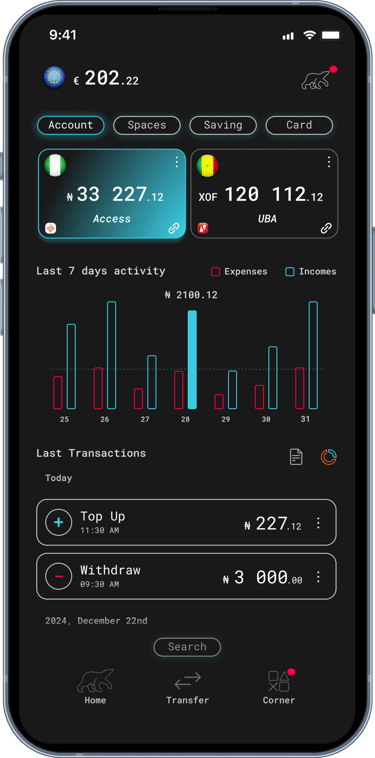
View old and new accounts together.
Reconcile incoming credits more easily.
Identify which account still has a temporary purpose.
Keep the Account Transition Visible
> Conclusion
Changing bank accounts abroad is easier when pending refunds are treated as individual payment dependencies rather than as an afterthought.
Start by listing every expected credit. Identify the original payment route. Keep the old account accessible while material refunds remain unresolved. Save evidence and references. Reconcile each credit before closure, and check non-card reimbursements separately because they may depend on stored bank details rather than the original card transaction.
These actions can reduce avoidable losses, confusion, and tracing work during a bank change. Even with careful preparation, however, international refunds can still depend on merchant processes, payment networks, issuing banks, local account rules, and country-specific infrastructure. Those fragmented systems can continue to create complexity when money has to find you after you move.
> Related reads
Why Moving Abroad Makes Banks Reassess Your Account
Explains why a relocation can change how a bank assesses your customer profile, documents, and account activity.
Why Old Bank Records Trigger New Verification
Explains why outdated addresses, identity documents, employment information, and other records can create fresh verification requirements.
How to Protect Salary Payments and Direct Debits When Moving Abroad
A broader guide to migrating incoming salary and recurring payments while maintaining an overlap between accounts.
How to Confirm a Bank Account Is Still Active Before Sending Money
Explains how to check whether account details remain usable before a payment is sent.
______________________________________________________________________________________________________________________________________________________
by BANKEAZ
On demand banking services for all


______________________________________________________________________________________________________________________________________________________
Learn more about Expat Banking

Global lives deserve simpler banking.





Download the BANKEAZ app for a 100% mobile banking experience. Available on iOS and Android - public testing by invitation.
Bankeaz is designed for people living between countries. Availability may vary depending on the user’s jurisdiction of residence.
The Bankeaz app is developed by Arcadia, a company currently being incorporated in Switzerland.
Bankeaz does not provide banking services in its own name. Financial services are provided by licensed and regulated partner institutions, in accordance with applicable laws and regulations.
Copyright © 2026 - Arcadia | Bankeaz - All rights reserved
Address
____________________






__________________________________________________________________________________________________________________________________________________


(- - -) - - - - - - - - - -
Zurich - CH
__________________________________________________________________________________________________________________________________________________
___________________________________________________________________________________________________________________________________________________
__________________________________________________________________________________________________________________________________________________
Learn
____________________