
How to Protect Mobile Banking Access When Changing Your Phone Number Abroad
EXPAT BANKING
Blog > Expat Banking > How to Protect Mobile Banking Access When Changing Your Phone Number Abroad
How to Protect Mobile Banking Access When Changing Your Phone Number Abroad
EXPAT BANKING
BANKEAZ | Expats Team
9/09/2026 - 4 min read


Your new local SIM works, but your bank still sends login codes to the number you stopped using three days ago.
That small mismatch can become a serious problem when you need to approve a payment, register a new device, recover a password, or respond to a security alert.
For people banking abroad, a telephone number can be more than contact information. Depending on the institution, it may form part of login authentication, account recovery, transaction approval, fraud monitoring, or identity verification.
The safest approach is therefore to avoid treating the old number as disposable until you understand what depends on it.
This guide explains five practical steps you can take before, during, and after a number change to preserve mobile banking access and reduce avoidable recovery problems.
Your primary bank may not be the only financial service relying on your mobile number
Find Every Account Still Using the Old Number

> Build a Phone-Number Dependency Map
Before cancelling the old SIM, list every financial account that may still depend on it.
Start with your main bank account, but continue beyond it. Check savings accounts, credit cards, payment apps, investment platforms, insurance portals, pension accounts, business banking, and any service you use for international payments.
For each account, identify how the number is used.
Ask:
Is it simply a contact number?
Does the bank send SMS login codes?
Is it used to approve payments?
Is it required when registering a new device?
Does password recovery depend on it?
Are suspicious-activity alerts sent there?
Is the number part of telephone banking verification?
Do not assume that changing the number in your profile automatically changes every authentication route. Different functions may use separate settings or require additional confirmation.
Also review the email account connected to your banking relationships. If that email itself uses the old mobile number for password recovery, losing the number could affect two layers of access at once.
Create a simple record showing each provider, the number currently registered, the authentication method used, and whether the update has been successfully tested.
The objective is not merely to update contact information. It is to understand your access chain before removing one of its components.
Do not remove your previous access route before confirming that the replacement works.
Keep the Transition Reversible


> Keep the Old Number Accessible During the Transition
Where practical, maintain temporary access to the old number while you update your banking relationships.
That might mean keeping the existing SIM active, maintaining roaming temporarily, or using a dual-SIM or eSIM arrangement if your devices and providers support it.
The important principle is overlap.
If you cancel the old number first and discover later that your bank requires a code sent to it before accepting a new number, the update can become much more complicated.
Work through important institutions individually.
Use only the provider’s official app, authenticated online-banking portal, verified branch process, or official customer-support channel. Avoid following unexpected links in texts or emails telling you that your contact information must urgently be changed.
Record when each update was made and keep any confirmation message or case reference.
Do not erase the old SIM, reset the previous device, or assume the migration is complete merely because the new telephone number appears on your profile page.
The useful milestone is successful access: you can log in, receive or complete the required authentication, and use the recovery process available to you.
Only then should you consider the old number no longer necessary for that account.


A phone number may be only one authentication option—or it may be central to account recovery.
Check How Your Bank Verifies You


> Reduce Dependence on SMS Where Your Bank Allows It
SMS codes remain common, but a mobile number is not always the strongest authentication method available.
A number can be compromised through SIM-swap fraud, where an attacker persuades a mobile provider to move the victim’s number to another SIM. The U.S. Federal Trade Commission warns that someone controlling a number may then receive SMS authentication codes intended for the legitimate customer.
If your bank offers alternatives, review them before changing numbers.
Depending on the institution, these may include in-app approval, authenticator applications, physical security keys, or device-based authentication. Do not activate or remove authentication methods unless you understand the bank’s recovery process.
Cybersecurity guidance also distinguishes between authentication methods. CISA notes that phishing-resistant authentication such as FIDO/WebAuthn offers stronger protection, while SMS authentication can remain vulnerable to SIM-swap and other attacks.
This does not mean you should disable SMS blindly. Your bank may require it for certain functions.
Instead, determine what choices your provider actually supports and use stronger alternatives where they are officially available and appropriate.
The objective is resilience: losing control of one mobile number should not automatically mean losing every available route to your financial accounts.
Banking security also depends on how securely your mobile provider handles your account.
Secure the Number Itself


> Protect Both Your Old and New Mobile Accounts
A secure banking login can still depend on the security of the telephone number receiving its codes.
Review the protections offered by your mobile carrier. Where available, add a PIN, password, or other account-level authentication designed to prevent unauthorized changes.
The FTC specifically recommends adding a PIN or password to a cellular account as a protection against unauthorized SIM changes.
Apply the same care to the new number.
Use a strong, unique password for your carrier account, protect the email address connected to it, and be cautious when someone claiming to represent a bank or telecommunications provider asks for verification codes.
Never give an authentication code to someone simply because they know your name, bank, telephone provider, or recent relocation details.
If your phone unexpectedly loses calls and mobile service and you did not request a SIM change, contact your carrier through a trusted channel. Unexpected service loss can have innocent causes, but it can also accompany unauthorized changes to a mobile account.
Your online banking security therefore extends beyond the banking app itself. The telephone number, email account, device, and carrier account can all participate in the same access chain.
A successful profile update does not necessarily prove that login and recovery are working.
Test Before You Depend on the New Number


> Run an Access and Recovery Test
After changing the number, test the parts of your banking setup that can safely be tested.
Start with a normal login from your recognized device.
Then confirm that the new number is displayed correctly in your authenticated account settings. Review notification and security settings separately if your bank provides them.
Check whether transaction approvals use the new number, the banking app, or another method.
Most importantly, understand the recovery path.
Ask yourself what would happen if your phone disappeared tomorrow.
Could you still contact the bank? Do you know your customer or account identifiers? Can you access the registered email account? Does the bank require the telephone number being replaced before it will accept another change?
Keep official support information somewhere accessible independently of the phone you normally use. Do not store passwords, card PINs, or one-time authentication codes in an unsecured document.
If an important account cannot be updated online, resolve that issue before voluntarily disconnecting the old number. Some institutions may require additional verification, documents, a branch visit, or a telephone process.
The fifth step is therefore not another profile update. It is contingency planning.
A phone-number transition is complete only when your normal access works and you understand how you would recover access if the new phone, SIM, or device became unavailable.
Store the information needed to contact institutions without storing credentials that could unlock your accounts.
Keep a Small Emergency Access Record


______________________________________________________________________________________________________________________________________________________
> Key Takeaways
✓ Map every financial account connected to your previous number before cancelling it.
✓ Maintain temporary access to the old number while important updates are still being verified.
✓ Check whether your bank offers authentication methods that do not rely entirely on SMS.
✓ Secure your mobile-carrier account with additional authentication where available.
✓ Test login, transaction approval, notifications, and recovery after updating your details.
✓ Keep official support information accessible independently of your everyday phone.
✓ Treat a phone-number change as an authentication migration, not simply a contact-detail update.
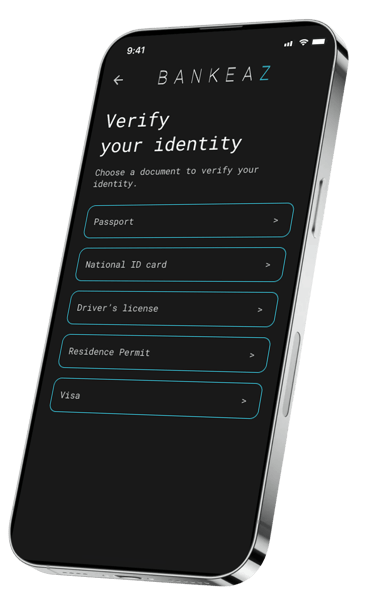
Changing contact information can affect identity verification as well as account access.
A KYC-focused visual can help explain how identity, contact details, and verification records interact.
No specific Bankeaz functionality or availability is implied.
Understand How Identity and Access Connect
> Conclusion
Changing your phone number abroad should be managed in stages.
First, determine which accounts still depend on the old number. Keep access to it temporarily where practical, update important institutions through official channels, review stronger authentication options where available, secure the mobile accounts themselves, and test both normal login and recovery before completing the transition.
These steps cannot guarantee uninterrupted access. Every bank has its own authentication, compliance, security, and recovery procedures.
They can, however, reduce avoidable gaps created when an old number disappears before the systems connected to it are ready.
For people managing expat banking and broader financial mobility, this kind of preparation matters because international financial access still depends on a mixture of local telecommunications networks, country-specific verification procedures, separate
> Related reads
Why Moving Abroad Makes Banks Reassess Your Account
Explains why relocation can trigger new documentation, verification, and account reviews.
Why Banking Decisions Change Abroad
Explains how location, residence, compliance requirements, and local banking infrastructure can affect a customer’s financial profile.
How to Reduce the Risk of Bank Account Restrictions When Living Abroad
A broader continuity plan covering relocation changes, communication, account access, and customer-profile updates.
How to Keep Your Financial Profile Consistent
Explains how to maintain accurate identity and contact information across financial providers.
______________________________________________________________________________________________________________________________________________________
by BANKEAZ
On demand banking services for all


______________________________________________________________________________________________________________________________________________________
Learn more about Expat Banking

Global lives deserve simpler banking.





Download the BANKEAZ app for a 100% mobile banking experience. Available on iOS and Android - public testing by invitation.
Bankeaz is designed for people living between countries. Availability may vary depending on the user’s jurisdiction of residence.
The Bankeaz app is developed by Arcadia, a company currently being incorporated in Switzerland.
Bankeaz does not provide banking services in its own name. Financial services are provided by licensed and regulated partner institutions, in accordance with applicable laws and regulations.
Copyright © 2026 - Arcadia | Bankeaz - All rights reserved
Address
____________________






__________________________________________________________________________________________________________________________________________________


(- - -) - - - - - - - - - -
Zurich - CH
__________________________________________________________________________________________________________________________________________________
___________________________________________________________________________________________________________________________________________________
__________________________________________________________________________________________________________________________________________________
Learn
____________________