
How to Choose the Right Payout Method When Sending Money Abroad
EXPAT BANKING
Blog > Expat Banking > How to Choose the Right Payout Method When Sending Money Abroad
How to Choose the Right Payout Method When Sending Money Abroad
EXPAT BANKING
BANKEAZ | Expats Team
8/26/2026 - 4 min read


A transfer can look convenient from the sender’s side and still create a problem at the other end.
You might find a fast way to send money abroad, only for the recipient to discover that the funds arrived in an inconvenient account, require another currency conversion, depend on a distant cash-collection point or cannot be accessed as quickly as expected.
That is why choosing an international payment should begin with the recipient.
Different transfer services can support different combinations of funding instruments and receiving methods. The World Bank’s Remittance Prices Worldwide methodology, for example, distinguishes between the way a transfer is funded and the way funds are ultimately disbursed to the receiver.
The practical goal is therefore not simply to find a transfer that you can send. It is to find a cross-border payment route that ends in a form the recipient can reliably access and use.
This guide shows how to make that decision step by step.
Before comparing transfer providers, identify what the recipient can actually access.
Ask How the Money Needs to Arrive


> Start With the Recipient’s Real Access
Before opening a transfer app or comparing fees, talk to the recipient.
Ask how they normally receive and use money. A bank account may be convenient for someone who pays rent, bills and subscriptions electronically. A mobile wallet may be more practical where it is widely used for daily transactions. Cash collection may matter when the recipient does not have suitable account access or needs physical cash.
Do not assume that having a bank account automatically makes a bank deposit the best choice. The recipient may use a different account for the relevant currency, face incoming-transfer charges or have limited access to that account.
Likewise, do not choose cash pickup simply because it sounds immediate. The recipient may need to travel, present identification, visit during opening hours or rely on a specific payout location.
Ask four practical questions:
Where can you receive the money?
Which option can you access without unnecessary travel or delay?
In what form do you need to use the money afterward?
Is there an alternative if the preferred method is unavailable?
The purpose is to define the destination of the money in practical terms, not merely geographically.
When you send money abroad, the useful endpoint is not “transfer completed.” It is “recipient can access the correct amount in a usable form.”
A technically available method may still be inconvenient if access points, account conditions or opening hours do not suit the recipient.
Make Sure the Payout Works in Practice


> Check What the Destination Actually Supports
Once the preferred payout method is clear, verify that it is supported for the specific destination.
Transfer options are corridor-specific. A service available between one pair of countries may offer a different receiving method, processing time or payout network in another corridor. The World Bank’s remittance database reflects this by comparing services by sending country, receiving country, transfer speed and receiving method rather than treating every transfer route as identical.
For a bank deposit, confirm that the provider supports the recipient’s country, bank and required account type.
For a wallet payout, confirm that the recipient uses the exact supported wallet and that their account is active and able to receive the intended amount.
For cash collection, check the actual disbursing network—not simply whether the provider advertises cash pickup. Look at the collection location, travel distance, operating hours and identification requirements.
Also consider transfer limits. A payout route suitable for regular family support may not accept the same amount as a larger tuition, property or business payment.
Do this verification before funding the transaction.
The practical rule is simple: destination support must be checked at the level of the actual payout method, not merely at the level of the provider or country name.


The payout method and receiving currency should be checked together.
Decide Which Currency Should Arrive


> Match the Payout Method to the Recipient’s Currency
Two transfers reaching the same person can create different outcomes if they arrive in different currencies.
Ask the recipient which currency they need and which account or payout method is designed to receive it.
Bankeaz’s beneficiary-verification guidance notes that a recipient may have different receiving instructions for EUR, GBP, USD, XOF or another currency. Sending funds to details intended for another currency can introduce additional conversion or processing.
Suppose a recipient needs local currency for household expenses. Sending a foreign currency into an account that automatically converts it may produce a different result from choosing a transfer route that quotes the local-currency payout in advance.
Conversely, a recipient who holds and uses a foreign-currency account may not want automatic conversion.
Before confirming the transfer, identify:
the currency you are funding;
the currency the provider will send;
the currency the payout method will receive;
the amount the recipient is expected to obtain.
Then ask whether any additional conversion could occur after payout.
The objective is not simply to find the most attractive exchange rate shown on one screen. It is to understand the full currency journey until the money becomes usable by the recipient.
“Bank deposit” or “cash pickup” describes the endpoint, not the entire payment journey.
Look Beyond the Payout Label


> Compare the Full Cost and Route Before Choosing
Once you know which payout methods would work for the recipient, compare the routes that can deliver them.
Do not compare only the headline transfer fee.
The World Bank notes that remittance costs can involve transaction fees and exchange-rate margins, while the receiver’s payout method, transfer speed and ability to provide recipient information can also affect the transaction.
For each suitable route, compare:
the amount you pay;
the transfer fee;
the quoted exchange rate;
the expected amount received;
possible receiving or intermediary charges;
expected processing time;
recipient requirements;
available tracking;
the selected payout method.
This is where the real transfer cost becomes more useful than the advertised fee.
Bankeaz’s existing cost guidance similarly recommends comparing the amount ultimately expected to reach the recipient rather than treating the visible transfer charge as the entire transaction cost.
A cheaper bank transfer may not be the better route if the recipient incurs additional costs or cannot use the account easily. A faster cash option may not be worthwhile if collection is inconvenient. A wallet transfer may be useful only if that wallet forms part of the recipient’s normal financial life.
Compare the complete outcome, not one attractive feature.
The preferred payout method can change when the recipient, amount, purpose or urgency changes.
Match the Route to This Transfer

> Create a Backup Payout Route Before You Send
A good payout decision includes an alternative.
The recipient may normally prefer a bank account, but that account could temporarily be restricted. A cash network might have limited operating hours. A wallet could reach a transaction limit. A transfer route may also become unavailable or require additional verification.
Before an important money transfer, agree on a fallback.
For example, identify whether the recipient has another verified account, another suitable receiving method or another legitimate payout route supported by the destination.
Do not improvise new beneficiary information during an urgent problem. Bankeaz’s verification guidance recommends independently confirming changed payment instructions through a trusted channel.
Keep the primary and fallback instructions separate and clearly labelled. If the first payment has already been sent and appears delayed, trace it before sending another one. Bankeaz’s deadline-planning guidance specifically recommends confirming the status of the original transfer rather than automatically creating a duplicate.
A backup route is most useful when it is prepared before anything goes wrong.
That turns payout selection from a one-time interface choice into a practical receiving plan.
Confirm the payout method, currency, amount and recipient instructions one final time.
Ask Before You Press Send


______________________________________________________________________________________________________________________________________________________
> Key Takeaways
✓ Ask the recipient how they can most easily access and use the money.
✓ Separate the sender’s preferred payment method from the recipient’s preferred payout method.
✓ Confirm that the exact receiving option is supported for the destination.
✓ Check practical access such as account availability, wallet status or cash-collection logistics.
✓ Agree on the currency the recipient should receive before choosing the transfer route.
✓ Compare the expected recipient amount, not only the transfer fee.
✓ Review speed, limits, conversion and possible intermediaries alongside the payout method.
✓ Reconsider the receiving method when the purpose or urgency of the payment changes.
✓ Verify changed payout instructions through a trusted independent channel.
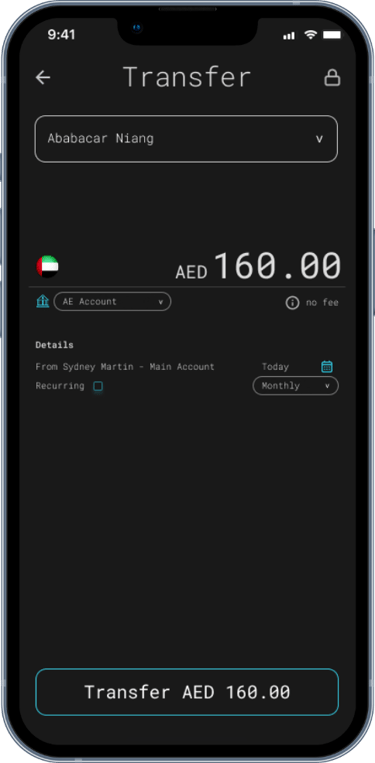
Keep the recipient, amount, currency and transfer route visible together.
Use that information to review how the payment is intended to reach the other side.
Confirm all recipient instructions independently before sending.
Review the Transfer From End to End
> Conclusion
Choosing how to send money internationally should not begin with the fastest button or the lowest visible fee.
Start with the person receiving the money.
Identify how they can access it, which payout options actually work at the destination, what currency they need and how much they are expected to receive. Only then compare the transfer routes capable of delivering that result.
For important payments, add one more step: agree on a verified backup receiving method before it is needed.
This recipient-first approach cannot remove every delay, fee or processing problem, but it can eliminate avoidable mismatches between how money is sent and how it needs to be received.
Even with careful preparation, cross-border payments still depend on separate providers, payment networks, currencies, intermediaries and country-specific infrastructure. That fragmentation means part of the complexity of moving money between countries remains outside the control of both sender and recipient.
> Related reads
Why International Payments Pass Through So Many Banks
Understand how intermediary institutions can shape the route between sender and recipient.
Why Your Transfer Stays “Pending” for Days
Explore the processing, verification, and payment-network factors that can delay an international transfer.
How to Compare International Transfer Providers
Use cost, exchange rate, speed, and reliability criteria after determining which payout methods fit the recipient.
How to Verify Beneficiary Details Before an International Transfer
Check recipient identity, account information, routing details and receiving currency before sending.
______________________________________________________________________________________________________________________________________________________
by BANKEAZ
On demand banking services for all


______________________________________________________________________________________________________________________________________________________
Learn more about Expat Banking

Global lives deserve simpler banking.




Download the BANKEAZ app for a 100% mobile banking experience. Available on iOS and Android - public testing by invitation.
Bankeaz is designed for people living between countries. Availability may vary depending on the user’s jurisdiction of residence.
The Bankeaz app is developed by Arcadia, a company currently being incorporated in Switzerland.
Bankeaz does not provide banking services in its own name. Financial services are provided by licensed and regulated partner institutions, in accordance with applicable laws and regulations.
Copyright © 2026 - Arcadia | Bankeaz - All rights reserved
Address
____________________






__________________________________________________________________________________________________________________________________________________


(- - -) - - - - - - - - - -
Zurich - CH
__________________________________________________________________________________________________________________________________________________
___________________________________________________________________________________________________________________________________________________
__________________________________________________________________________________________________________________________________________________
Learn
____________________