
How to Check International Transfer Limits Before Sending Money
EXPAT BANKING
Blog > Expat Banking > How to Check International Transfer Limits Before Sending Money
How to Check International Transfer Limits Before Sending Money
EXPAT BANKING
BANKEAZ | Expats Team
8/01/2026 - 4 min read


You prepare an important international payment for rent, tuition, a property deposit, a supplier, or family support.
Your account contains enough money. The beneficiary details are correct. But when you try to confirm the payment, the transfer is rejected, reduced, or placed under review.
The problem may be a limit rather than a lack of funds.
An international transfer can be affected by several overlapping restrictions. A provider may limit each transaction, the total sent in one day, the amount transferred in a month, the countries available, the payment method, or the value permitted before additional verification.
These limits are not always displayed in the same place. Some are published publicly, while others depend on the customer, account type, transaction history, currency, or destination.
Checking them before sending can help you choose the right route, prepare the required documents, and avoid an urgent payment becoming stuck.
Check the transaction, daily, monthly, funding, destination, receiving, and verification limits before entering the payment amount.
Identify Every Limit That May Apply


> Distinguish The Different Types Of Limit
The phrase “transfer limit” can refer to several different restrictions.
Start by checking the per-transaction limit. This is the maximum amount allowed in one payment.
Then review any cumulative limits, including:
daily limits;
weekly limits;
monthly limits;
annual limits;
limits across all transfers;
limits for one beneficiary;
limits for one destination country.
A provider may allow a large individual transfer but restrict the total amount sent during the month. Another may permit several smaller payments while limiting each transaction separately.
The funding method can create another limit. A bank transfer, debit card, credit card, cash-funded transfer, or digital wallet may each support a different maximum amount.
There may also be corridor restrictions. The amount available for one country or currency pair may differ from the amount available for another. Local receiving networks can impose their own limits on bank deposits, mobile-wallet payments, or cash collection.
Finally, the receiving account may have restrictions. A beneficiary’s bank or payment account might limit incoming payments, require notice for large transfers, or reject unsupported currencies.
Write down every applicable limit rather than relying on one number displayed on the provider’s homepage.
Compare all limits together. The payment must fit within every relevant threshold, not only the headline amount.
Find the Lowest Applicable Maximum


> Check Your Personal And Account-Specific Limit
A provider’s advertised maximum may not be the amount available to your account.
Your personal limit can depend on:
account type;
verification level;
account age;
transfer history;
country of residence;
destination country;
source of funds;
payment purpose;
funding method;
security settings.
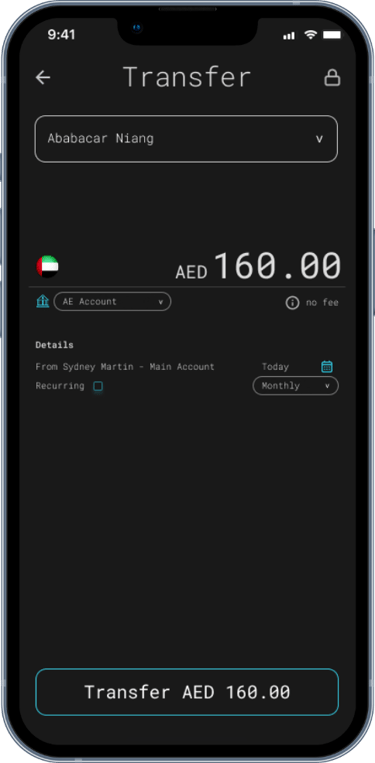
Log in to your account and start a transfer without confirming it. The payment screen may show a more accurate limit than a general help page.
Also check your security controls. Some banks let customers set their own daily payment limit below the institution’s maximum. Raising that limit may require authentication, a waiting period, or contact with support.
New beneficiaries can also be subject to lower limits or delayed activation. Adding the recipient immediately before an urgent payment may therefore create a separate restriction.
Ask the provider whether the displayed allowance is:
the maximum for one transfer;
the amount still available today;
the remaining monthly allowance;
specific to the selected currency;
specific to the selected beneficiary;
conditional on further verification.
Bankeaz’s provider-comparison guidance already identifies transfer limits as one of the practical conditions that can vary between services, alongside payment methods, timing, fees, and exchange rates.
Take a screenshot or record the limit shown shortly before sending, since account conditions and available allowances can change.


Review the amount available for your profile, beneficiary, destination, currency, and chosen funding method.
Check the Limit Inside Your Account


> Confirm Whether Fees And Currency Conversion Affect The Limit
The amount you want the recipient to receive may not be the amount counted against your limit.
Suppose the recipient must receive €10,000. The provider adds a transfer fee and funds the payment from an account in another currency.
You may need enough transfer capacity for:
the principal amount;
the transfer fee;
currency-conversion costs;
intermediary charges;
receiving-side deductions.
Ask whether the limit applies to:
the amount you send;
the total amount debited;
the amount after fees;
the amount delivered to the beneficiary;
the value before or after currency conversion.
This distinction matters when the payment is close to the maximum.
A transfer entered at the exact limit may fail if the fee is added on top. Alternatively, reducing the principal to accommodate the fee may leave the recipient short.
International transfer costs can also include exchange-rate margins, intermediary-bank charges, and receiving-bank fees. These affect the final amount even when they do not change the sender’s formal transfer allowance.
Request a complete estimate showing:
the amount debited;
the currency debited;
the transfer fee;
the exchange rate;
the amount sent;
the delivery currency;
the estimated recipient amount.
This helps you determine whether both the transfer limit and the payment objective can be met.
Check whether the fee is included in the maximum or added above the transfer amount.
Compare the Limit With the Total Debit


> Prepare For Additional Verification
A high-value transfer may require more information even when it remains within the published limit.
The provider may ask for evidence of:
identity;
current address;
income;
source of funds;
purpose of payment;
relationship with the beneficiary;
invoice or contract;
property transaction;
tuition obligation;
tax payment;
gift or family support.
This does not necessarily mean the transfer has been refused. It may mean the institution needs additional information before processing it.
Prepare documents before an urgent payment where possible.
For example:
salary statements for accumulated income;
a bank statement showing where the funds were held;
a sale agreement for property proceeds;
an invoice for a supplier payment;
an admission letter or tuition invoice;
a rental or purchase contract;
a signed gift declaration when appropriate.
Make sure the names, addresses, amounts, and dates are consistent across the payment instructions and supporting records.
Incomplete or inconsistent information can contribute to delays. Bankeaz explains that international transfers may remain pending while payment systems, intermediaries, and compliance checks interact.
Ask support what documents may be required before initiating the payment. Do not wait until the deadline to discover that a manual review is necessary.
Organize identity, source-of-funds, and payment-purpose documents before attempting a high-value transaction.
Prepare Evidence Before a Large Transfer


> Do Not Split The Payment Without Checking The Consequences
When a transfer exceeds the per-transaction limit, sending several smaller payments may appear to be an easy solution.
But splitting the payment does not necessarily solve the problem.
The smaller transfers may still count toward:
a daily limit;
a monthly limit;
a beneficiary limit;
a corridor limit;
a verification threshold;
a cumulative monitoring rule.
Several payments can also create additional fees, repeated currency conversions, extra reconciliation work, and confusion for the recipient.
Do not divide a payment to avoid legitimate verification or reporting requirements.
Instead, ask the provider whether it can:
temporarily increase the limit;
process a scheduled bank transfer;
support a different funding method;
arrange a high-value payment;
accept documents in advance;
explain the expected review time;
confirm whether several transfers are permitted.
Also ask the recipient whether several payments can be matched correctly. A university, property agent, supplier, or authority may expect one exact amount with one specific reference.
When a payment deadline is approaching, build in enough time for verification, weekends, banking cut-off times, and potential intermediary processing. International payments may travel through several institutions, and the route is not always visible to the customer.
A planned transfer is safer than a sequence of last-minute attempts.
Ask about limit increases, review times, payment methods, cut-off times, and receiving conditions before the transfer becomes urgent.
Confirm the Route Before the Deadline


______________________________________________________________________________________________________________________________________________________
> Key Takeaways
✓ Review limits for the selected destination, currency, and payment method.
✓ Confirm the allowance displayed inside your own account.
✓ Check whether a new beneficiary is subject to a waiting period.
✓ Determine whether fees are included in or added above the limit.
✓ Compare the total debit with the amount the recipient must receive.
✓ Prepare identity, source-of-funds, and payment-purpose documents.
✓ Ask about the review process before an urgent high-value transfer.
✓ Do not assume that splitting the payment avoids cumulative limits.
✓ Confirm that the recipient can accept and identify the planned payment structure.
See the amount, currency, fees, and available limit together.
Understand when additional information may be required.
Plan the payment before the sending deadline.
Review Transfer Capacity Before You Confirm
> Conclusion
Checking an international transfer limit involves more than finding one maximum amount.
Identify the per-transaction and cumulative limits. Then review the restrictions linked to your account, beneficiary, destination, currency, and payment method. Confirm whether fees affect the allowance and whether the recipient can accept the full amount.
For a high-value payment, prepare identity, source-of-funds, and payment-purpose documents before sending. When the amount exceeds the available limit, ask the provider about compliant alternatives rather than automatically dividing the transfer.
These actions may reduce failed attempts and preventable delays. However, cross-border payments still depend on separate provider rules, national payment systems, intermediary institutions, and country-specific verification processes. That fragmentation continues to make transfer limits difficult to understand across borders.
> Related reads
Why Your Transfer Stays “Pending” for Days
Explains how missing information, processing stages, and additional checks can interrupt a transfer.
Why International Payments Pass Through So Many Banks
Explains how correspondent and intermediary institutions can affect the route, cost, and visibility of an international payment.
How to Compare International Transfer Providers
Provides broader comparison criteria, including transfer limits, methods, fees, exchange rates, speed, and recipient outcomes.
How to Check the Real Cost of an International Money Transfer
Explains how to compare the full debit, exchange rate, fees, intermediary deductions, and final amount received.
______________________________________________________________________________________________________________________________________________________
by BANKEAZ
On demand banking services for all


______________________________________________________________________________________________________________________________________________________
Learn more about Expat Banking

Global lives deserve simpler banking.





Download the BANKEAZ app for a 100% mobile banking experience. Available on iOS and Android.
Bankeaz is designed for people living between countries. Availability may vary depending on the user’s jurisdiction of residence.
The Bankeaz app is developed by Arcadia, a company currently being incorporated in Switzerland.
Bankeaz does not provide banking services in its own name. Financial services are provided by licensed and regulated partner institutions, in accordance with applicable laws and regulations.
Copyright © 2026 - Arcadia | Bankeaz - All rights reserved
Address
____________________






__________________________________________________________________________________________________________________________________________________


(- - -) - - - - - - - - - -
Zurich - CH
__________________________________________________________________________________________________________________________________________________
___________________________________________________________________________________________________________________________________________________
__________________________________________________________________________________________________________________________________________________
Learn
____________________