
How African Diaspora Senders Can Build an Evidence File for International Money Transfers
EXPAT BANKING
Blog > Expat Banking > How African Diaspora Senders Can Build an Evidence File for International Money Transfers
How African Diaspora Senders Can Build an Evidence File for International Money Transfers
EXPAT BANKING
BANKEAZ | Expats Team
9/12/2026 - 4 min read


You sent money home six months ago. Today, a bank, payment provider, relative, accountant, or other party asks you to confirm exactly what happened.
The transfer itself may be easy to remember. Reconstructing it is harder.
The original quote is in one app. The final receipt is in an email. Your bank statement shows a debit but not the recipient outcome. A relative confirmed receipt in a messaging conversation that is now difficult to find.
For African diaspora senders who make repeated international transfers, these fragments can accumulate quickly.
A family-support ledger can help explain how much support was sent over time. Bankeaz already covers that process separately.
This guide addresses a different problem: how to create a compact evidence file for individual transfers so that you can later demonstrate what you instructed, what you paid, what the provider processed, and what happened if something went wrong.
The easiest time to document a transfer is immediately before and after you send it.
Capture the Transaction While It Is Fresh

> Save the Before-and-After Transaction Evidence
Do not begin your record only after money has moved.
For an important international money transfer, capture the information available before confirming the payment.
Depending on the provider, that may include:
amount you intend to send;
sending currency;
receiving currency;
displayed exchange rate;
visible transfer fees;
expected recipient amount;
estimated delivery date;
beneficiary details;
payment reference or purpose.
Then save the final transaction confirmation separately.
The final record should ideally show the transaction or confirmation number, date, amount paid, currency, beneficiary, provider, status, and any final cost information supplied to you.
This distinction matters because pre-payment information and completed-transaction information are not always identical.
For example, U.S. remittance rules generally require covered providers to disclose information such as fees, exchange rates, expected recipient amounts, and availability dates. Those rules are jurisdiction-specific, but they demonstrate why the provider’s original disclosure and final receipt can both be valuable records.
Do not assume your own country provides identical rights or disclosures. Preserve whatever documentation your provider gives you.
The objective is simple: months later, you should be able to reconstruct the transaction without relying on memory.
A consistent naming system prevents receipts and screenshots from becoming an unsearchable archive.
Give Every Transfer Its Own Evidence ID


> Connect the Documents Without Building Another Budget
Your evidence file should not duplicate your household-support spreadsheet.
Instead, give each significant transfer a unique record.
A practical identifier could combine:
Date + destination + short provider reference
For example:
2026-09-04-Ghana-X72P
Then use that identifier consistently in the folder or filenames relating to that transaction.
You might retain:
provider receipt;
transfer confirmation;
relevant bank debit;
beneficiary instruction;
invoice or payment request when relevant;
recipient confirmation;
provider correspondence if a problem occurred.
Preserve original downloaded documents where possible instead of relying only on screenshots. Screenshots can still be useful for temporary status information that may disappear later.
Avoid renaming files so aggressively that important original information becomes difficult to recognize.
You also do not need to copy full card numbers, passwords, authentication codes, PINs, or unnecessary identity documents into the folder.
The evidence file should answer questions about the payment without becoming a concentrated collection of credentials.
This gives you something different from a financial-support register.
The register answers, “How much have I been sending?”
The evidence file answers, “What exactly happened with this particular payment?”


Proof that money left your account is not always proof of what happened at the destination.
Record the Recipient Outcome Separately

> Add Delivery Evidence When It Matters
A sender’s bank statement can show that money left an account. It may not prove exactly when the recipient received usable funds.
For routine family support, a simple confirmation message may be enough for your own records.
For a larger or more consequential cross-border payment, consider retaining stronger evidence where appropriate.
That might include:
recipient confirmation of receipt;
amount and currency received;
payment status from the provider;
invoice marked paid;
receipt from a school, hospital, landlord, supplier, or other payee.
Only retain what is necessary.
Do not ask relatives to send full bank statements, passwords, PINs, or unrelated financial information merely to complete your records.
If the received amount differs from what you expected, preserve the original evidence rather than immediately changing the recorded figure.
Keep the amount you paid, the amount the provider expected to deliver, and the amount actually confirmed as separate values.
That distinction can help later when examining transfer fees, exchange-rate effects, recipient-bank deductions, or an unexpected shortfall.
It also prevents the evidence from being rewritten after the outcome is known.
When a payment is delayed or disputed, record what happened as events occur.
Turn Problems Into a Timeline


> Build a Dispute-Ready Record When Something Goes Wrong
If an international transfer is delayed, rejected, sent incorrectly, or received for the wrong amount, start an issue log.
Write down:
transaction reference;
expected delivery date;
date the problem became apparent;
what you observed;
when you contacted the provider;
support channel used;
name or identifier of the representative when available;
case or complaint number;
documents submitted;
response received;
next action promised.
Save relevant screenshots before statuses change.
Keep copies of emails and secure-message correspondence.
If you speak to support by telephone, write a short factual note immediately afterward.
This type of chronology can be useful because providers may ask for transaction-specific details when investigating problems.
For example, U.S. CFPB guidance advises consumers reporting transfer problems to keep identifying information, transaction details, supporting documents or screenshots, and notes about who they contacted and what was said.
Again, complaint procedures and deadlines vary by jurisdiction and transfer type. Do not assume that a rule applying to a U.S. remittance transfer applies to a sender in France, Canada, the United Kingdom, or another country.
Your recordkeeping system should therefore preserve the evidence first and let the applicable provider or local rules determine the formal process.
Transfer archives often contain personal and financial information that should not circulate casually.
Protect the Records as Carefully as the Money


> Create a Secure Retention Rule
Keeping everything forever is not automatically good recordkeeping.
Create a simple rule defining what you retain, where you store it, and when you review it.
Use a protected device, reputable encrypted storage, or another secure system appropriate to your situation. Turn on strong account authentication where available.
Separate highly sensitive identity or source-of-funds documents from ordinary transfer receipts when there is no reason for them to sit in the same folder.
Do not place PINs, passwords, security answers, or one-time verification codes in the archive.
Retention periods should reflect the reason you are keeping the documents.
An ordinary family payment may need a different treatment from a property contribution, business transaction, tuition payment, inheritance-related transfer, gift, or payment involved in a dispute.
Tax, reporting, inheritance, gift, and documentation requirements differ by jurisdiction. Do not create a universal “delete after three years” or “keep for seven years” rule without checking what applies to the sender and recipient.
A useful periodic review can ask:
Is this record still needed for a dispute, reporting requirement, financial review, significant purchase, or other legitimate purpose?
If yes, retain it securely.
If not, consider whether continuing to hold sensitive personal information creates more risk than value.
Good recordkeeping is not about collecting the maximum amount of data. It is about retaining the right evidence for the right reason.
A useful archive should make sense even six months after the payment.
Test Whether Your File Can Explain the Transfer


______________________________________________________________________________________________________________________________________________________
> Key Takeaways
✓ Save both pre-payment information and the final transaction confirmation when appropriate.
✓ Give important transfers a consistent identifier so related documents remain connected.
✓ Preserve original receipts and downloadable records rather than relying only on memory or app history.
✓ Keep sender evidence and recipient confirmation separate but linked to the same transaction.
✓ Record amounts paid, expected, and received as separate values when they differ.
✓ Create a factual timeline immediately when a transfer problem appears.
✓ Keep support case numbers, correspondence, and relevant screenshots together.
✓ Do not store passwords, PINs, authentication codes, or unnecessary identity information with transfer records.
✓ Apply retention rules according to the purpose and significance of the payment rather than keeping everything indefinitely.
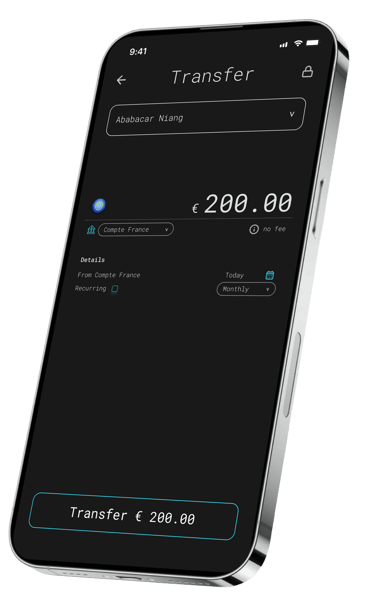
A transfer record becomes easier to understand when amount, currency, beneficiary, purpose, and status can be reviewed together.
Keep the Transfer Context Visible**
> Conclusion
For African diaspora senders, better transfer records do not require turning every family payment into an accounting project.
Start with the individual transaction.
Preserve what you were told before paying, save the final receipt, link relevant sender and recipient evidence, and create a chronological record when something goes wrong. Organize those files consistently and protect them from unnecessary exposure.
This approach can make an older money transfer easier to explain when a provider, bank, recipient, accountant, or other legitimate party asks what happened.
It can also reduce the need to reconstruct an important payment from scattered emails, messaging conversations, bank statements, and memory.
These actions can reduce part of the documentary friction surrounding cross-border payments. They cannot remove the wider complexity: international transfers still pass through different providers, currencies, intermediaries, compliance processes, and country-specific legal frameworks. Even well-organized senders may therefore face additional questions when money moves across borders.
> Related reads
Why Remittances Alone Cannot Build Diaspora Wealth
Explores why sending money is only one part of the wider financial relationship between diaspora households and relatives across borders.
Why Transfer Fees Change to Senegal
Explains why the cost of sending money along the same corridor can vary between transactions.
How African Diaspora Families Can Track Financial Support Across Countries
Useful for readers who want to move from individual transaction evidence to a household-level record of family support.
How to Prepare Proof of Funds Before Sending Money
Explains how to organize evidence about the availability and origin of funds when a provider requests verification before a payment.
______________________________________________________________________________________________________________________________________________________
by BANKEAZ
On demand banking services for all


______________________________________________________________________________________________________________________________________________________
Learn more about Expat Banking

Global lives deserve simpler banking.





Download the BANKEAZ app for a 100% mobile banking experience. Available on iOS and Android - public testing by invitation.
Bankeaz is designed for people living between countries. Availability may vary depending on the user’s jurisdiction of residence.
The Bankeaz app is developed by Arcadia, a company currently being incorporated in Switzerland.
Bankeaz does not provide banking services in its own name. Financial services are provided by licensed and regulated partner institutions, in accordance with applicable laws and regulations.
Copyright © 2026 - Arcadia | Bankeaz - All rights reserved
Address
____________________






__________________________________________________________________________________________________________________________________________________


(- - -) - - - - - - - - - -
Zurich - CH
__________________________________________________________________________________________________________________________________________________
___________________________________________________________________________________________________________________________________________________
__________________________________________________________________________________________________________________________________________________
Learn
____________________