
How African Diaspora Families Can Track Financial Support Across Countries
EXPAT BANKING
Blog > Expat Banking > How African Diaspora Families Can Track Financial Support Across Countries
How African Diaspora Families Can Track Financial Support Across Countries
EXPAT BANKING
BANKEAZ | Expats Team
8/29/2026 - 4 min read


You send €250 to help a parent with household expenses. Two weeks later, you send another amount for medical costs. A sibling contributes separately. School fees are paid through another provider, and an emergency transfer goes to a mobile wallet.
By the end of the month, everyone remembers helping—but nobody has a complete picture of how much family support moved, what each payment covered, or how much actually reached its destination.
For African diaspora households, a remittance is often part of a wider family financial system rather than an isolated transaction. The practical challenge is therefore not only how to send money abroad. It is how to keep reliable records across people, currencies, payment methods, and countries.
A simple tracking routine can improve visibility without turning family relationships into accounting exercises. The goal is to know what was planned, what was sent, what arrived, and what still needs attention.
Bring transfers, cash support, bill payments, and other contributions into one simple register.
Start With One Family-Support Record


> Build One Remittance and Family-Support Register
The first step is to stop treating each money transfer receipt as the complete record.
Create one spreadsheet, budgeting file, or other secure record covering all regular financial support. It does not need advanced formulas. What matters is that the family uses the same basic fields consistently.
For each contribution, record:
date sent;
sender;
recipient or household;
recipient country;
purpose;
amount sent and original currency;
visible transfer fee;
payment or transfer method;
transaction reference;
expected amount to be received;
actual amount received, once confirmed;
date received;
status or notes.
Keep the original currency rather than immediately converting everything into euros, pounds, dollars, or another reference currency. You will need the original amount later if you want to understand the transfer accurately.
The “purpose” field is especially useful. “Family support” is often too broad. Instead, use descriptions such as monthly household contribution, rent, school fees, healthcare, home repair, business contribution, celebration, or emergency.
If several family members contribute, use the same register when appropriate—or agree on a person responsible for consolidating the totals. The objective is not to monitor one another. It is to prevent the family’s financial commitments from disappearing across messages, apps, bank statements, and memory.
Separate ordinary monthly support from planned goals and unexpected requests.
Give Every Payment a Purpose


> Separate Recurring, Planned, and Emergency Support
A useful tracking system should show not only how much the family sends but why the money is moving.
Start with three broad categories.
Recurring support covers predictable commitments such as a parent’s monthly household contribution, rent, utilities, medication, or regular school costs.
Planned support covers larger expenses that can be anticipated: tuition, construction work, ceremonies, travel, annual insurance payments, equipment, or a family project.
Emergency support covers events that could not reasonably be scheduled, such as an urgent medical bill or essential repair.
This distinction can change financial conversations.
Suppose a household sends the equivalent of €6,000 during a year. That number alone tells you very little. If €3,600 was recurring support, €1,500 funded planned education costs, and €900 covered emergencies, the family now has information it can use for the following year.
It may decide to reserve money monthly for school costs instead of handling one large payment later. It may establish a small emergency fund. It may also discover that several people are paying separately toward the same recurring obligation.
The purpose is not to limit generosity. It is to make commitments visible before they become pressure on the sender or uncertainty for the recipient.


Complete the record only after confirming the recipient’s usable amount.
Check What Actually Arrived


> Reconcile the Amount Sent With the Amount Received
Your bank statement may show that 300 was debited from your account. That does not automatically tell you what your relative received.
For each significant international money transfer, compare the sender’s record with the recipient’s confirmation.
Ask for three simple pieces of information when appropriate:
the amount received;
the currency received;
the date the funds became available.
You do not need a relative’s banking password, PIN, full account statement, or other unnecessary personal information. A confirmation message or receipt may be enough for the household’s tracking purpose.
Then compare the transfer with your own record.
If you paid 300 plus a 4 transfer fee while the recipient received the equivalent of 286 in their local currency, note both sides rather than replacing one number with the other.
This helps expose the real transfer cost more clearly. The difference may involve the provider’s fee, exchange rate, receiving method, or other parts of the payment route.
Do not assume every difference represents a hidden charge. The important action is to record what you can verify and investigate unexpected gaps when they matter.
Over several months, these records can also make provider comparisons more meaningful because you are comparing actual household outcomes rather than advertised transfer prices alone.
Preserve what was actually sent and received before creating a common planning view.
Keep the Original Currency


> Use One Reference Currency Without Losing Original Values
Families working across several countries may struggle to answer a simple question: “How much did we support the family this month?”
Adding 500 euros, 2,000 Canadian dollars, and several payments in an African local currency produces no meaningful total.
Choose one reference currency for household planning. It might be the currency in which the principal sender earns income or the currency most family members understand.
Then maintain two figures:
Original amount: the amount actually transferred in the transaction currency.
Reference amount: an approximate converted value used for monthly or annual comparisons.
Never overwrite the original.
For completed transfers, use the transaction documentation or rate applied by the provider when that information is available. For forward planning, you may use a current indicative rate, but label it as an estimate.
That distinction matters because planning and historical reconciliation serve different purposes.
A reference currency can help you compare monthly family obligations, calculate how much of your income is committed to cross-border support, and distinguish increases in actual support from changes caused mainly by currency movements.
It can also help family members discuss future commitments using one common baseline while still respecting the currencies in which the money is earned and spent.
Review obligations regularly instead of rebuilding the picture during the next emergency.
Turn Records Into a Monthly Routine


> Create a Monthly Review and Record-Retention Rule
Tracking becomes useful when somebody actually reviews the information.
Choose a regular date—such as the final weekend of the month—and check five questions:
What recurring support was due?
What was actually sent?
What did recipients confirm receiving?
Were there unexpected fees, delays, or currency differences?
What commitments are coming next month?
If several people support the same household, the review can also identify duplicate payments or responsibilities that nobody realized another person had already covered.
Agree on basic record-retention rules. Keep transfer confirmations, relevant receipts, and explanations for significant family payments in an organized folder when there is a practical reason to retain them.
Do not store passwords, PINs, security codes, or unnecessary identity documents in a shared support spreadsheet.
For larger or unusual payments, write down the purpose while everyone still remembers it. That can make the transaction easier to understand later if a bank or payment provider requests clarification.
Tax, gift, inheritance, benefit, and financial-reporting rules can differ between countries. If family support could create a legal or reporting obligation in either the sender’s or recipient’s jurisdiction, check the applicable local requirements rather than assuming the treatment is the same everywhere.
Finally, use the review to plan—not merely to document the past. A recurring family obligation should ideally appear in the next month’s budget before the transfer becomes urgent.
Use your records to prepare next month’s support before new requests arrive.
Review the Whole Family Picture


______________________________________________________________________________________________________________________________________________________
> Key Takeaways
✓ Put transfers, bill payments, cash contributions, and other family support into one secure register.
✓ Record both the original amount sent and the amount the recipient confirms receiving.
✓ Separate recurring obligations from planned expenses and emergencies.
✓ Keep original currencies and use a separate reference currency for household comparisons.
✓ Track transfer fees and exchange-rate effects when they materially change the recipient’s outcome.
✓ Give larger or unusual payments a clear purpose in your records.
✓ Review family support monthly and include predictable commitments in the next budget.
✓ Keep useful receipts, but never share or store passwords, PINs, or unnecessary security information.
Review transfers alongside your wider financial picture.
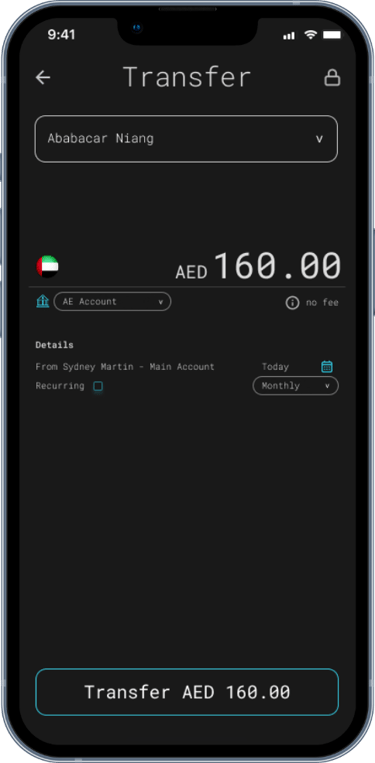
Bankeaz includes Transfers in its cross-country product direction.
Bankeaz access remains limited; keep your own family-support records.
Put Cross-Border Transfers in Context
> Conclusion
Family support across countries becomes difficult to understand when every payment exists in a different bank statement, transfer app, message thread, currency, or relative’s memory.
A simple system can improve that picture. Create one support register, separate recurring commitments from planned and emergency help, confirm what recipients actually receive, preserve original currencies, and review the complete record each month.
The objective is not to turn family relationships into spreadsheets. It is to make financial responsibilities visible enough to plan them.
These actions can reduce some of the everyday friction involved in diaspora family finance. Yet cross-border payments still move through country-specific institutions, currencies, payment networks, and compliance processes. That underlying fragmentation can continue to create complexity even for families with well-organized records.
> Related reads
Why Diaspora Family Finances Stay Fragmented
Useful background on why one family financial life becomes distributed across accounts, currencies, wallets, providers, and countries.
Why Remittances Alone Cannot Build Diaspora Wealth
Explores the difference between sending recurring support and building longer-term family financial resilience.
How to Compare International Transfer Providers
Useful when families want to evaluate costs, receiving methods, reliability, tracking, and transfer-provider characteristics.
How to Bank Across Multiple Countries
Provides a broader framework for organizing accounts, currencies, and financial activity across jurisdictions.
______________________________________________________________________________________________________________________________________________________
by BANKEAZ
On demand banking services for all


______________________________________________________________________________________________________________________________________________________
Learn more about Expat Banking

Global lives deserve simpler banking.





Download the BANKEAZ app for a 100% mobile banking experience. Available on iOS and Android - public testing by invitation.
Bankeaz is designed for people living between countries. Availability may vary depending on the user’s jurisdiction of residence.
The Bankeaz app is developed by Arcadia, a company currently being incorporated in Switzerland.
Bankeaz does not provide banking services in its own name. Financial services are provided by licensed and regulated partner institutions, in accordance with applicable laws and regulations.
Copyright © 2026 - Arcadia | Bankeaz - All rights reserved
Address
____________________






__________________________________________________________________________________________________________________________________________________


(- - -) - - - - - - - - - -
Zurich - CH
__________________________________________________________________________________________________________________________________________________
___________________________________________________________________________________________________________________________________________________
__________________________________________________________________________________________________________________________________________________
Learn
____________________