
How to Prepare Proof of Funds Before Sending Money
EXPAT BANKING
Blog > Expat Banking > How to Prepare Proof of Funds Before Sending Money
How to Prepare Proof of Funds Before Sending Money
EXPAT BANKING
BANKEAZ | Expats Team
8/08/2026 - 4 min read


You may have enough money in your account and still be asked to provide documents before a transfer can proceed.
This often happens when the amount is large, the beneficiary is new, the destination is abroad, or the transaction differs from your normal activity. The institution may want evidence that the funds are available and an explanation of how they were obtained.
These checks can involve two related ideas: proof of funds and source of funds.
Proof of funds generally shows that the money is available. Source-of-funds evidence explains where it came from, such as salary, savings, a property sale, an inheritance, investment proceeds, or business income.
Bankeaz already notes that internationally mobile customers may need to provide identity, address, employment, tax, and source-of-funds information repeatedly across institutions.
Preparing a clear file before sending can reduce avoidable back-and-forth when a transfer is reviewed.
Show both that the money is currently available and how it entered your financial history.
Separate Availability From Origin


> Understand What The Institution May Be Asking For
Before uploading documents, clarify the request.
“Proof of funds” is sometimes used as a broad phrase, but the reviewer may actually need one or more of the following:
evidence of your current balance;
evidence that the account belongs to you;
the origin of a specific amount;
the purpose of the transfer;
evidence of your relationship with the beneficiary;
an explanation of recent large credits;
a history showing how savings accumulated.
Ask what period the documents should cover and whether every page is required.
A recent account statement may show that the money exists. However, if the balance appeared after one unusually large deposit, the institution may also ask what created that deposit.
For example, a statement showing €80,000 may prove availability. It does not automatically show whether the amount came from employment, an investment sale, a loan, a gift, or a property transaction.
Also ask whether the provider accepts:
downloaded digital statements;
screenshots;
certified copies;
documents in another language;
password-protected files;
records from foreign banks;
several documents combined into one file.
Preparing the wrong type of evidence can create more delay than preparing a smaller but well-matched set.
Confirm whether the reviewer needs balance evidence, origin evidence, transfer-purpose documents, or all three.
Clarify the Exact Request


> Match The Documents To The Source Of The Money
The strongest documents depend on how the funds were obtained.
Salary and accumulated savings
Useful records may include:
recent bank statements;
payslips;
employment contract;
annual income statement;
tax return;
savings-account history.
The evidence should show a reasonable connection between income and the balance being transferred.
Property sale
You may need:
signed sale agreement;
completion statement;
lawyer or notary record;
bank statement showing receipt of the proceeds;
evidence of previous ownership.
Investment proceeds
Relevant documents may include:
brokerage statements;
trade confirmations;
portfolio statements;
redemption notices;
bank records showing the proceeds entering your account.
Inheritance
Possible evidence includes:
probate or estate documents;
a will or inheritance certificate;
executor or lawyer correspondence;
bank records showing receipt.
Gift or family support
The institution may request:
a signed gift letter;
the donor’s identification;
evidence of the donor’s source of funds;
bank records showing the transfer;
an explanation of the relationship.
Business income
Useful documents may include:
invoices;
contracts;
company accounts;
tax filings;
payment records;
business-bank statements.
Use documents that reflect the actual source. Do not select a more convenient explanation simply because the supporting files are easier to find.


Select records that explain the specific funds being transferred rather than submitting unrelated financial documents.
Match Each Amount to Its Origin

> Build A Clear Document Chain
A reviewer should be able to follow the money without guessing.
Suppose you sold investments and then moved the proceeds from a brokerage account to a savings account before initiating an international transfer.
A clear chain might include:
an investment statement showing ownership;
a trade confirmation showing the sale;
a brokerage statement showing the resulting cash balance;
a bank statement showing receipt from the brokerage;
a current statement showing the funds remain available;
the invoice or contract explaining the planned transfer.
The names, dates, amounts, account identifiers, and currencies should align.
Small differences may be understandable. Fees, taxes, partial transfers, or currency conversion can change the amount. When they do, add a brief explanation rather than leaving the reviewer to infer what happened.
If the money moved through several accounts, include the relevant records for each stage.
Avoid sending only the first and last documents when the middle movement is important. A property-sale agreement and a current balance may not be enough if the path between them is unclear.
Bankeaz notes that inconsistent information across documents and financial profiles can lead to additional requests or delayed transactions.
Create a simple index listing each file and what it proves.
Connect the original event, each account movement, the current balance, and the planned payment.
Make the Money Trail Easy to Follow


> Check Document Quality And Consistency
Before submitting, review the documents as though you were seeing them for the first time.
Confirm that each record clearly shows:
your legal name;
the institution name;
the account identifier;
the statement or transaction date;
the relevant amount;
the currency;
the transaction description;
all required pages.
Use recent statements when requested.
Do not crop away headers, account information, page numbers, or transaction descriptions unless the provider explicitly permits redaction. A heavily edited screenshot can be harder to verify than a complete downloaded statement.
Check that your name matches the profile held by the transfer provider. Differences involving middle names, married names, transliteration, or company names may require explanation.
Also review your address, employment information, residency, and tax details. Internationally mobile people frequently have records issued in different countries, and valid documents may still fail automated checks when formats or personal details do not align.
Where a document is not in an accepted language, ask whether a translation is required and whether it must be certified.
Use descriptive file names, such as:
01_Current_Bank_Statement_July_2026.pdf
02_Property_Sale_Agreement.pdf
03_Sale_Proceeds_Credit.pdf
Do not alter original documents or create misleading files.
Check names, dates, currencies, amounts, account details, page completeness, and document readability.
Review the File Before the Bank Does


> Prepare A Short Explanation And Send Securely
Documents often become easier to understand when accompanied by a concise explanation.
Your note can state:
the amount you intend to send;
the currency;
the beneficiary;
the purpose of the transfer;
the origin of the funds;
the period over which the money accumulated;
the documents included;
any difference between the original amount and current balance.
For example:
“The funds come from the sale of my apartment completed on 15 June 2026. The proceeds were credited to my account on 18 June 2026. I am transferring part of the balance to pay the attached property-purchase invoice.”
Keep the explanation factual. Do not provide a long personal story unless it is needed.
Submit documents only through the institution’s official secure channel. Avoid sending full bank statements, identity documents, or tax records through unverified email addresses or messaging apps.
Before uploading, verify:
the website or application address;
the name of the requesting institution;
the request reference;
the permitted file types;
the file-size limit;
whether passwords should be removed;
the expected response time.
Keep copies of everything submitted and record the submission date.
Banks may still ask follow-up questions, especially when an international payment is unusual or passes through several institutions. International transfers can involve multiple banks, each applying its own checks.
Respond accurately and consistently rather than sending a new explanation that contradicts the original one.
Combine a short explanation with organized evidence of the source, movement, current availability, and intended use of the funds.
Create One Complete Verification File


______________________________________________________________________________________________________________________________________________________
> Key Takeaways
✓ Find the cut-off time for the exact transfer type you plan to use.
✓ Clarify whether the institution needs proof of availability, source of funds, transfer-purpose evidence, or all three.
✓ Use documents that match the actual origin of the money.
✓ Show the movement of funds between accounts when relevant.
✓ Make sure names, dates, amounts, currencies, and account details align.
✓ Explain fees, partial movements, or currency differences briefly.
✓ Use recent, complete, and readable records.
✓ Avoid excessive cropping or unsupported document editing.
✓ Add a concise explanation connecting the funds to the planned transfer.
✓ Submit sensitive records only through an official secure channel.
✓ Keep a copy of every document and message provided.
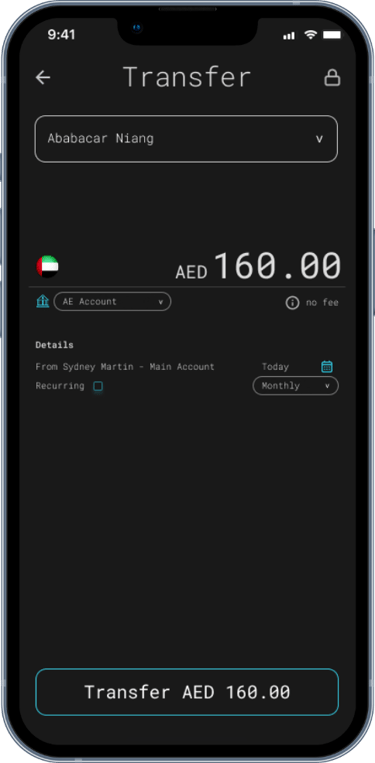
Review the amount, purpose, and verification status.
Keep relevant documents connected to the payment.
Understand what may be required before confirming.
Prepare the Transfer & Supporting Evidence Together
> Conclusion
Preparing proof of funds begins with understanding what the institution needs to verify.
A current bank statement may show that the money is available, but it may not explain where the money came from. Match the evidence to the real source, whether that is salary, savings, property, investments, inheritance, a gift, or business income.
Then build a clear chain showing how the money moved into the account from which it will be sent. Review every document for consistent names, dates, amounts, currencies, and account information. Add a short factual explanation and submit the file through an official secure channel.
These actions may reduce part of the friction involved in a large or unusual transfer. However, international banking still depends on fragmented verification practices, institution-specific risk controls, multiple intermediaries, and country-specific documentation standards. As a result, the same financial evidence may be accepted by one institution and questioned again by another.
> Related reads
Why Expats Must Provide So Many Documents
Explains why internationally mobile customers may face repeated requests for identity, address, employment, and financial records.
Why Transfers Get Repeatedly Reviewed
Explains how amount changes, new recipients, international routes, and separate institutional checks can trigger further review.
How to Prepare for Verification
Provides broader guidance for preparing identity and supporting information before accessing financial services or sending money internationally.
How to Avoid Verification Delays
Explains how complete and current documents can reduce avoidable back-and-forth during verification.
______________________________________________________________________________________________________________________________________________________
by BANKEAZ
On demand banking services for all


______________________________________________________________________________________________________________________________________________________
Learn more about Expat Banking

Global lives deserve simpler banking.





Download the BANKEAZ app for a 100% mobile banking experience. Available on iOS and Android.
Bankeaz is designed for people living between countries. Availability may vary depending on the user’s jurisdiction of residence.
The Bankeaz app is developed by Arcadia, a company currently being incorporated in Switzerland.
Bankeaz does not provide banking services in its own name. Financial services are provided by licensed and regulated partner institutions, in accordance with applicable laws and regulations.
Copyright © 2026 - Arcadia | Bankeaz - All rights reserved
Address
____________________






__________________________________________________________________________________________________________________________________________________


(- - -) - - - - - - - - - -
Zurich - CH
__________________________________________________________________________________________________________________________________________________
___________________________________________________________________________________________________________________________________________________
__________________________________________________________________________________________________________________________________________________
Learn
____________________