
How African Diaspora Senders Can Build a Clear Record for Every International Money Transfer
EXPAT BANKING
Blog > Expat Banking > How African Diaspora Senders Can Build a Clear Record for Every International Money Transfer
How African Diaspora Senders Can Build a Clear Record for Every International Money Transfer
EXPAT BANKING
BANKEAZ | Expats Team
9/05/2026 - 4 min read


You sent €300 to a relative three months ago. Today, you need to know how much arrived in local currency, which provider you used, whether a fee was deducted, and what the transfer was meant to cover.
Your banking app may show only part of that story.
For African diaspora senders supporting relatives or managing obligations across countries, transfers can accumulate quickly. One month may include household support. Another may involve school fees, medical expenses, a contribution to a family event, or money sent to your own account abroad.
Without consistent records, an international money transfer that was obvious on the day can become difficult to reconstruct later.
A useful record does not need to become a complicated accounting system. The objective is simpler: make each transfer understandable from beginning to end.
The five actions below can help.
Before creating folders or spreadsheets, define the information you want to be able to recover for every transfer.
Decide What One Complete Record Means


> Create One Log Entry for Every Transfer
Start with a simple transaction log.
You can use a spreadsheet, secure notes system, financial-management tool, or another format you can maintain consistently. The best system is one you will actually update.
For every money transfer, record:
date initiated;
sender account or provider;
recipient;
destination country;
purpose;
amount sent;
sending currency;
transaction or confirmation reference;
expected delivery date;
final status.
Add a category such as “monthly support,” “tuition,” “medical,” “property,” “business,” or “own account” when it helps you understand patterns later.
Avoid vague descriptions such as “family” if several transfers go to the same household. “September household support” or “2026 school term 1” provides more useful context.
Consistency matters especially when you send money abroad through several banks, remittance companies, mobile-wallet services, or other payment routes. Provider histories may remain separate, while your own log gives you one chronological view.
The log should answer a basic question without requiring detective work: What was this payment, and where can I find the evidence behind it?
Connect the payment date, purpose, provider reference, and recipient in one record.
Give Every Transfer a Traceable Identity


> Save the Evidence, Not Only the App Status
A “completed” label is useful, but it is not the complete transfer record.
After submitting an international transfer, save the provider’s confirmation or receipt in the original downloadable format when one is available.
Depending on the payment, your evidence file may include:
transfer confirmation;
transaction number;
sending-account debit;
beneficiary details used;
payment reference;
invoice, school notice, medical request, or other document explaining the purpose;
relevant correspondence;
recipient confirmation.
Use descriptive filenames.
For example:
2026-09-04_Mother_HouseholdSupport_TransferReceipt.pdf
or
2026-09-04_University_Tuition_Invoice.pdf
The goal is not to store every message you exchanged. Save the records that explain who was paid, why, how much was sent, and what happened afterward.
Where a provider shows important information only temporarily inside an app, retain an appropriate copy for your personal records, subject to the provider’s terms and applicable privacy requirements.
Keep sensitive banking information in a secure location rather than an open family chat or unprotected shared folder.


Keep the original instruction, transaction confirmation, and recipient outcome connected.
Build the Evidence Chain


> Record What the Transfer Actually Cost
The amount typed into the transfer form is not always the full financial story.
Record the cost alongside the transaction.
Useful fields include:
amount debited from you;
visible transfer fees;
sending currency;
exchange rate or FX rate shown by the provider;
destination currency;
amount the provider says should arrive;
amount the recipient confirms receiving;
any known receiving or intermediary deductions.
This creates a better picture of the real transfer cost.
Suppose you intended to send the equivalent of €400. Your records might show a €5 fee, a particular exchange rate, and a final recipient amount in naira, cedis, shillings, CFA francs, rand, or another destination currency.
When that information is stored transfer by transfer, you can later compare providers based on outcomes rather than memory.
Do not assume that every difference between “sent” and “received” is a hidden charge. Currency conversion, fee structures, recipient-side charges, and payment routes can differ. Record what you can verify and label anything uncertain rather than guessing.
Over several months, this history can make recurring cross-border payments easier to review.
Record the debit, exchange rate, stated fees, and confirmed amount received.
Compare the Outcome, Not Just the Sending Fee


> Close the Record With Recipient Confirmation
A transfer record should not stop when the sender receives a confirmation screen.
Where appropriate, record whether the recipient actually received the money.
For family support, confirmation might simply be a message stating the amount received and date.
For tuition, rent, invoices, or other formal obligations, you may need stronger evidence that the payment was credited or allocated correctly.
Record:
date received;
amount received;
recipient currency;
any discrepancy;
whether the intended obligation was settled;
follow-up required.
This is especially useful when a sender manages several transfers for different relatives.
Imagine sending similar amounts to two family members within the same week. Months later, the provider receipts may look almost identical. The combination of purpose, recipient, reference, and confirmation makes them much easier to distinguish.
Recipient confirmation can also expose problems while the transfer is still recent. If less money arrived than expected, or nothing has arrived, you already have the transaction reference and supporting details ready for follow-up.
Do not mark the record complete until you know the recipient outcome.
Finish the Transfer Story


> Create a Simple System for Exceptions and Long-Term Review
The most valuable records often concern transfers that did not proceed normally.
If a payment is delayed, rejected, returned, duplicated, questioned, or received for a different amount, add an exception note to the same transaction record.
Include:
date the problem was noticed;
provider contacted;
case or support number;
explanation provided;
documents submitted;
next action;
refund or return amount where relevant;
date the issue was resolved.
Do not overwrite the original amount or status. Preserve the history so you can see what changed.
Then review the complete record periodically.
A quarterly or six-month review can reveal:
how much you transferred;
which purposes recur;
which providers you used;
how exchange rates and fees varied;
which transfers required follow-up;
whether the same documentation problem keeps appearing.
Apply sensible data security. Avoid storing passwords, authentication codes, card security numbers, or unnecessary copies of identity documents inside your transfer log.
Retention requirements can vary depending on the country, tax situation, payment purpose, provider, and legal context. If a transfer relates to taxes, property, business, inheritance, immigration, or another formal obligation, check the applicable document-retention requirements rather than relying on a generic timetable.
The purpose is useful evidence, not endless data accumulation.
A short periodic review can reveal recurring costs, incomplete transfers, and missing evidence.
Review Before Records Become History


______________________________________________________________________________________________________________________________________________________
> Key Takeaways
✓ Create one consistent entry for every international transfer.
✓ Record the recipient, purpose, amount, currencies, date, provider, and transaction reference.
✓ Save the original transfer confirmation together with relevant supporting documents.
✓ Use descriptive filenames so evidence can be matched to the correct payment quickly.
✓ Record fees, exchange rates, total debit, and confirmed recipient amount when available.
✓ Ask the recipient to confirm what arrived rather than relying only on the sender-side status.
✓ Keep delays, returns, discrepancies, and support cases attached to the original transaction.
✓ Review several months of transfers periodically to identify recurring costs and incomplete records.
✓ Protect financial records and avoid storing passwords or authentication codes with them.
✓ Check specific legal or tax retention requirements when a payment relates to a formal obligation.
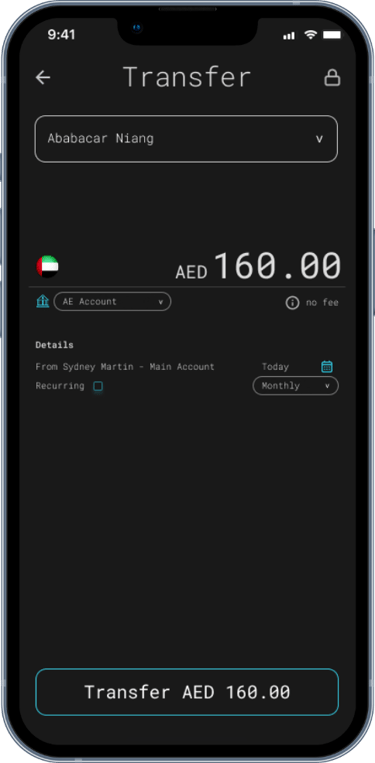
See the recipient, amount, currency, and transfer context together.
Use a structured view as an organizational aid when reviewing cross-border activity.
Keep original provider documentation whenever formal proof is required.
Keep Transfer Details Easier to Review
> Conclusion
A useful transfer history is more than a list of bank debits.
For African diaspora senders, the strongest record connects five things: the reason for the payment, the amount sent, the supporting evidence, the real cost, and the final recipient outcome.
Start with a consistent log. Save the receipt and related documents. Record fees and currency conversion. Confirm what arrived. When something goes wrong, add the entire follow-up history to the original transaction instead of leaving it scattered across apps and messages.
These habits can make repeated international money transfers easier to understand, compare, and explain.
Good records can reduce some of the administrative friction surrounding cross-border payments. They cannot remove all of it: international financial activity still moves through different providers, currencies, intermediary institutions, payment networks, and country-specific processes, which can make the complete transaction history difficult to see from one system alone.
> Related reads
Why €1000 can become €947 in international transfers
Explains how conversion margins and intermediary deductions can reduce the amount received.
Why Remittances Alone Cannot Build Diaspora Wealth
Explores the difference between sending recurring support and building longer-term family financial resilience.
How African Diaspora Families Can Organize Regular and Emergency Remittances
Shows how families can separate predictable support from genuine emergency transfers.
How to Use Payment References to Avoid Transfer Delays
Explains how to identify, enter, verify, and retain payment references so transfers can be matched correctly.
______________________________________________________________________________________________________________________________________________________
by BANKEAZ
On demand banking services for all


______________________________________________________________________________________________________________________________________________________
Learn more about Expat Banking

Global lives deserve simpler banking.




Download the BANKEAZ app for a 100% mobile banking experience. Available on iOS and Android - public testing by invitation.
Bankeaz is designed for people living between countries. Availability may vary depending on the user’s jurisdiction of residence.
The Bankeaz app is developed by Arcadia, a company currently being incorporated in Switzerland.
Bankeaz does not provide banking services in its own name. Financial services are provided by licensed and regulated partner institutions, in accordance with applicable laws and regulations.
Copyright © 2026 - Arcadia | Bankeaz - All rights reserved
Address
____________________






__________________________________________________________________________________________________________________________________________________


(- - -) - - - - - - - - - -
Zurich - CH
__________________________________________________________________________________________________________________________________________________
___________________________________________________________________________________________________________________________________________________
__________________________________________________________________________________________________________________________________________________
Learn
____________________