
How African Diaspora Families Can Organize Regular and Emergency Remittances
EXPAT BANKING
Blog > Expat Banking > How African Diaspora Families Can Organize Regular and Emergency Remittances
How African Diaspora Families Can Organize Regular and Emergency Remittances
EXPAT BANKING
BANKEAZ | Expats Team
8/22/2026 - 4 min read


A parent needs a fixed amount for household expenses every month. School fees arrive twice a year. Then, without warning, a medical bill, funeral contribution or urgent home repair creates another request.
For many African diaspora households, these payments all come through the same channel: another remittance from the person earning abroad.
That can make family support unpredictable even when the sender has a stable income.
Remittances are an important financial lifeline. IFAD estimates that around 200 million migrants send money home to more than 800 million family members worldwide, with funds commonly supporting healthcare, education and everyday needs. But supporting relatives regularly does not mean every request has to be financed in the same way.
A practical approach is to create two separate tracks: one for regular remittances and another for genuine emergencies. The goal is not to reduce family solidarity. It is to make that solidarity more sustainable.
This guide explains five actions families can take today.
Look at the last six to twelve months of family support and separate predictable expenses from exceptional requests.
Identify What Is Actually Regular


> Turn Repeated Requests Into a Regular Remittance Budget
The first step is to stop treating predictable costs as surprises.
Review the money sent during the previous six or twelve months. Write down the purpose, amount and frequency of each transfer.
You may find several categories:
food or household contributions every month;
rent or utilities;
medication purchased regularly;
tuition or school expenses at known points in the year;
support for an elderly parent;
contributions to a dependent child;
recurring community or family obligations.
If the same expense appears repeatedly, it belongs in the regular-support plan.
For example, suppose a household sends €250 each month for living expenses and approximately €600 twice a year for school costs. Instead of waiting for each request, the sender can calculate an annual family-support budget and reserve the appropriate amount from monthly income.
That changes the decision from “Can I afford to send this today?” to “Is this already part of the plan?”
Regularity also creates room to compare transfer fees, exchange rates and delivery options rather than choosing whatever service appears fastest under pressure.
Money reserved for emergencies should not quietly become part of the normal monthly transfer.
Give the Emergency Fund a Separate Job


> Create a Separate Emergency Remittance Reserve
Once regular support has its own budget, create a second pool for genuine emergencies.
The amount will depend on income, family circumstances and the risks relatives face. There is no universal figure.
More important is the separation.
An emergency reserve might be used for:
urgent medical treatment;
a serious accident;
temporary displacement;
essential repairs after severe damage;
a death or funeral obligation;
another event that cannot reasonably wait for the next regular transfer.
It should not automatically cover expenses that are simply inconvenient, late or foreseeable.
IFAD has specifically highlighted emergency savings as one way remittance-receiving families can improve resilience to financial shocks.
One practical method is to contribute a fixed amount to the reserve whenever you receive income. Even a small recurring contribution makes future emergencies less dependent on credit cards, overdrafts or borrowing.
Where possible, keep the reserve liquid and accessible enough to use quickly. Avoid putting emergency money somewhere that requires a long withdrawal process or exposes it unnecessarily to investment risk.


A family rule can reduce confusion when several requests arrive at the same time.
Agree on What Counts as Urgent


> Define Emergency Rules Before Someone Needs Money
“Emergency” can mean different things to different relatives.
Without a shared definition, the emergency reserve can quickly become another general family account.
Agree on simple questions such as:
Is the need time-sensitive?
Would waiting several days materially worsen the situation?
Is the expense essential?
Medical care and temporary shelter are different from a purchase that can be postponed.
Was the cost foreseeable?
Annual tuition should normally be planned. An unexpected hospitalization cannot be.
Who else is responsible?
If several siblings or relatives contribute, decide whether one person pays first or whether the cost is divided.
Is documentation appropriate?
For a large hospital, school or repair payment, an invoice or estimate can help everyone understand the amount required. This should be handled respectfully rather than as a presumption of dishonesty.
The objective is not to build bureaucracy around family help. It is to prevent urgency from becoming the only financial decision rule.
Transfer fees are only one part of the cost. Currency conversion and receiving charges can also change the outcome.
Compare What the Recipient Will Actually Receive

> Build Cost and Speed Into the Transfer Decision
Regular transfers and emergency transfers may justify different choices.
For a scheduled international money transfer, you often have more time to compare providers, transfer methods and the exchange rate offered.
For an emergency, speed may matter more.
But even urgent transfers should be assessed using the amount the relative will actually receive.
Check:
the sending fee;
the exchange or FX rate;
any visible receiving charge;
expected delivery time;
payment and collection method;
transfer limits;
whether additional verification could delay a larger or unusual transaction.
The World Bank maintains a remittance-price database covering hundreds of country corridors specifically because the cost of sending relatively small international payments varies by route and provider.
IFAD reports that fees and currency-conversion costs remain meaningful components of remittance expense.
For regular support, compare providers periodically rather than automatically repeating an old habit. For an emergency, keep at least one alternative transfer route available in case the usual option is delayed.
That is a more useful measure of real transfer cost than focusing on a single advertised fee.
When several relatives can contribute, decide roles before one sender becomes the automatic source of every transfer.
Share Responsibility, Not Just Requests


> Create a Simple Family Remittance Routine
A useful system should continue working after the first conversation.
Set a regular review — monthly, quarterly or before major family expenses.
Keep it simple.
One person might maintain the list of recurring obligations. Another might communicate upcoming school or medical costs. Siblings may agree fixed contribution percentages. The recipient can confirm when funds arrive and flag changes in advance.
A basic shared record can contain:
expected regular support;
due dates;
who contributes;
amount sent;
amount received;
transfer cost;
emergency-reserve balance;
exceptional payments.
This also helps identify patterns.
If the family uses the “emergency” reserve every month for the same category, that expense probably needs to move into the regular budget. If a recurring payment disappears, the regular transfer may be reduced rather than continuing automatically.
And if the sender’s circumstances change — job loss, relocation, higher housing costs or a new dependent — the plan should change too.
Family support is more sustainable when expectations adjust to financial reality on both sides of the border.
A short periodic review can reveal recurring costs, depleted reserves and changing family priorities.
Review the System Before the Next Crisis


______________________________________________________________________________________________________________________________________________________
> Key Takeaways
✓ Review previous transfers and identify costs that are genuinely recurring.
✓ Give predictable support its own monthly or annual remittance budget.
✓ Build a separate, liquid reserve for genuine emergencies.
✓ Agree in advance on what your family considers an emergency.
✓ Compare the final amount received, including fees and currency conversion.
✓ Keep an alternative transfer method available for time-sensitive situations.
✓ Divide responsibilities when several relatives contribute.
✓ Reclassify repeated “emergency” expenses as regular obligations when appropriate.
✓ Review the plan when income, exchange rates or family circumstances change.
Organizing support starts with knowing which transfer serves which purpose.
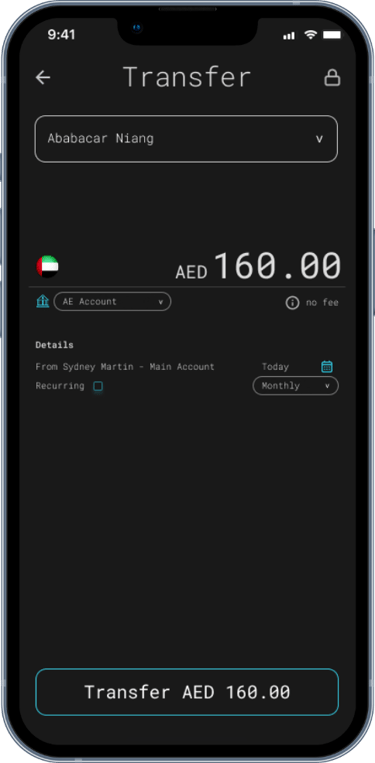
A clear transfer view can make cross-border activity easier to review and categorize.
Bankeaz describes its product as limited early access, so availability should not be assumed.
Keep Cross-Border Transfers Easier to Follow
> Conclusion
Family remittances become harder to manage when predictable bills and genuine crises draw from the same money.
A more durable approach is to separate the two.
Start by identifying recurring obligations. Budget for them in advance. Build an emergency reserve separately. Agree on family rules for urgent requests, compare the full cost of each cross-border payment, and keep a simple record that everyone can review.
These steps cannot remove every difficulty. Income changes, currencies move, providers apply different checks, and urgent family events are inherently unpredictable.
But structure can reduce unnecessary financial pressure and make decisions clearer when money is needed quickly.
Better organization can remove part of the friction around sending money across borders. The wider challenge remains: international financial activity still passes through different providers, intermediaries, currencies and country-specific infrastructures, so complexity does not disappear simply because a family has planned well.
> Related reads
Why Remittances Alone Cannot Build Diaspora Wealth
Useful for readers who want to understand why repeated transfers do not automatically create long-term household resilience or assets.
Why Diaspora Family Finances Stay Fragmented
Explains the broader banking and coordination problem behind family money managed across several countries.
How to Bank Across Multiple Countries
Relevant for readers who want to assign different roles to accounts and organize money across jurisdictions.
How to Prepare Proof of Funds Before Sending Money
Useful when an unusually large or urgent transfer could trigger requests for supporting financial documentation.
______________________________________________________________________________________________________________________________________________________
by BANKEAZ
On demand banking services for all


______________________________________________________________________________________________________________________________________________________
Learn more about Expat Banking

Global lives deserve simpler banking.





Download the BANKEAZ app for a 100% mobile banking experience. Available on iOS and Android - public testing by invitation.
Bankeaz is designed for people living between countries. Availability may vary depending on the user’s jurisdiction of residence.
The Bankeaz app is developed by Arcadia, a company currently being incorporated in Switzerland.
Bankeaz does not provide banking services in its own name. Financial services are provided by licensed and regulated partner institutions, in accordance with applicable laws and regulations.
Copyright © 2026 - Arcadia | Bankeaz - All rights reserved
Address
____________________






__________________________________________________________________________________________________________________________________________________


(- - -) - - - - - - - - - -
Zurich - CH
__________________________________________________________________________________________________________________________________________________
___________________________________________________________________________________________________________________________________________________
__________________________________________________________________________________________________________________________________________________
Learn
____________________