
The Generation That Will Redefine the World
EXPAT BANKING
Blog > Expat Banking > The Generation That Will Redefine the World
The Generation That Will Redefine the World
EXPAT BANKING
BANKEAZ | Expats Team
10/31/2026 - 4 min read


Why Dakar 2026 Is About More Than Sport
On October 31, 2026, Dakar is scheduled to become the first African city to host an Olympic sporting event.
Young athletes from around the world will compete, exchange experiences, and represent their countries in Senegal. The Dakar 2026 Youth Olympic Games, scheduled from October 31 to November 13, will mark an important milestone in Olympic history, according to the International Olympic Committee.
Yet the significance of Dakar 2026 extends beyond sport.
For much of the modern era, Africa has been discussed through the language of development: a continent expected to catch up with economic, technological, and institutional standards established elsewhere.
That perspective is increasingly incomplete.
Across Africa, a new generation is growing up amid rapidly changing technologies, expanding cultural networks, and new forms of international economic participation. Its members will inherit institutions built for a different world, but they may also design alternatives.
The demographic scale is significant.
Research published by the Mastercard Foundation in its Africa Youth Employment Outlook 2026 highlights the growing importance of Africa's young population for future employment and economic development.
Similarly, World Bank research on African demographic trends and employment indicates that the continent could account for an increasingly important share of the world's young working-age population in the decades ahead.
These projections should not be interpreted as guarantees of economic growth. They demonstrate the scale of both the opportunities and the challenges facing African societies.
The central question is no longer only what the world can offer Africa's youth.
It is what this generation may contribute to the way the world works.
Explore how demographic change could influence labor markets, education, entrepreneurship, and international economic relationships.
What Do Africa's Youth Projections Actually Tell Us?


> A New Generation Is Entering the World Stage
Hosting an Olympic event is not the same as winning a competition. It requires a country to coordinate infrastructure, security, transportation, technology, accommodations, and international institutions.
Dakar 2026 therefore represents something larger than an opportunity for African athletes to compete internationally. It places Senegal in the position of host, organizer, and contributor to a major global event.
That distinction matters.
For decades, international sporting, cultural, and economic institutions have concentrated considerable influence in a relatively small number of cities and countries. Hosting a major event allows a different location to participate in decisions about how international gatherings are organized and experienced.
The International Olympic Committee's Dakar 2026 program emphasizes youth participation, education, and engagement as important dimensions of the Games. The event is also intended to involve young people beyond the competing athletes.
But hosting an event does not automatically redistribute power.
Its longer-term significance will depend on what remains after the closing ceremony: professional expertise, improved facilities, stronger local organizations, and new opportunities for young people.
An event can provide international visibility. Creating durable opportunities requires something more.
The deeper transformation may be psychological and institutional. Young Africans need not regard global participation exclusively as a journey toward established international centers.
They can also become organizers, investors, researchers, entrepreneurs, and cultural producers within their own cities.
By 2050, that shift in perspective could matter more than the medals awarded in Dakar.
Look beyond sporting results to examine the skills, facilities, educational opportunities, and institutional capabilities that could remain after the Games.
What Would Make Dakar 2026 a Lasting Success?


> From Consumers of Innovation to Creators of Global Standards
Many technologies used across Africa were originally designed for markets with different infrastructure, purchasing power, and institutional arrangements.
Digital products developed around stable electricity, inexpensive broadband, established credit histories, and extensive formal documentation may not adequately serve communities where these conditions are less consistent.
Such differences are often described as barriers to adoption. They can also become starting points for innovation.
Consider education platforms designed to operate with intermittent connectivity, agricultural advisory tools adapted to local languages, or financial services that reflect complex informal and cross-border economic relationships.
Solutions created under these conditions may eventually prove useful far beyond Africa.
The continent's experience with mobile technology illustrates how local requirements can influence service design. Mobile connectivity has expanded across many African markets, although access and usage remain uneven.
The GSMA's Mobile Economy Africa 2026 report identifies persistent barriers associated with affordability, digital skills, device access, and infrastructure.
These challenges demonstrate why innovation cannot be measured simply by the availability of new technology.
Affordability, digital literacy, language accessibility, and reliability are equally important.
Artificial intelligence introduces another opportunity and another risk.
Systems trained predominantly on languages, institutions, and consumer behavior from wealthier markets may perform less effectively in African contexts. Developing relevant tools will require local datasets, technical expertise, adequate computing infrastructure, and serious attention to data governance.
The opportunity is not merely to become another market for AI products.
It is to influence which problems AI addresses, whose knowledge it incorporates, and how its benefits are distributed.
For a Senegalese developer, a Kenyan researcher, or a Nigerian entrepreneur, the ambition could increasingly extend beyond adapting international technology.
It could involve establishing practices that other markets eventually adopt.
The test will be whether locally created solutions can gain access to investment, research partnerships, and international distribution without losing the ability to serve their original communities.


Understand how innovation designed around local realities may offer lessons for international markets.
Can African Influence Global Technology Standards?


> Culture Will Become a Form of Global Influence
The international circulation of African cultural production is already changing how influence is created and distributed.
Music, fashion, cinema, dance, and digital media no longer depend exclusively on traditional cultural centers to reach audiences.
A musician in Lagos can develop a worldwide audience through digital distribution. A designer in Dakar can participate in international fashion conversations without first becoming established in Paris. A creative studio in Nairobi can collaborate with clients across several continents.
These possibilities do not mean that traditional centers have lost their influence.
Major record labels, streaming platforms, international distributors, and established cultural institutions still hold considerable economic and commercial power.
But the relationship between creators, audiences, and gatekeepers is evolving.
Industry reporting suggests that recorded music markets in parts of sub-Saharan Africa have experienced periods of growth, although market size, revenues, and the distribution of economic benefits vary considerably between countries.
The IFPI Global Music Report 2026 provides evidence of growth in the region's recorded music industry while also highlighting the concentration of revenues in its largest markets.
International cultural visibility is also difficult to measure through commercial revenues alone. Audience reach, creative influence, and the financial returns received by artists are distinct indicators.
Cultural visibility should therefore not be confused with economic ownership.
A song may reach millions of listeners while its creators receive only a limited share of the resulting income. A fashion trend may achieve international recognition without generating sustained opportunities for the communities in which it originated.
The next stage of African cultural influence will depend not only on creative talent but also on intellectual property protection, distribution infrastructure, business expertise, and access to financing.
Dakar 2026 offers a useful lens through which to consider these changes.
International visitors will encounter Senegal not simply as the location of a sporting competition, but as a society with its own artistic traditions, contemporary cultural movements, and creative ambitions.
The lasting question is whether greater international attention can be converted into sustainable creative industries.
By 2050, cultural influence could be measured less by whether African artists gain approval abroad and more by whether African creative industries possess the institutions and commercial power to define their own terms of international engagement.
Explore the difference between international cultural popularity and lasting economic participation by creators.
Who Benefits When African Culture Travels Globally?


> The Next Generation Will Think Beyond Borders
For many young people, professional and personal lives are becoming less closely aligned with a single national territory.
A student may complete a degree in one country, undertake professional training in another, and eventually work with an organization based elsewhere.
An entrepreneur may manage customers across several markets. A family may maintain economic and personal relationships spanning multiple continents.
These patterns are not entirely new. African societies have long histories of regional trade, migration, and diaspora connections.
What is changing is the potential speed and scale of communication, collaboration, and digital participation.
Remote work, online education, and digital entrepreneurship can expand access to opportunities, although their benefits remain uneven and depend on infrastructure, skills, and legal conditions.
Research from the World Bank on African employment and demographic change underscores the importance of creating productive opportunities for a growing working-age population.
Importantly, international mobility should not be understood only as migration from Africa toward Europe or North America.
Movement within Africa, regional educational partnerships, and trade between African markets may become increasingly important.
The challenge is that institutions often remain organized around national borders.
Professional qualifications may not be recognized in another country. Employment regulations can complicate cross-border work. Access to education, insurance, and financial services may depend heavily on legal residence and local documentation.
Even financial mobility can remain difficult when professional and family relationships extend across several jurisdictions.
These frictions create an opportunity for institutional innovation.
Universities could strengthen cross-border recognition of qualifications. Governments could improve the clarity of work permit processes. Regional organizations could promote interoperable systems where legal and technical conditions permit.
But a more connected generation does not necessarily mean a world without borders.
Mobility will remain shaped by income, citizenship, visa regulations, political relationships, and security.
The important question is whether institutions can adapt to increasingly transnational lives without weakening legitimate protections.
Examine the relationship between international education, employment, professional qualifications, and financial systems.
Are Institutions Keeping Pace With International Lives?


> The Future Is Not Guaranteed. It Must Be Built.
Demographics are often presented as a form of economic destiny.
They are not.
A large young population may expand a country's workforce, consumer markets, and creative potential. But the economic benefits depend on whether education systems, employers, infrastructure, and institutions can support productive participation.
The distinction is fundamental.
Research on youth employment in Africa, including the Mastercard Foundation's Africa Youth Employment Outlook 2026, identifies the importance of education, productive work, skills development, and economic inclusion.
The challenges differ substantially across countries, age groups, and communities, making continent-wide generalizations insufficient.
Five conditions will be particularly consequential.
First, education must translate into relevant capabilities.
Expanding enrollment matters, but learning outcomes, professional training, scientific research, and adaptable technical skills are equally important.
Second, economies must create productive employment.
Entrepreneurship cannot compensate indefinitely for insufficient demand, weak industrial capacity, or limited opportunities for stable work.
The World Bank's analysis of employment opportunities for African youth emphasizes the importance of productive jobs in turning demographic growth into broader economic progress.
Third, infrastructure must become more reliable.
Electricity, transportation networks, affordable connectivity, and functioning public services influence whether businesses can operate competitively.
Fourth, access to capital must broaden.
Young entrepreneurs need financing arrangements that respond to their operating conditions. Investors, in turn, require credible information, effective institutions, and reasonable protections.
Fifth, opportunities must become more inclusive.
The economic participation of young women, rural populations, and disadvantaged communities cannot be treated as a secondary concern.
These priorities are connected.
A highly trained engineer may struggle to establish a company without reliable energy. A talented filmmaker may reach international audiences while lacking adequate commercial protection. A qualified professional may remain excluded from employment by administrative or legal restrictions.
Africa's future will also differ across countries and communities.
The circumstances of a young graduate in Dakar cannot be assumed to match those of a rural entrepreneur in Ethiopia or a software developer in Nairobi.
The continent's demographic transformation will occur across economies with distinct political systems, institutional capabilities, and development trajectories.
For governments and institutions, the practical challenge is to measure progress through outcomes rather than declarations.
Are more young people acquiring useful skills? Are productive jobs expanding? Can businesses reach new markets? Are women gaining greater economic agency? Are public investments improving everyday conditions?
The answers will determine whether demographic expansion becomes an economic advantage or intensifies existing pressures.
Dakar 2026 cannot resolve these questions.
But it offers an opportunity to place them at the center of the international conversation.
The test of the next generation's influence will not be how frequently its potential is celebrated, but how consistently that potential is supported.
Look beyond population projections to identify the indicators that could reveal whether economic opportunity and social inclusion are improving.
What Should We Measure Between Dakar 2026-2050?


______________________________________________________________________________________________________________________________________________________
> Key Takeaways
✓ Evaluate Dakar 2026 through its long-term educational, organizational, and community legacy, not only its sporting results.
✓ Recognize that African innovation may influence international markets when solutions developed locally demonstrate reliability and wider relevance.
✓ Distinguish cultural visibility from economic ownership and sustainable creative-industry development.
✓ Understand that international mobility requires more than digital connectivity. Legal, educational, financial, and institutional systems also matter.
✓ Assess demographic potential through education, productive employment, infrastructure, access to capital, and the inclusion of young women.
✓ Measure progress toward 2050 through improvements in economic participation and everyday opportunities.
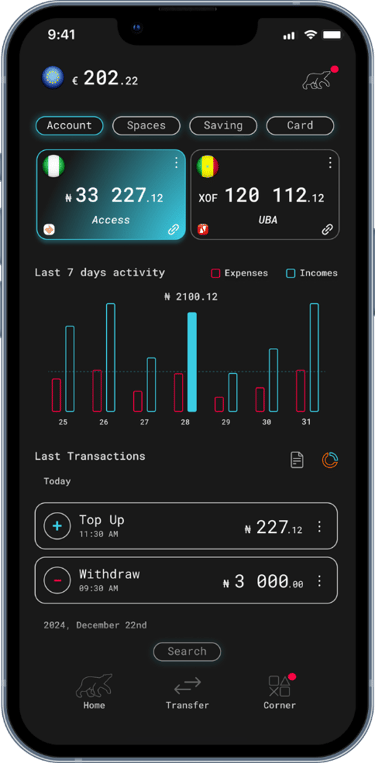
International careers involve financial accounts across countries.
Documentation and obligations vary by country.
Understanding these requirements helps manage financial complexity.
Understanding Financial Life Across Borders
> Conclusion
THE WORLD THAT THIS GENERATION COULD BUILD
By 2050, the athletes participating in Dakar 2026 will be approaching middle age. Many will have built careers, families, businesses, and professional networks.
The world around them will also have changed.
Africa's young population could become an increasingly important influence on global employment, technology, culture, and economic relationships.
But the direction of that influence remains uncertain.
The next generation will face the consequences of decisions made about education, infrastructure, institutions, investment, and inclusion.
Its achievements will depend not only on individual ambition but also on the opportunities available to translate ability into progress.
Dakar 2026 offers a useful symbol because it challenges an established assumption about where major international events take place and who participates in shaping them.
Its greater importance may lie in the questions it raises beyond the sporting arena.
Who will design the technologies used by tomorrow's communities?
Which cities will become centers of cultural influence?
How will education and employment change as more people build lives across borders?
And which institutions will adapt to these transformations?
The answers will not emerge from demographic projections alone.
They will be produced through decisions, investments, cooperation, and the work of millions of individuals whose contributions cannot yet be predicted.
The generation growing up across Africa today will not simply adapt to the world it inherits.
It may change the way that world works.
> Related reads
International Lives, National Banking Systems
Discover why national banking systems struggle to meet the financial needs of people living and working across multiple countries.
Why International Profiles Confuse Banks
Understand why international financial profiles can create inconsistencies in bank records and trigger additional identity and compliance checks.
How to Bank Across Multiple Countries
Learn how to organize bank accounts, manage payments, and maintain financial continuity across multiple countries.
How African Diaspora Families Can Track Financial Support Across Countries
Learn how African diaspora families can track cross-border financial support, organize transfer records, and maintain visibility over family contributions.
______________________________________________________________________________________________________________________________________________________
by BANKEAZ
On demand banking services for all


______________________________________________________________________________________________________________________________________________________
Learn more about Expat Banking

Global lives deserve simpler banking.






Download the BANKEAZ app for a 100% mobile banking experience. Available on iOS and Android - public testing by invitation.
Bankeaz is designed for people living between countries. Availability may vary depending on the user’s jurisdiction of residence.
The Bankeaz app is developed by Arcadia, a company currently being incorporated in Switzerland.
Bankeaz does not provide banking services in its own name. Financial services are provided by licensed and regulated partner institutions, in accordance with applicable laws and regulations.
Copyright © 2026 - Arcadia | Bankeaz - All rights reserved
Address
____________________






__________________________________________________________________________________________________________________________________________________


(- - -) - - - - - - - - - -
Zurich - CH
__________________________________________________________________________________________________________________________________________________
___________________________________________________________________________________________________________________________________________________
__________________________________________________________________________________________________________________________________________________
Learn
____________________