
How to Prevent Double Currency Conversion on International Transfers
EXPAT BANKING
Blog > Expat Banking > How to Prevent Double Currency Conversion on International Transfers
How to Prevent Double Currency Conversion on International Transfers
EXPAT BANKING
BANKEAZ | Expats Team
7/22/2026 - 4 min read
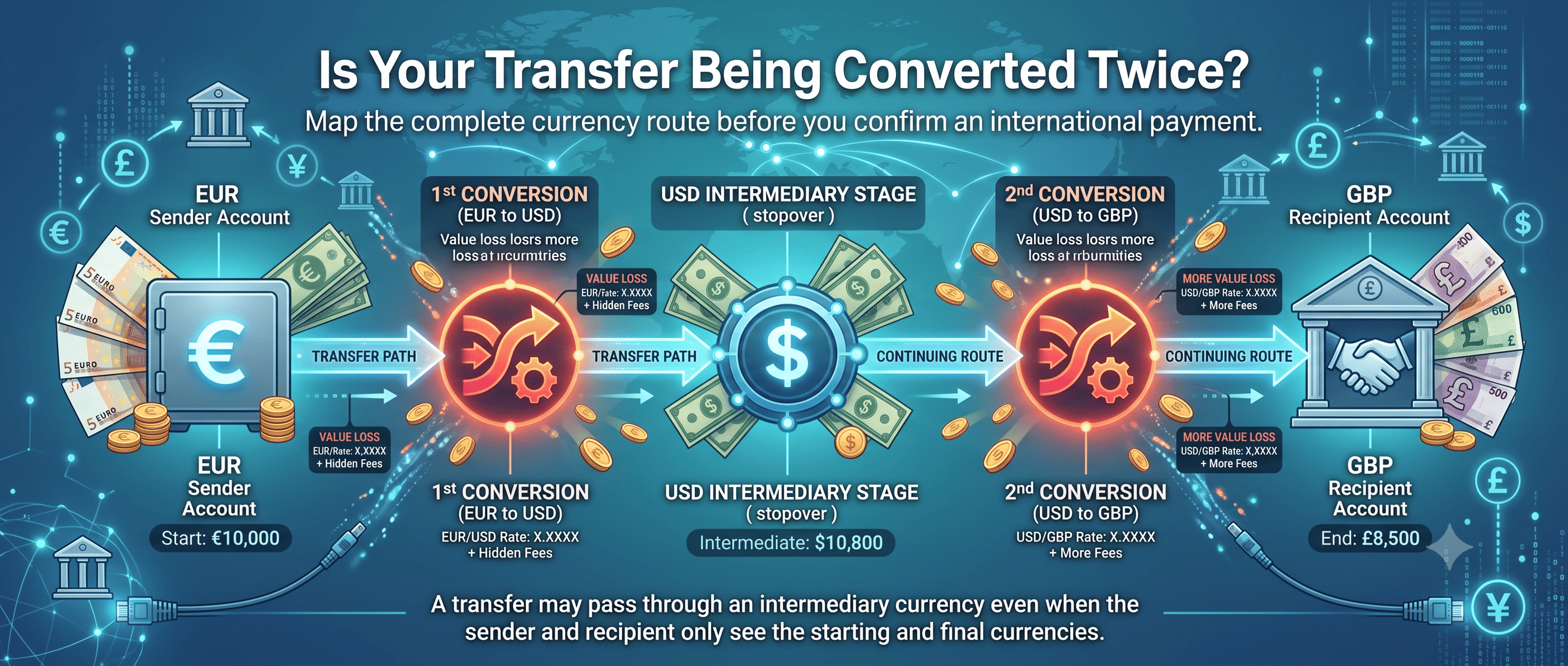
You send euros to a recipient who expects pounds. The transfer confirmation shows one exchange rate, so the process appears straightforward.
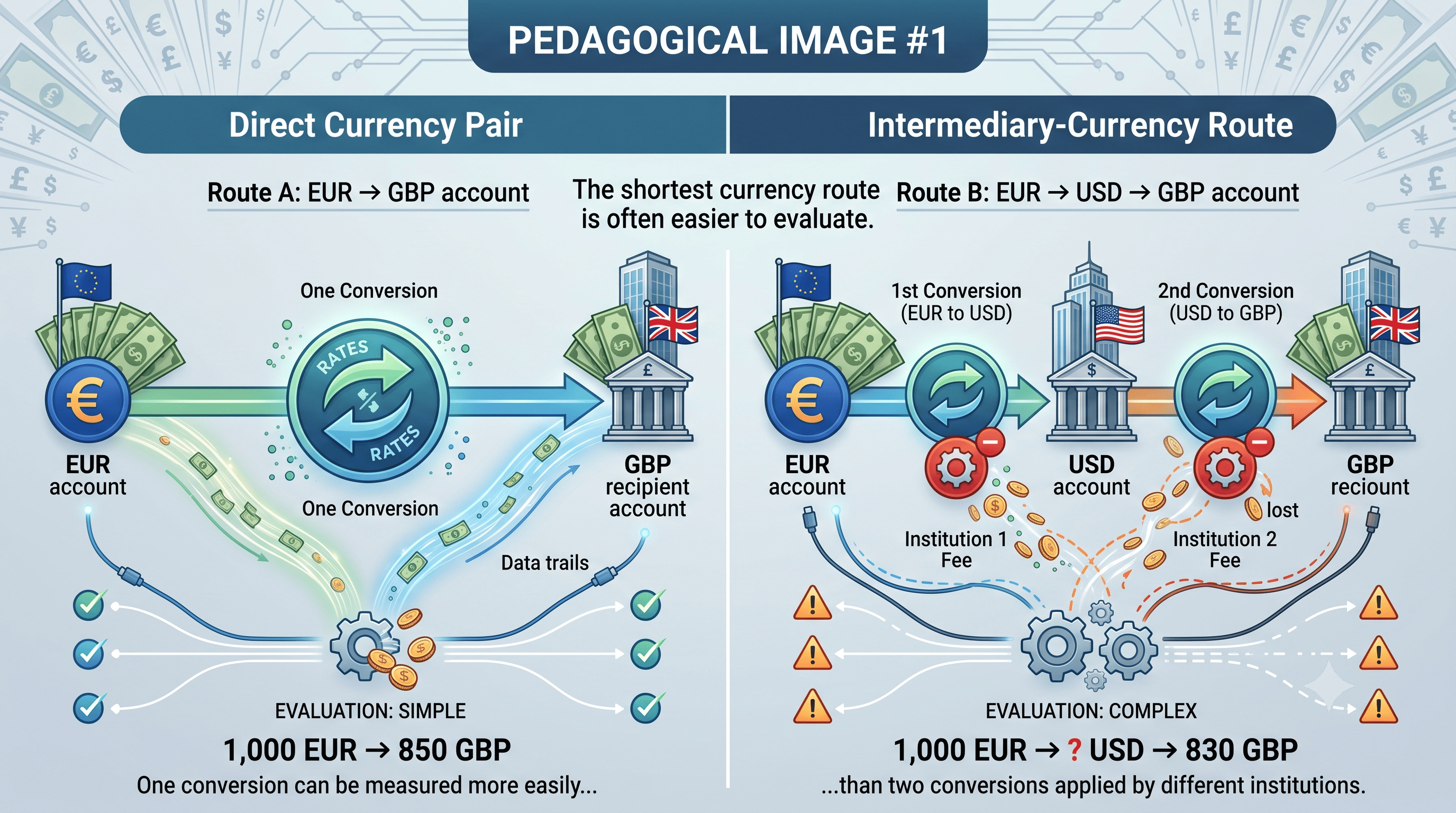
But the payment route may be more complicated. Your provider might first convert the euros into US dollars for settlement. An intermediary or receiving bank may then convert those dollars into pounds. Instead of one exchange, the money has passed through two separate currency conversion events.
Each conversion may use a different rate or margin. The result can be a lower recipient amount, even when the visible transfer fee appears reasonable.
Preventing double conversion starts with a simple question: Which currency will the money use at every stage of the transfer?
This guide explains how to answer that question before you send.
Write down the sending currency, settlement currency, payout currency, and receiving-account currency before confirming the transfer.
Trace the Money Before It Moves
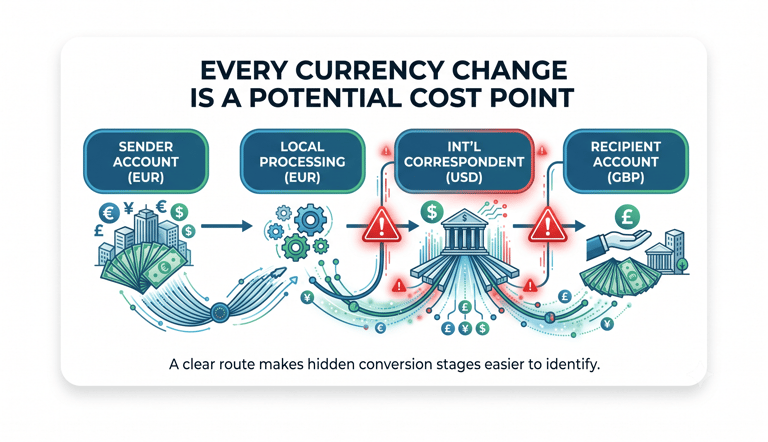
> Identify Every Currency In The Transfer
Start by separating the currencies involved in the payment.
You need to identify:
the currency held in your funding account;
the currency you instruct the provider to send;
the settlement or intermediary currency, when disclosed;
the currency delivered by the transfer provider;
the currency accepted by the recipient’s account.
These are not always the same.
Suppose you hold euros and want a recipient in the United Kingdom to receive pounds. A direct EUR-to-GBP conversion involves one exchange. A route from EUR to USD and then from USD to GBP involves two.
The additional step is not always obvious. Some international payment routes involve correspondent or intermediary banks, and several institutions may participate before the funds reach the destination. Different banks can apply fees or currency-related costs along that route.
Before confirming an international transfer, review the quote or payment instructions for terms such as:
sending currency;
payout currency;
settlement currency;
correspondent currency;
beneficiary receives;
conversion at destination;
receiving bank may convert.
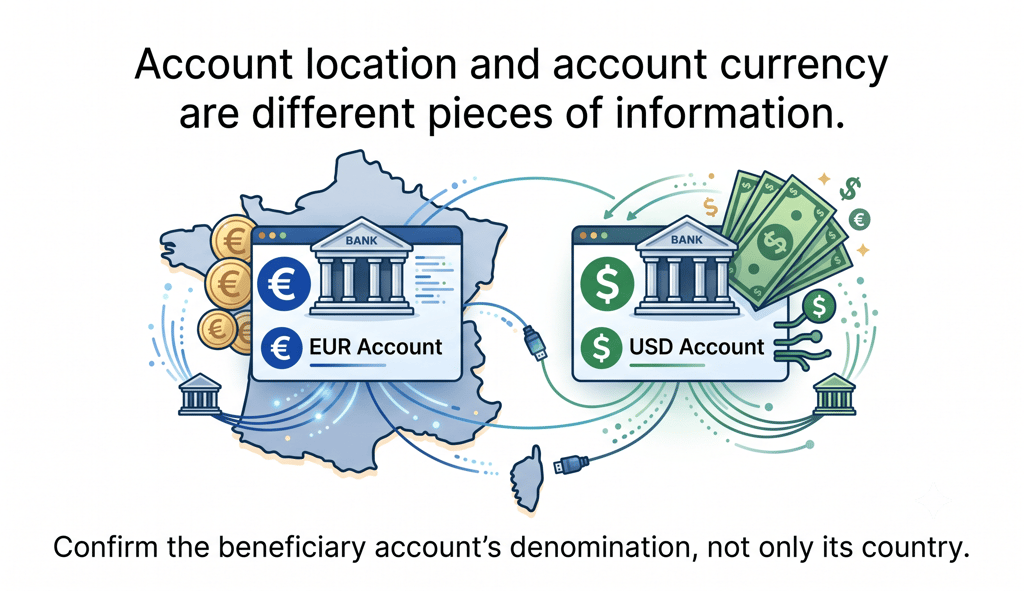
Do not assume that selecting the recipient’s country automatically selects the recipient’s account currency.
A bank account located in France, for example, may hold euros, dollars, or another supported currency. The account’s actual denomination matters more than its geographic location.
The destination country does not tell you which currency the beneficiary account can receive without conversion.
Ask Which Currency Will Arrive
> Align The Payout Currency With The Recipient Account
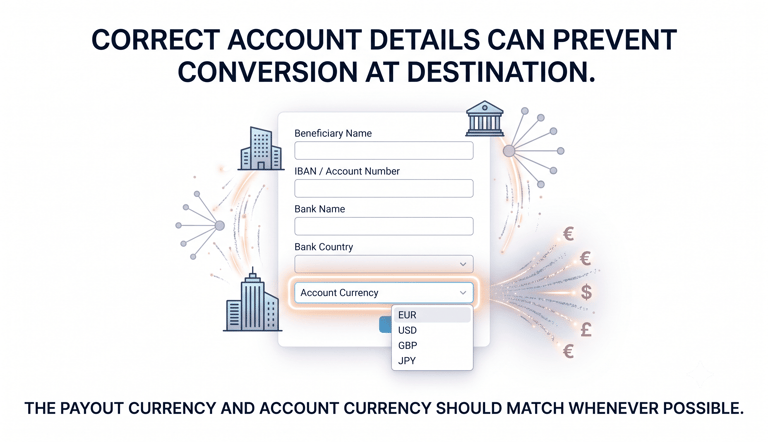
One of the most effective ways to prevent double conversion is to make the provider’s payout currency match the recipient account’s currency.
If the recipient owns a GBP account, ask the provider to deliver GBP. If the provider sends USD to that account, the receiving bank may automatically convert the incoming payment into pounds.
That second conversion may occur under the receiving bank’s own rate and fee structure. It may not appear in the sender’s original quote.
This is why the displayed transfer cost is not always the full cost. Exchange-rate margins, intermediary deductions, and receiving-bank charges can all affect the final amount.
Ask the recipient to confirm:
the exact currency of the account;
whether it accepts incoming payments in other currencies;
whether foreign-currency payments are rejected, retained, or automatically converted;
which account details are required for that currency;
whether an incoming-transfer fee applies.
Some customers have separate account details for each currency. Sending to the wrong set of details can change the route or trigger an unwanted conversion.
When possible, use account details specifically assigned to the intended payout currency.
Ask the recipient for account details that correspond specifically to the currency being delivered.
Match the Currency to the Account
> Check How The Transfer Is Funded
Double conversion can also begin before the transfer leaves your account.
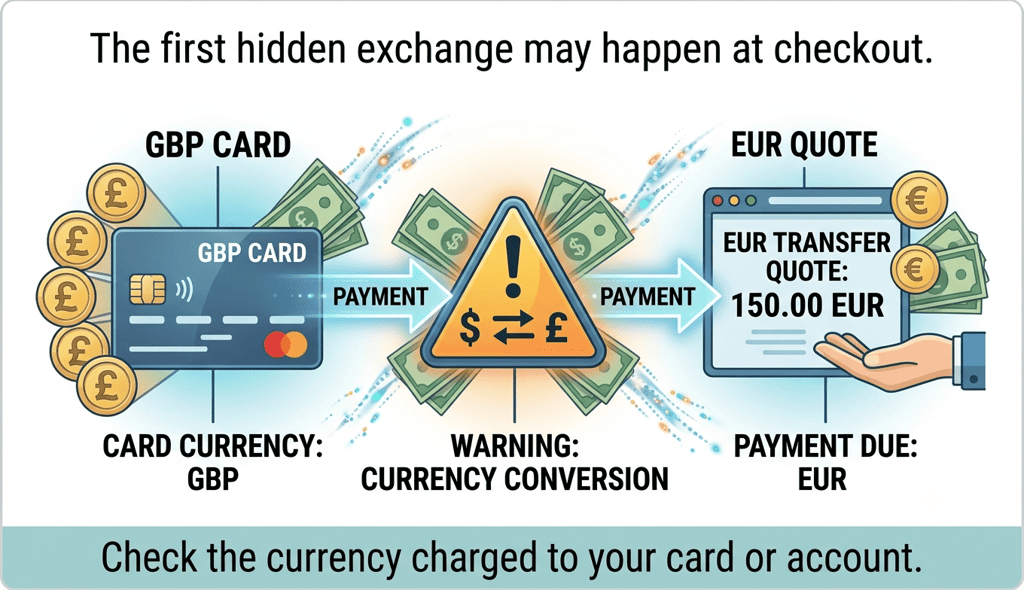
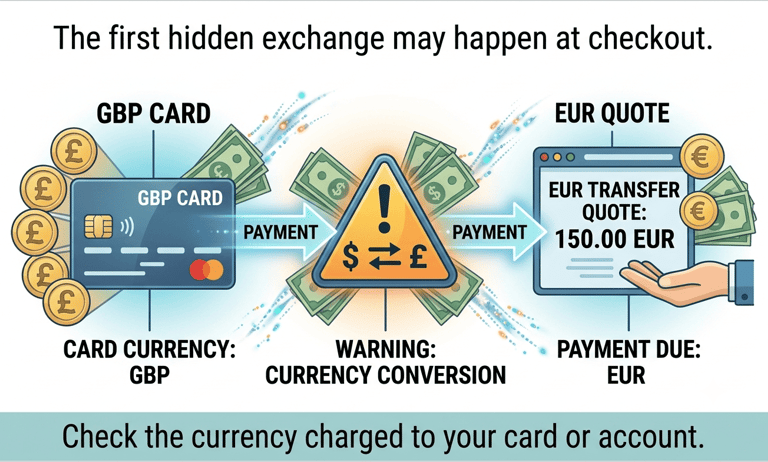
Imagine that your transfer quote is in euros, but you fund it with a card denominated in pounds. Your card issuer may convert GBP into EUR. The transfer provider may then convert EUR into the recipient’s currency.
The provider has performed only one conversion, but the overall payment contains two.
Review the currency requested at the funding stage. Then compare it with the currency held in the account or card you are using.
To reduce unnecessary conversion:
fund an EUR transfer from an EUR balance;
fund a USD transfer from a USD balance;
avoid using a card in one currency to pay a transfer invoice in another;
review any card prompt that offers to convert the payment for you;
check whether the funding bank applies a foreign-transaction fee.
This is particularly important when a provider supports several payment methods. Bank transfer, debit card, credit card, and digital-wallet funding can produce different routes and costs.
Choose the method that keeps the funding currency aligned with the quoted transfer currency.
A mismatch between the funding currency and the transfer quote can create an extra conversion before the international payment begins.
Start in the Right Currency
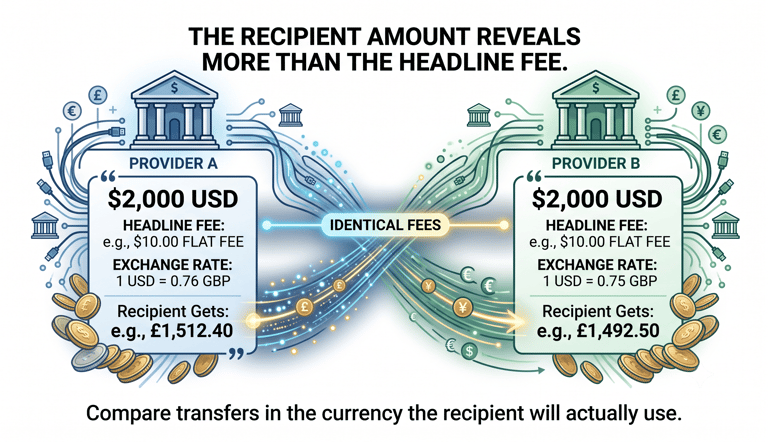
> Compare The Final Received Amount, Not Only The Rate
A provider may advertise an attractive exchange rate, but that figure does not reveal whether another institution will convert the money later.
The most useful number is the amount expected to arrive in the recipient account’s own currency.
Request or calculate:
the amount deducted from your funding account;
the funding currency;
the provider’s transfer fee;
the provider’s conversion rate;
the currency sent to the beneficiary bank;
possible intermediary deductions;
the final amount credited in the beneficiary account currency.
Comparing providers by the recipient’s final amount gives a clearer picture than comparing the visible fee alone.
Pay attention to estimates described as “before receiving-bank fees” or “recipient bank may apply conversion.” These phrases indicate that the quoted amount may not be final.
When the provider cannot confirm the delivered currency, ask whether the transfer travels through an intermediary currency. The provider may not always control the complete route, but the answer can help you understand the uncertainty.
Record the quote immediately before confirming the payment. Exchange rates and transfer conditions can change, so an older estimate may no longer represent the transaction you are about to make.
A low visible fee can be outweighed by a second conversion or a less favorable receiving-bank rate.
Compare What Actually Arrives
> Test The Route Before Sending A Large Amount
When the route remains unclear, consider making a small transfer first.
A test payment can show:
which currency leaves your account;
which currency the provider sends;
whether intermediary deductions appear;
which currency reaches the beneficiary bank;
whether the receiving bank performs another conversion;
the difference between the expected and credited amounts.
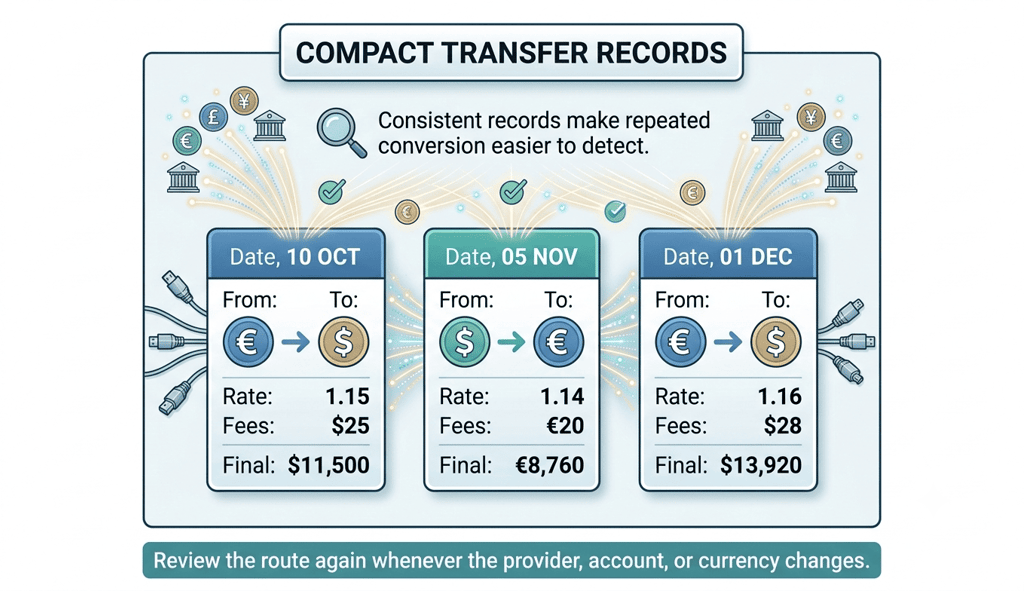
Ask the recipient to retain the transaction record. Compare it with your own confirmation and note every rate, charge, and currency shown.
A small test does not guarantee that every future payment will follow the same route. Transfer corridors, intermediary banks, processing arrangements, and pricing can change. However, it can reveal an immediate mismatch before a much larger amount is exposed to the same process.
For recurring payments, review the route periodically rather than assuming that the first result will always repeat.
This is especially useful for tuition, rent, salaries, supplier invoices, or family support, where a small percentage lost through repeated conversion can become significant over time.
Save the quote, transfer confirmation, beneficiary statement, exchange rates, and final credited amount for future comparisons.
Keep a Currency-Route Record
______________________________________________________________________________________________________________________________________________________
> Key Takeaways
✓ Identify every currency used from funding to final credit.
✓ Confirm the denomination of the recipient’s account.
✓ Match the provider’s payout currency to that account currency.
✓ Fund the transfer from a balance in the quoted payment currency when practical.
✓ Ask whether an intermediary or settlement currency is involved.
✓ Compare the amount credited to the recipient, not only the advertised fee.
✓ Review receiving-bank conversion rules before sending.
✓ Use a small test transfer when the route remains unclear.
✓ Save both sender and recipient records to identify every conversion.
Understand the currencies involved in a transfer.
Review the exchange stage and expected recipient amount.
Compare the route before confirming the payment.
See the Currency Route Before You Send
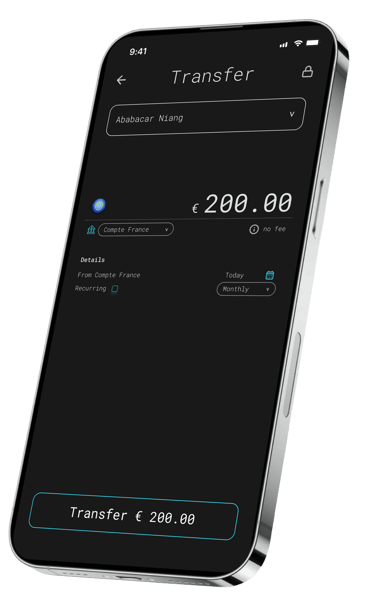
> Conclusion
Preventing double currency conversion requires looking beyond the first exchange rate displayed on the transfer screen.
Start by mapping every currency in the route. Confirm the recipient account’s denomination, align the payout currency with that account, and make sure the funding method does not introduce an earlier conversion. Then compare the final credited amount and investigate any intermediary or receiving-bank exchange.
When the route is uncertain, a small test transfer can provide useful evidence before you send a larger payment.
These steps may reduce avoidable conversion costs. However, cross-border payments still pass through fragmented infrastructures, multiple institutions, and country-specific banking arrangements. As a result, the complete currency route is not always visible or controlled by a single provider.
> Related reads
Why £1000 Can Become £947 in International Transfers
Explains how several cost layers can reduce the final recipient amount.
Why International Payments Pass Through So Many Banks
Explains the role of sending, intermediary, and receiving institutions in international payment routes.
How to Check the Real Cost of an International Money Transfer
Shows how to compare fees, rates, intermediary charges, and the final amount received
How to Reduce International Transfer Costs
Provides broader steps for reducing the total cost of sending money internationally.
______________________________________________________________________________________________________________________________________________________
by BANKEAZ
On demand banking services for all


______________________________________________________________________________________________________________________________________________________
Learn more about Expat Banking

Global lives deserve simpler banking.





Download the BANKEAZ app for a 100% mobile banking experience. Available on iOS and Android - public testing by invitation.
Bankeaz is designed for people living between countries. Availability may vary depending on the user’s jurisdiction of residence.
The Bankeaz app is developed by Arcadia, a company currently being incorporated in Switzerland.
Bankeaz does not provide banking services in its own name. Financial services are provided by licensed and regulated partner institutions, in accordance with applicable laws and regulations.
Copyright © 2026 - Arcadia | Bankeaz - All rights reserved
Address
____________________






__________________________________________________________________________________________________________________________________________________


(- - -) - - - - - - - - - -
Zurich - CH
__________________________________________________________________________________________________________________________________________________
___________________________________________________________________________________________________________________________________________________
__________________________________________________________________________________________________________________________________________________
Learn
____________________