
How to Prepare the Payment Before the Tuition Deadline
EXPAT BANKING
Blog > Expat Banking > How to Prepare the Payment Before the Tuition Deadline
How to Prepare the Payment Before the Tuition Deadline
EXPAT BANKING
BANKEAZ | Expats Team
11/04/2026 - 4 min read


A student receives an invoice for the next semester. The family arranging the payment sees a due date, a bank account and an amount in the university’s currency. It may appear enough to initiate an international payment a few days before that date. Yet the university may only recognise the obligation as satisfied once money has arrived and been allocated to the correct student ledger.
This distinction matters for an international student whose enrolment, course access or administrative clearance depends on a confirmed payment. A bank receipt, payment-provider confirmation and university account balance describe different stages. This guide explains how to verify the institution’s instructions, protect the intended credited amount, preserve the correct reference, allow for the full processing window and respond if the payment is not posted.
Use a four-field tuition instruction check: recipient, currency, student reference and expected net amount.
Check before you send


> Confirm the institution’s current payment instructions
Start at the university’s official student portal or published fees page. Retrieve the current semester statement, the exact fee category and the approved payment channels. Some institutions require an integrated payment portal; others allow a direct bank transfer. Do not substitute payment details from an older admission letter without checking that they remain valid. For transfer timing beyond the university’s own steps, consult Bankeaz’s guide to planning an international transfer before a deadline.
Record the institution’s legal beneficiary name, account or local routing details, permitted currency, unique student identifier, fee type, due date and whether a third-party payer is allowed. Ask the finance office whether payment must merely arrive at its bank or be posted against the student’s account by the deadline. This distinction matters because university payment teams can need additional time to match incoming funds to a particular student.
Check whether tuition, housing, insurance and administrative charges are paid to different accounts. If a parent or sponsor is paying, confirm whether their name needs to be provided separately and whether the student identifier must remain unchanged. Beware of last-minute account changes delivered only by email: verify changed instructions through a trusted university contact or the authenticated portal before releasing funds.
Make sure the exact student ID or payment reference will travel with the funds.
Verify the student identifier


> Calculate the amount the university must actually receive
The invoice amount is not necessarily the amount to enter in the sender’s app. First determine the required currency and expected credited amount. If the invoice is GBP 8,000, the student account ordinarily needs to show the billed GBP amount, subject to any institution-specific tolerances or previous credits. Sending the nominal equivalent from another currency may be insufficient when exchange-rate spreads or deductions reduce the proceeds.
Request a quote showing the exchange rate, provider charges, receiving-bank charges where known and any intermediary deductions. Compare routes by the expected amount the institution receives, not only the advertised sending fee. Some providers offer a fixed receiving amount through an approved university collection channel, while others quote only an indicative outcome. Ask which amount the provider commits to deliver and whether the university accepts that route.
Build a small written calculation: invoice balance minus confirmed scholarship or deposit credits equals amount still due; then determine the funding amount needed after charges and conversion. If exact deductions are unknown, ask the bank or university about the appropriate fee arrangement rather than adding an arbitrary buffer that could complicate reconciliation or refunds. Compare the real transfer cost as well as certainty of receipt. Never assume a charge code removes every possible third-party fee.


Use the tuition ledger target as the comparison metric for payment options.
Compare what arrives


> Protect the student reference across every payment step
Payment matching can fail even when the correct amount reaches the institution. Copy the student identifier exactly from the current invoice or portal. Check spaces, leading zeroes and any invoice suffix. Where the payment form has separate fields for recipient reference, description and message to beneficiary, follow the university’s instruction about which one carries the identifier.
Before confirming, inspect the review screen and take a secure record of the reference as submitted. If a bank truncates the message field, contact the provider before authorising and ask whether the identifier will appear in the beneficiary-facing payment information. Nottingham Trent University’s tuition guidance shows how a student ID connects to the payment reference used to identify a transfer.
Do not place sensitive identity documents in a free-text payment note unless instructed through a secure channel. Retain the invoice, provider transaction ID, bank receipt, exchange-rate confirmation and any payer information requested by the university. This evidence makes a later investigation faster because each party can distinguish the banking transaction from the student-account allocation process.
Store one reference sheet containing invoice, student ID, transaction ID and date.
Keep a matching trail


> Schedule for receipt and student-account posting—not just submission
Work backwards from the outcome the university requires. Include bank cut-off times, weekends, holidays in both countries, any currency conversion, anti-fraud checks and the institution’s own posting cycle. The time between arrival at a beneficiary bank and appearance on the student portal can be consequential. Ask the provider for its processing window and the university for its normal student-ledger posting window; keep both in the timeline.
A useful timeline has three dates: the institution’s final posting deadline; an earlier expected-arrival date; and a sending date with enough margin for correction. For example, if a bill is due on a Friday, do not assume sending on Wednesday gives two business days of processing—holidays, verification and ledger allocation may intervene. Ask the university for its current service window and the provider for corridor-specific estimates rather than relying on a universal number.
If the deadline is already close, contact the university before sending to ask whether a proof-of-payment document, approved payment plan or written extension could help. Such arrangements are discretionary and should not be presumed. The general principles in Bankeaz’s guide to planning a transfer deadline explain processing milestones; here the crucial additional milestone is the student account being updated.
Create a timeline with sending, expected bank receipt, ledger posting and escalation dates.
Plan from the posting deadline


> Prepare an exception and escalation plan before problems appear
Identify who will respond if the payment is delayed, short or unmatched. Save the university finance office’s contact form, support hours, case reference requirements and the sending provider’s trace procedure. Ask what evidence the university needs to investigate a transfer not reflected in the ledger. This step is especially important when a family member or xqemployer sends the money on the student’s behalf.
Set a checkpoint before the deadline to compare the bank’s status with the student portal. If funds are marked sent but not credited, contact the finance office with the transaction identifier, amount, currency, date, beneficiary and reference. If the payment route is still being traced, request its formal investigation process. An absent or incorrect payment reference may prevent automatic matching even if the funds have reached the institution.
If a shortfall appears, do not automatically repeat the original payment. First obtain a clear balance statement and ask whether a top-up is accepted, how it should be labelled and which currency applies. If the deadline cannot be met, request written instructions about late-payment consequences and any permitted remedy. A precise escalation record reduces duplicated transfers, disputed balances and uncertainty about who must act next.
Close the task only after the institution confirms the expected credit or gives a written alternative.
Confirm the tuition ledger


______________________________________________________________________________________________________________________________________________________
> Key Takeaways
✓ Obtain current tuition instructions from an authenticated source.
✓ Confirm required currency, exact reference and expected net credit.
✓ Compare exchange rate, provider fees and potential deductions.
✓ Allow time for transfer arrival and university ledger posting.
✓ Save evidence and prepare a clear escalation route.
Bankeaz is developing a coordinated international banking experience.
Availability depends on future partner and corridor activation.
Use your university’s approved payment method for now.
Understand cross-border payment steps
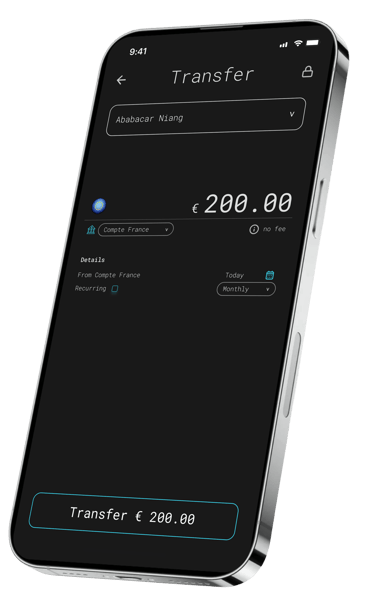
> Conclusion
A successful tuition payment starts with the institution’s rules and ends with the student balance, not with the sender’s confirmation screen. Verify the authorised route, calculate the net amount, preserve the student reference and build a timeline that includes university posting. Then keep documentation and a contact plan for any mismatch. These steps can reduce avoidable payment uncertainty, although cross-border payments still depend on banks, collection providers and institution-specific systems whose separate processes may not move in synchrony.
> Related reads
Why International Transfers Stay Stuck for Days
Explains why apparently immediate transfers may still face delays across banks, payment systems, and international processing stages.
Why Fees Change Between Transfers
Discover why international transfer fees can vary between payments due to exchange rates, intermediary banks, and payment routes.
How to Plan an International Transfer Before the Payment Deadline
Learn how to plan international transfers ahead of deadlines by anticipating processing times, banking delays, and payment requirements.
How to Check Banking Cut-Off Times Before Sending an International Transfer
Learn how to check banking cut-off times to avoid processing delays and better anticipate when your international transfer will be sent.
______________________________________________________________________________________________________________________________________________________
by BANKEAZ
On demand banking services for all


______________________________________________________________________________________________________________________________________________________
Learn more about Expat Banking

Global lives deserve simpler banking.





Download the BANKEAZ app for a 100% mobile banking experience. Available on iOS and Android - public testing by invitation.
Bankeaz is designed for people living between countries. Availability may vary depending on the user’s jurisdiction of residence.
The Bankeaz app is developed by Arcadia, a company currently being incorporated in Switzerland.
Bankeaz does not provide banking services in its own name. Financial services are provided by licensed and regulated partner institutions, in accordance with applicable laws and regulations.
Copyright © 2026 - Arcadia | Bankeaz - All rights reserved
Address
____________________






__________________________________________________________________________________________________________________________________________________


(- - -) - - - - - - - - - -
Zurich - CH
__________________________________________________________________________________________________________________________________________________
___________________________________________________________________________________________________________________________________________________
__________________________________________________________________________________________________________________________________________________
Learn
____________________