
How to Prepare Alternative Address Documents for Bank Verification Abroad
EXPAT BANKING
Blog > Expat Banking > How to Prepare Alternative Address Documents for Bank Verification Abroad
How to Prepare Alternative Address Documents for Bank Verification Abroad
EXPAT BANKING
BANKEAZ | Expats Team
11/11/2026 - 4 min read


A bank asks you for a recent utility bill showing your name and current address. You live with a relative, rent a furnished room, or have just arrived for university. The electricity contract belongs to someone else. You have a real residence but no conventional proof of address in your own name.
An alternative document may help, provided it demonstrates the precise address requested and fits the bank’s rules. Some institutions accept official letters, leases or bank statements; others impose narrower lists, issue-date limits or country restrictions. Check a provider-specific acceptance list rather than assuming that a document accepted elsewhere will work.
This guide walks through choosing usable alternatives, strengthening incomplete evidence and presenting a focused package for bank verification. The situation is especially common in banking for diaspora communities, where residential and family arrangements may span countries.
Confirm whether the bank needs your current residential address, correspondence address or another declared address.
Define the address you must prove


> Confirm the address category and acceptance rules
Before collecting documents, read the exact request in the banking app or official message. Does the institution want your residential address, the address associated with a particular bank account, or a mailing address? A postal forwarding address, workplace or family home you do not occupy may fail a residence check even if you receive correspondence there.
Ask for the current list of acceptable evidence, maximum age, permitted issuer, country and language, and whether electronic originals are valid. Ask whether a document must show your full legal name and complete address, including building and unit. Some banks prohibit using the same document for both identity and address checks. These rules reflect the provider’s policy and local requirements, not a global list of approved alternatives.
For example, N26 proof-of-address guidance mentions recent utility bills, official government letters and bank statements in certain cases. Another provider may permit a different set. In banking services for expats, an early question about accepted formats often prevents paying for unnecessary paperwork.
Write one sentence for the institution: “I live at [current address], but the utility account is not in my name. Which alternative documents, and what supporting evidence, can you accept?” Do not send sensitive records to unofficial social accounts or links.
Compare document categories before ordering replacements or translations.
Choose an accepted substitute


> Build a shortlist of credible alternative documents
Create a shortlist based on what is already issued in your name. Possible options include a signed tenancy agreement, municipal residence certificate, tax assessment, official benefit or government letter, bank statement, employer residence confirmation, or university housing letter. A residence permit showing an address may also help where accepted. These are examples, not automatic substitutes.
Consider four checks for each candidate: does it name you; show the exact current address; have a credible and identifiable issuer; and fall within the bank’s recency rules? A signed lease can evidence a housing arrangement but may not establish that you still occupy the premises. A tax letter can be official yet display a previous address. A bank statement can be recent but sourced from an institution excluded by the reviewer.
The alternative document examples published by a verification provider demonstrate the range of possible categories while explicitly leaving final requirements to the institution using its service. Use that distinction when preparing bank documents for international banking: possibilities are not guarantees.
Prioritize the strongest direct, current evidence, then hold a second item in reserve if the bank asks for corroboration. Do not submit every record you possess. Each extra file can introduce dates or addresses that require explanation.


When bills belong to someone else, identify what the bank requires to connect you to the address.
Explain the household arrangement


> Document shared housing and recent moves honestly
Shared housing creates a specific evidence gap. You may live with parents, a partner, a friend or a host who pays every bill. Do not change the account-holder name on the document or pass that person’s bill off as your own. Instead ask the bank whether it accepts a combination: a dated host declaration, proof that the host occupies the property, and an independent record linking you to the same address.
If accepted, the declaration can state the host’s legal name, relationship to you, full address, your move-in date and a dated signature. The bank may ask for a prescribed form, ID copy or other evidence; obtain explicit instructions before collecting another person’s private documents. Share only necessary information through an authorized secure channel.
New arrivals can request a university accommodation letter, tenancy confirmation from a recognized property manager, municipal registration record or employer-provided housing certificate where available. The document should accurately distinguish a temporary stay from settled residence. Booking receipts and short-term accommodation confirmations are not universally valid proof of residence.
For people living between countries, Bankeaz’s perspective on financial life beyond national borders helps explain the mismatch between mobile households and fixed-address evidence. A defensible international identity record distinguishes your current home from former or correspondence addresses; it does not merge them.
Review differences between the document and the address in the account profile before sending a file.
Resolve the address mismatch


> Prepare a clear, unaltered submission package
Once a candidate is confirmed as eligible, download the original PDF from the issuer or scan the complete paper record. Ensure the issuer, issue date, legal name and address are readable. Include every requested page, reverse side or signature. Do not crop away a footer, edit a date, add your name to a document or obscure information unless the receiving bank authorizes redaction.
Compare the address in your account verification profile with the evidence: apartment number, street, postal code, locality and country. If the same real address is formatted differently, ask whether the reviewer accepts a brief explanation. If your bank profile lists your old residence, update it through the proper process before uploading a newer document, when the institution directs you to do so.
Where a record is issued abroad, confirm whether the bank needs a translation or authenticated copy. These are separate requirements. For details on language and format, see Bankeaz guidance on foreign-issued documents. Do not spend money on certification before the institution requests it.
Name the files by purpose, for example “Residence_Confirmation_Original.pdf” and “Accommodation_Letter.pdf”. Submit the minimal approved combination. Keep a secure record of the date, case reference and files transmitted. This practical discipline supports financial mobility while reducing the risk of inconsistent disclosures.
Find out whether the obstacle is document category, recency, name, address or issuer.
Respond to the specific rejection


> Create a fallback and escalation path if evidence is rejected
Rejection is useful information only if you learn why it occurred. Ask whether the document was not an eligible type, too old, missing a page, inconsistent with the account address, or unable to be validated. Request the alternative accepted category in writing through official support. Do not repeatedly resubmit the identical file hoping for a different result.
Use a simple fallback ladder. First, correct a technical defect, such as an unreadable scan or missing second page. Second, obtain a newer document from the same recognized issuer. Third, switch to another category expressly permitted by the institution. Fourth, ask whether a manual review or combination of records is possible. Some providers do not permit manual exceptions; if so, ask what genuinely qualifying document you can obtain.
You can often generate better future evidence by updating a legitimate residence record, registering with a local authority where applicable, requesting official accommodation confirmation or changing your own service account details through the provider’s normal process. Never create an artificial tenancy, buy a false address certificate or use another person’s details.
If the institution cannot serve your residence location, the limitation may be one of account eligibility rather than documentation. Distinguish these cases before appealing. That issue is part of wider money-management obstacles abroad, and no particular file can override an institution’s jurisdictional restrictions. If a deadline matters, ask for the bank’s formal complaint and escalation route rather than assuming an exception.
Check the address, name, document category and securely documented response before submitting.
Complete the final evidence review


______________________________________________________________________________________________________________________________________________________
> Key Takeaways
✓ Confirm whether the institution asks for residential, mailing or previous-address evidence.
✓ Request the bank’s exact accepted document categories and date limits.
✓ Prefer current, independently issued documents naming you and your real address.
✓ Ask for shared-household evidence rules before collecting a host’s personal data.
✓ Preserve originals and reconcile your account profile with the actual address.
✓ Ask for the specific rejection reason and use the appropriate fallback.
Bankeaz is developing banking solutions for cross-border lives.
Address and identity checks follow each regulated partner’s requirements.
Availability depends on future partner and corridor activation.
Understanding address checks across borders
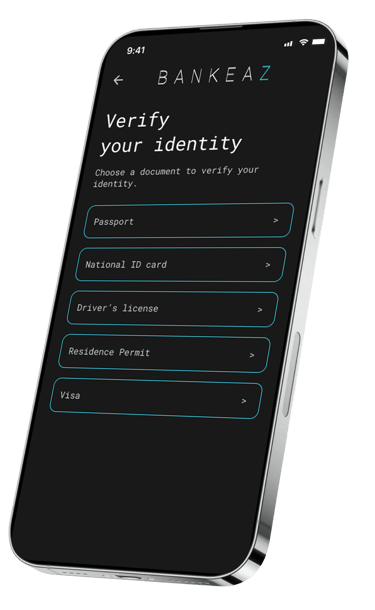
> Conclusion
Alternative proof of address is not a single magic document. It is a selection process: determine what the bank means by residence, confirm accepted issuer and document types, choose accurate evidence in your name, and explain a shared household or recent move without manipulating records.
When an application fails, a specific reason and a documented fallback are more valuable than sending unrelated files. Bankeaz’s broader guidance on how to prepare for verification can help organize the rest of the process.
These actions can reduce avoidable delays in banking abroad, but the underlying landscape remains fragmented. Residency rules, issuer formats, bank policies and country-specific infrastructure still determine what can be verified across borders.
> Related reads
Why Valid Documents Still Fail Abroad
Understand why valid documents issued in one country may be rejected by foreign banks due to different verification and compliance requirements.
Why Digital Nomads Can Struggle With Proof of Address
Understand why frequent moves and temporary accommodation can make it difficult for digital nomads to provide acceptable proof of address.
How to Prepare Foreign-Issued Documents for Bank Verification
Learn how to prepare foreign-issued documents by checking their validity, format, and translation requirements before bank verification.
How to Prepare for Verification
Learn how to organize your identity, address, and financial documents to prepare for banking verification and avoid unnecessary delays.
______________________________________________________________________________________________________________________________________________________
by BANKEAZ
On demand banking services for all


______________________________________________________________________________________________________________________________________________________
Learn more about Expat Banking

Global lives deserve simpler banking.




Download the BANKEAZ app for a 100% mobile banking experience. Available on iOS and Android - public testing by invitation.
Bankeaz is designed for people living between countries. Availability may vary depending on the user’s jurisdiction of residence.
The Bankeaz app is developed by Arcadia, a company currently being incorporated in Switzerland.
Bankeaz does not provide banking services in its own name. Financial services are provided by licensed and regulated partner institutions, in accordance with applicable laws and regulations.
Copyright © 2026 - Arcadia | Bankeaz - All rights reserved
Address
____________________






__________________________________________________________________________________________________________________________________________________


(- - -) - - - - - - - - - -
Zurich - CH
__________________________________________________________________________________________________________________________________________________
___________________________________________________________________________________________________________________________________________________
__________________________________________________________________________________________________________________________________________________
Learn
____________________