
How to Prepare Foreign-Issued Documents for Bank Verification
EXPAT BANKING
Blog > Expat Banking > How to Prepare Foreign-Issued Documents for Bank Verification
How to Prepare Foreign-Issued Documents for Bank Verification
EXPAT BANKING
BANKEAZ | Expats Team
9/26/2026 - 4 min read


Your bank asks for proof of address. You upload a government document issued in your previous country.
It is current, genuine, and contains your name and address. The bank asks for another document.
The issue may not be whether the document is real. The institution may be unable to interpret its format, language, issuing authority, address structure, or relationship to the information already recorded in your profile.
Bankeaz has documented this broader problem: verification becomes more complicated when identity information, addresses, and documents originate in different jurisdictions, while many systems still expect locally familiar formats.
Preparing a foreign document therefore requires more than taking a clear photograph.
Before starting bank verification, identify what the institution accepts, preserve the original file, determine whether translation or authentication is actually required, check identity differences across countries, and submit enough context for the reviewer to understand what the document proves.
Here is a practical way to do that.
Find out exactly what the institution requires before paying for translations, copies, or authentication.
Check Acceptance Before Preparing the File


> Identify What the Bank Will Accept
Do not begin by translating, notarizing, or legalizing every foreign document you own.
Begin with the bank's requirement.
Ask what the document is supposed to prove: proof of identity, proof of address, residence status, tax information, employment, income, source of funds, civil status, or something else.
Then verify the institution's acceptance conditions.
A useful checklist includes the document type, permitted issuing authorities, accepted issuing countries, maximum document age, accepted languages, whether all pages are required, whether an electronic document is acceptable, and whether the bank wants an original, copy, or certified copy.
Requirements vary between institutions and jurisdictions. A document accepted by one provider should not automatically be assumed acceptable elsewhere.
This step is particularly important for proof of address. Your foreign bank statement may show a complete residential address, while the receiving bank may request a government letter or utility document instead. A residence certificate may be valid indefinitely under local rules, but the bank may still impose its own recency requirement.
Ask before paying for additional formalities.
If the instructions are unclear, use the bank's official support or verification channel and request a specific answer such as:
“Can a bank statement issued in Country A be used as proof of address for this verification? If yes, does it require translation or certification?”
That question is much more useful than asking whether “foreign documents” are accepted generally.
Create a submission version without editing the information issued by the original authority.
Protect the Original


> Keep the Original Document Intact
Once you know the document may be used, preserve it exactly as issued.
Do not replace an old address with your new address. Do not translate text directly onto the original image. Do not remove a page because it appears irrelevant. Do not hide transaction lines, official reference numbers, seals, QR codes, or other elements unless the institution explicitly allows redaction.
Create a separate submission copy when necessary, but retain the original.
For electronic documents, use the original PDF downloaded from the issuing authority or institution whenever possible rather than a screenshot. For paper records, capture the complete document with all edges visible and enough resolution for names, numbers, stamps, and dates to be read.
If the document has a front and back, include both when relevant.
Use clear file names rather than leaving several documents called IMG_4827.jpg or scan-final2.pdf.
For example:
01_Passport_Original.pdf
02_Residence_Certificate_Original.pdf
03_Residence_Certificate_Translation.pdf
The purpose is not cosmetic. A reviewer should be able to distinguish the original bank documents from translations and supporting material immediately.
Bankeaz's existing verification guidance also emphasizes readable, current documentation and consistent information across records.


Confirm the accepted language and required type of translation before ordering one
Translate Only What Is Required


> Separate Translation, Certification, and Authentication
Three different requirements are often confused: translation, certification, and document authentication.
A translation makes the content understandable in another language. Before ordering one, ask which languages the institution accepts and whether it requires a specific translator, sworn translator, certified translation, or another format.
A certified copy serves a different purpose. Depending on the jurisdiction and institution, an authorized person may confirm that a copy corresponds to the document presented to them.
Authentication or legalization is another process again.
Under the Hague Apostille Convention, an apostille is used to simplify authentication of certain public documents for use abroad. Importantly, an apostille authenticates elements such as the signature, the capacity of the signer, and the relevant seal or stamp; it does not certify that the underlying document's contents are true.
Do not obtain an apostille simply because a document is foreign.
First ask whether the receiving institution requires one, whether the document qualifies, and which authority in the issuing country handles the process. Official UK guidance, for example, explicitly tells applicants to check with the person requesting the document whether legalization is necessary and whether the original or a certified copy is required.
Requirements can also be simplified by regional rules. For example, certain public documents moving between EU countries are exempt from apostille requirements under EU rules, although those rules cover defined document categories rather than every possible banking record.
The practical rule is simple: confirm first, formalize second.
Cross-country naming, address, and date conventions can differ. Make the connection clear without modifying official records.
Explain Differences—Do Not Erase Them


> Reconcile Names, Addresses, and Cross-Country Formats
Foreign-issued documents often contain information that is correct locally but appears different when compared internationally.
Your passport may include two surnames while another country's system stores only one. A middle name may be omitted. Accents may disappear. A name written in a non-Latin alphabet may appear under a transliterated spelling.
Addresses can create similar problems.
One document may list an apartment before the street number. Another may abbreviate the region. A bank statement from your previous country may naturally contain your previous address rather than your new residence.
Do not edit official documents to make them match.
Instead, compare the core identity fields before submitting:
legal name and name order;
date of birth;
document number;
issuing country;
current and previous addresses;
transliteration or alternative spellings;
relevant dates.
Bankeaz's existing profile-consistency guidance notes that even differences involving abbreviations, middle names, or alternative spellings can lead to additional verification checks.
Where the institution permits explanatory material, provide a short factual note.
For example:
“Passport uses my full legal name, Ana María Santos Ribeiro. My French utility account records Ana Santos Ribeiro. Both records refer to the same person.”
Do not invent explanations or describe a difference as harmless if you do not know why it exists. If an official record contains an actual error, ask the issuing authority about correction instead of trying to repair the document yourself.
Put originals, translations, supporting evidence, and explanations in an order a reviewer can follow.
Build One Verification Package


> Submit a Document Map, Not a Document Pile
Suppose a bank asks for proof of your present address, but your strongest supporting records span two countries.
Instead of uploading six unexplained files, create a clear sequence:
Requirement: current residential address
Primary evidence: residence certificate issued in Country B
Language: original in Language B
Translation: attached if required
Supporting identity document: passport from Country A
Explanation: address changed after relocation on the stated date
This is different from creating an oversized KYC archive.
Submit only the material the institution requests or reasonably needs to understand the evidence. Excess documents can introduce additional addresses, expired identifiers, old employers, or unrelated personal information that may create new questions.
Use the institution's official upload channel whenever available. Keep a secure copy of exactly what you submitted and record the date, case number, and any follow-up request.
If the bank rejects the document, ask for the reason rather than immediately sending multiple alternatives.
Was the problem the document type? The country of issue? Its age? The language? Missing pages? Certification? A mismatch in your customer profile?
That answer determines the next action.
For internationally mobile people, this creates a reusable method for future identity verification: understand the requirement, preserve the evidence, explain legitimate differences, and respond specifically to the institution's concern.
Confirm that the reviewer can identify what the document is, who issued it, what it proves, and how it relates to you.
Run the Final Foreign-Document Check


______________________________________________________________________________________________________________________________________________________
> Key Takeaways
✓ Confirm exactly what the bank wants the foreign document to prove.
✓ Check accepted issuing countries, languages, document age, copy format, and certification requirements before spending money on preparation.
✓ Preserve the original document and keep translations or explanations separate.
✓ Treat translation, certified copies, and apostilles as different processes.
✓ Obtain authentication only when it is required and applicable to the document involved.
✓ Compare legal names, transliterations, addresses, dates, and document identifiers before submission.
✓ Explain legitimate cross-country differences rather than editing the evidence.
✓ Submit a structured package containing only relevant material.
✓ Keep a record of what you submitted and ask for the specific reason if a document is rejected.
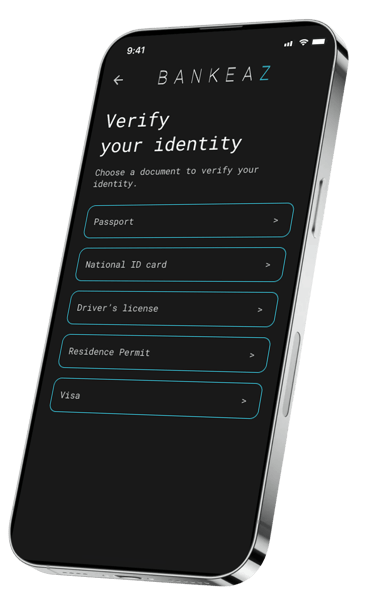
Use the KYC journey to organize documents.
Separate originals, supporting evidence, and verification status.
Do not assume unconfirmed functionality.
Understand the Verification Journey
> Conclusion
Foreign-issued documents do not need to look domestic. They need to satisfy the receiving institution's requirement and make your identity or supporting information sufficiently understandable for review.
Start by determining exactly what the bank accepts. Preserve the original document. Check language requirements before ordering translations. Treat certification, translation, and authentication as separate questions. Then compare your name, address, dates, and other identity details across countries and explain genuine differences without altering official evidence.
Finally, organize the submission so that every file has a clear purpose.
These actions cannot guarantee approval because each institution applies its own bank verification, compliance, and document-acceptance procedures. They can, however, reduce avoidable ambiguity.
For people banking abroad, some complexity remains structural: international identities continue to pass through country-specific document systems, verification standards, databases, and compliance processes that do not always connect smoothly across borders.
> Related reads
Why Valid Documents Still Fail Abroad
Explains why legitimate passports, addresses, visas, and other records can create problems when banking systems expect different national formats.
Why Systems Don’t Read International Profiles Properly
Examines how naming conventions, document formats, national databases, and fragmented identity systems affect cross-border verification.
How to Prepare for Verification
A broader preparation guide covering identity documents, proof of address, information consistency, and international activity.
How to Keep Your Financial Profile Consistent
Useful for maintaining names, addresses, residency information, and other customer data across financial institutions.
______________________________________________________________________________________________________________________________________________________
by BANKEAZ
On demand banking services for all


______________________________________________________________________________________________________________________________________________________
Learn more about Expat Banking

Global lives deserve simpler banking.





Download the BANKEAZ app for a 100% mobile banking experience. Available on iOS and Android.
Bankeaz is designed for people living between countries. Availability may vary depending on the user’s jurisdiction of residence.
The Bankeaz app is developed by Arcadia, a company currently being incorporated in Switzerland.
Bankeaz does not provide banking services in its own name. Financial services are provided by licensed and regulated partner institutions, in accordance with applicable laws and regulations.
Copyright © 2026 - Arcadia | Bankeaz - All rights reserved
Address
____________________






__________________________________________________________________________________________________________________________________________________


(- - -) - - - - - - - - - -
Zurich - CH
__________________________________________________________________________________________________________________________________________________
___________________________________________________________________________________________________________________________________________________
__________________________________________________________________________________________________________________________________________________
Learn
____________________