
How to Check the Recipient Account Currency Before an International Transfer
EXPAT BANKING
Blog > Expat Banking > How to Check the Recipient Account Currency Before an International Transfer
How to Check the Recipient Account Currency Before an International Transfer
EXPAT BANKING
BANKEAZ | Expats Team
9/02/2026 - 4 min read


A recipient sends you an IBAN and asks for 2,000 EUR. The account is held in another country, your transfer provider offers several currency choices, and everything appears ready.
One important question is still unanswered: what currency is the recipient’s bank account actually designed to receive?
The answer cannot safely be inferred from the country alone. Standard IBAN structures identify an account and its country but do not contain a universal account-currency field. ISO describes the IBAN as an identifier for an individual payment account, while central-bank guidance describes elements such as country code, check digits, bank information, and account number.
That distinction matters because an incoming foreign-currency payment can be treated differently from bank to bank. It may be credited in the original currency, converted into the account currency, require different receiving instructions, or face additional processing.
Here is how to establish the currency path before making an international transfer.
Do not begin with the sender’s currency menu. Begin with evidence from the recipient’s account.
Ask for Currency-Labeled Account Details


> Get the Currency From the Recipient’s Banking Information
The simplest first step is to ask the beneficiary one precise question:
“What currency is this exact account intended to receive?”
Avoid asking only, “Can I send euros to this account?” That could produce an ambiguous yes. A bank may technically accept EUR but convert it immediately into another account currency.
Instead, ask the recipient to check their bank-generated account information, online-banking account-details screen, statement, payment instructions, or bank support information.
You want to establish four separate facts:
the account holder;
the exact account number or IBAN;
the account currency;
the receiving instructions for the currency you intend to send.
This distinction is reflected even in formal banking-information documents. For example, the European Commission’s financial-identification form treats “IBAN/account number” and “currency” as separate fields rather than assuming one can be derived from the other.
If the beneficiary holds several balances—such as EUR, USD and GBP—ask whether each uses the same account details or different receiving instructions.
Do not reuse old details simply because a previous payment arrived.
An FR, DE, GB or other country code helps identify the account location. It does not by itself prove the currency of the account.
Separate Account Country From Account Currency


> Do Not Guess the Currency From the IBAN or Country
A French IBAN does not automatically prove that the underlying account should receive EUR. A British account is not automatically a GBP-only account. Internationally mobile individuals and businesses may hold accounts or balances denominated in currencies different from the country where the account is maintained.
The standardized IBAN structure tells you how to identify the payment account. It includes information such as the country code and account identifier; it is not a universal code for determining the balance currency.
Apply the same caution to a SWIFT/BIC. A BIC identifies a financial institution or relevant branch information; it should not be treated as proof of the beneficiary account’s currency.
This gives you a useful rule:
Use account identifiers to verify where the money is going. Use explicit banking information to verify which currency that account receives.
That separation is especially important for recipients who have moved abroad, use multi-currency banking arrangements, receive international business payments, or maintain foreign-currency accounts.


The money you fund, the currency sent through the payment route, and the currency finally credited may not be identical.
Map Every Currency in the Transfer


> Write Down the Complete Currency Path
Before comparing the exchange rate, create a simple three-line record:
Funding currency: What currency leaves your account?
Transfer currency: What currency does the provider send toward the beneficiary?
Account currency: What currency will the receiving bank credit?
These can all be the same. But they do not have to be.
For example, you might fund a transfer in EUR, ask the provider to convert it to USD, and send USD to an account whose base currency is GBP. If the receiving bank accepts the payment but converts it again, two separate currency conversion events may occur.
Bank policies differ. HSBC, for example, states for one of its international-receivables services that when an incoming payment differs from the account currency, it automatically converts the payment before crediting the account. That is an example of why the receiving bank’s own policy matters; another institution or account type may operate differently.
Your objective is therefore not simply “send USD” or “send EUR.”
It is to know who performs each conversion, at what stage, and what currency reaches the account.
Confirm what happens when the incoming payment currency differs from the account currency.
Check the Receiving Bank’s Treatment


> Ask What Happens to a Mismatched Currency
Once you know the account currency, check what happens if you send something else.
The recipient can ask their bank or review its official payment guidance:
Can this account receive the proposed foreign currency?
Will the bank keep that currency or automatically convert it?
Which exchange rate is used if conversion occurs?
Can an incoming-payment fee apply?
Are different SWIFT or intermediary instructions required for that currency?
Would another account be more appropriate?
Do not assume that a transfer provider’s quoted “recipient gets” amount always describes what remains after every possible recipient-bank action. The quote may describe the provider’s delivery stage rather than a later conversion performed by another institution.
This is where hidden transfer fees can become broader than a visible transfer charge. The economic result can also depend on an exchange-rate spread, intermediary deductions or receiving-bank treatment. Bankeaz’s existing real-cost guide similarly recommends evaluating the final recipient amount rather than focusing only on the advertised transfer fee.
For an invoice, tuition payment, property payment or other fixed obligation, also ask which currency the recipient considers the debt settled in.
Agree on the currency and usable amount the recipient expects—not only the amount you intend to send.
Define the Recipient Outcome


> Create a Pre-Send Currency Record
Before authorizing the payment, record the evidence you used.
For a significant transfer, keep:
the recipient’s current account details;
the stated account currency;
the currency you selected with the provider;
the exchange rate quoted when conversion occurs;
the expected amount delivered by the provider;
any known receiving-bank conversion;
expected transfer and receiving fees;
the date the instructions were confirmed.
This becomes your reference if the credited amount differs from what either party expected.
It is particularly useful for recurring payments. Instead of assuming the same route is still appropriate next month, compare the new instruction with the previous record. A beneficiary may have changed bank, opened a new currency account, changed receiving instructions, or decided that a different currency is more useful.
For a high-value transfer where uncertainty remains, ask the bank or payment provider for clarification before sending. A small test transfer can sometimes provide additional information, but it should not be treated as a guarantee that a larger payment will follow exactly the same processing route.
The practical goal is a documented expectation: which account, which currency and approximately what credited result?
That turns currency checking into a repeatable process rather than a guess.
Review the account, sending currency, receiving currency, conversion points and expected credit together.
Run the Final Currency Check


______________________________________________________________________________________________________________________________________________________
> Key Takeaways
✓ Ask the recipient for the currency of the exact account you intend to use.
✓ Prefer explicit bank-generated account information over assumptions based on the recipient’s country.
✓ Do not treat an IBAN or SWIFT/BIC as proof of the account currency.
✓ Write down the funding currency, transfer currency and final account currency separately.
✓ Ask what the receiving bank does when an incoming payment arrives in another currency.
✓ Check whether a second conversion could occur after your transfer provider has completed its own conversion.
✓ Compare the expected recipient outcome, not only the visible transfer fees.
✓ Keep current account and currency instructions for important or recurring cross-border payments.
✓ Reconfirm the currency path whenever the beneficiary changes account details or receiving preferences.
Review transfers alongside your wider financial picture.
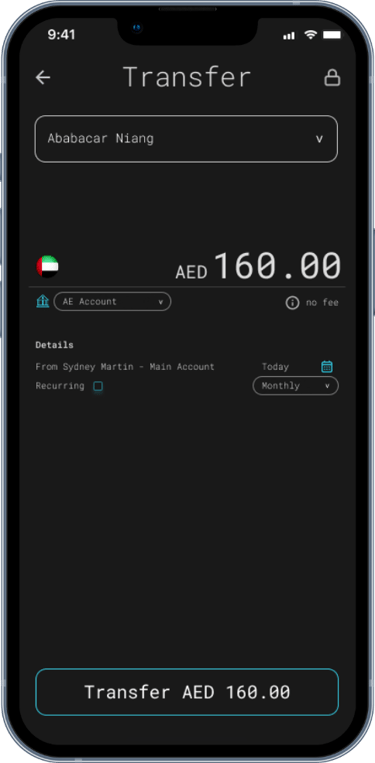
Bankeaz includes Transfers in its cross-country product direction.
Bankeaz access remains limited; keep your own family-support records.
Put Cross-Border Transfers in Context
> Conclusion
Checking the recipient account currency requires more than looking at the country, IBAN or currency selector in your own banking app.
Start with the beneficiary’s current banking information and identify the currency attached to the exact account. Then separate the currency you fund, the currency the provider sends and the currency the receiving bank credits. If any two differ, determine where currency conversion occurs and what exchange-rate or receiving-bank treatment may apply.
Finally, record the expected recipient outcome before authorizing an important payment. That gives both parties something concrete to compare with the amount ultimately credited and provides a clearer picture of the real transfer cost.
These checks can remove some avoidable currency uncertainty. International payments can still depend on separate banks, foreign-exchange processes, intermediary institutions and country-specific payment infrastructure, so part of the complexity of moving money across borders remains outside the sender’s direct control.
> Related reads
Why €1000 can become €947 in international transfers
Explains how conversion margins and intermediary deductions can reduce the amount received.
Why Remittances Alone Cannot Build Diaspora Wealth
Explores the difference between sending recurring support and building longer-term family financial resilience.
How to Verify Beneficiary Details Before an International Transfer
Broader verification of beneficiary, account and routing information.
How to Check the Real Cost of an International Money Transfer
Practical comparison of transfer fees, exchange rates and final amounts received.
______________________________________________________________________________________________________________________________________________________
by BANKEAZ
On demand banking services for all


______________________________________________________________________________________________________________________________________________________
Learn more about Expat Banking

Global lives deserve simpler banking.





Download the BANKEAZ app for a 100% mobile banking experience. Available on iOS and Android - public testing by invitation.
Bankeaz is designed for people living between countries. Availability may vary depending on the user’s jurisdiction of residence.
The Bankeaz app is developed by Arcadia, a company currently being incorporated in Switzerland.
Bankeaz does not provide banking services in its own name. Financial services are provided by licensed and regulated partner institutions, in accordance with applicable laws and regulations.
Copyright © 2026 - Arcadia | Bankeaz - All rights reserved
Address
____________________






__________________________________________________________________________________________________________________________________________________


(- - -) - - - - - - - - - -
Zurich - CH
__________________________________________________________________________________________________________________________________________________
___________________________________________________________________________________________________________________________________________________
__________________________________________________________________________________________________________________________________________________
Learn
____________________