
How to Check Recipient-Bank Fees Before Sending Money Abroad
EXPAT BANKING
Blog > Expat Banking > How to Check Recipient-Bank Fees Before Sending Money Abroad
How to Check Recipient-Bank Fees Before Sending Money Abroad
EXPAT BANKING
BANKEAZ | Expats Team
10/21/2026 - 4 min read


You are about to send €2,000 to a family member abroad. Your transfer provider shows a €0 sending fee and a clear payment estimate. Everything appears straightforward.
But will the recipient's bank credit the entire expected amount?
Some banks charge for incoming international payments. Others may apply different conditions according to the recipient's account type, payment currency or transfer network. The receiving institution may also convert the payment into the account's currency, affecting the usable balance.
These charges are not necessarily included in the sender's transfer estimate.
Before confirming an international money transfer, you need to establish what happens after the payment reaches the beneficiary's bank.
This guide explains how to find the applicable receiving-bank tariff, verify whether charges apply, distinguish fees from conversion effects and record the expected outcome before sending.
The objective is not to eliminate every possible deduction. It is to replace assumptions with verifiable information.
Identify the institution, account and payment method before looking up incoming-transfer charges.
Start With the Receiving Bank


> Identify the Exact Receiving Bank and Account
Start by confirming where the money will actually be credited.
A recipient may provide an IBAN, local account number, SWIFT/BIC or payment instructions generated by an intermediary service. These details help identify a destination, but they do not necessarily explain which entity applies the final account charges.
Ask the recipient to confirm:
The legal name of the account-holding institution.
The account type: personal, business, savings or another eligible category.
The currency in which the account is maintained.
The incoming payment method accepted by that account.
Any correspondent or intermediary instructions supplied by the bank.
This distinction matters because one banking group may operate several legal institutions across different countries, each with its own tariff.
Even within one bank, personal and business accounts can have different incoming-payment conditions. Premium account packages may provide exemptions unavailable to standard customers.
Do not assume that a recognizable banking brand means the same pricing applies everywhere.
When possible, obtain the account information directly from the recipient's banking application, an official account certificate or the institution's secure customer-support channel.
Avoid relying exclusively on an old payment receipt or a previously used transfer template.
Practical action: Create a one-line beneficiary record stating the exact institution, account category, currency and proposed transfer method.
Look for the receiving bank's official charges for incoming international payments.
Find the Published Tariff


> Locate the Incoming International Transfer Fee
Once you know the receiving institution, find its current fee schedule.
Banks may publish tariffs under different names, including Schedule of Charges, Personal Banking Fees, International Payments, Foreign Transfers or Incoming Wire Transfers.
Search the official bank website or request the document through a verified customer-service channel.
Focus on the section describing money received from another institution or country. Do not confuse outgoing transfer fees with incoming fees.
Check whether the tariff specifies:
A fixed charge per incoming international transfer.
A percentage of the incoming amount.
A minimum or maximum fee.
Different pricing for domestic, regional and international payment systems.
A separate charge for foreign-currency receipts.
Exemptions linked to specific account packages.
For example, a hypothetical bank might charge a fixed €10 equivalent for each incoming international wire. Another might charge 0.2% of the transferred amount, subject to a minimum.
These examples illustrate possible pricing structures, not the tariffs of a particular institution.
The recipient should verify the exact fee and whether it is deducted from the incoming amount or debited separately from the account balance.
Also check the effective date. A downloaded tariff from last year may no longer apply.
Official consumer guidance from the U.S. Office of the Comptroller of the Currency recommends reviewing the account agreement and applicable fee schedules to understand wire-transfer charges.
Practical action: Save the relevant tariff page and its effective date. If the published terms are ambiguous, ask the bank for written clarification before sending.


Confirm whether the published tariff applies to the exact payment being planned.
Ask the Bank What Happens on Arrival

> Confirm How the Bank Will Process the Payment
Finding a fee in a tariff does not always establish whether it will apply to your particular transfer.
The recipient may have an account package that includes incoming payments, a special arrangement or conditions linked to a particular payment system.
Ask the receiving bank to clarify the exact transaction.
A useful message would specify the intended amount, sending country, payment currency, receiving-account currency and payment method.
The recipient can then ask:
Will this account accept the proposed payment?
What incoming-payment fee will apply?
Will that fee be deducted from the transfer or charged separately?
Will the bank convert the incoming currency?
Are there exemptions or additional charges associated with this account?
If the institution cannot provide a precise fee without knowing the route, ask what information is missing.
For example, a bank may need to distinguish a regional credit transfer from an international SWIFT payment. The same beneficiary account can sometimes receive both, but the processing and pricing arrangements may differ.
Do not assume that every payment described as international follows the same network.
Where the expected transfer is substantial or the beneficiary must receive an exact amount, request written confirmation through the bank's official secure channel.
Remember that a receiving bank can explain its own charges without necessarily knowing every intermediary deduction that may occur before the payment arrives.
Practical action: Record the bank's response, the date, the currency and any conditions attached to the quoted charge.
Distinguish sender charges, intermediary deductions and the recipient bank's own fees.
Separate the Three Cost Categories


> Distinguish Receiving Fees From Other Deductions
A transfer can arrive below the expected amount even when the receiving bank's published incoming fee is correct.
This is because a cross-border payment may involve several charging institutions.
The sender's provider may charge for initiating the transaction. An intermediary bank may deduct a processing charge during the payment journey. The beneficiary's bank may then impose its own incoming-payment fee.
These are separate potential costs.
In some international wire arrangements, charges are allocated using instructions described as OUR, SHA or BEN.
Broadly, OUR indicates that the sender is intended to bear charges, SHA allocates applicable charges between sender and beneficiary, and BEN indicates that the beneficiary bears charges. However, the actual outcome depends on the payment network, contractual arrangements and participating institutions. Selecting OUR does not universally guarantee that the beneficiary receives the exact instructed amount.
Ask the sending provider which allocation options are available and whether the route can still generate third-party deductions.
This matters because the receiving bank may not be responsible for a fee taken by an intermediary before the funds arrive.
U.S. remittance disclosure rules explicitly distinguish certain intermediary fees from charges imposed by the designated recipient's institution. Depending on the applicable regulation, some receiving-bank fees may be disclosed as possible additional charges without their exact amount being included in the initial recipient estimate.
Regulatory requirements differ by jurisdiction and transfer type.
Practical action: Keep separate records for sending fees, intermediary charges, receiving-bank fees and currency conversion. Avoid describing every unexplained difference as a receiving-bank fee until the deduction has been identified.
Combine known charges with the receiving bank's currency treatment.
Estimate the Amount Actually Credited


> Document the Expected Credit and Verify the Actual Result
Before authorizing the payment, prepare a short record of what the beneficiary is expected to receive.
Begin with the sending provider's quotation. Record the amount sent, the currency, the exchange rate if applicable and the amount the provider expects to deliver.
Next, incorporate any confirmed incoming-bank charge and any receiving-side conversion that can reasonably be estimated.
Consider a purely illustrative example:
Component
Amount
Provider's estimated delivery
€1,000
Known receiving-bank fee
−€10
Estimated final credit
€990
This simplified calculation assumes that the receiving bank deducts €10 from the incoming funds, with no further conversion or intermediary charges.
Real transfers may produce a different result.
If intermediary deductions remain unknown, identify them as an uncertainty rather than inventing a figure.
For important payments, ask whether the recipient needs an exact credited amount or merely needs to receive funds approximately equal to the sender's intended transfer.
That distinction is particularly important for rent, tuition, invoices and contractual obligations.
After the payment arrives, the recipient should check the actual account credit and, when available, the associated transaction advice.
Compare the result with the pre-send record.
If the amount is lower, ask the institution that handled the relevant stage for an itemized explanation. A receiving-bank fee should ideally be identifiable separately from conversion effects or deductions made earlier in the payment chain.
Where appropriate, request a payment trace through the sending institution.
Do not automatically assume that a second transfer will use identical routing or pricing. Account conditions, correspondent relationships and fee schedules can change.
Practical action: Maintain a reusable transfer record containing the recipient's bank, tariff source, confirmation date, expected credit, actual credit and any unexplained variance.
This makes future payments easier to assess without treating past results as guarantees.
Preserve the bank's tariff, written confirmation and actual credited amount.
Keep the Evidence for Next Time


______________________________________________________________________________________________________________________________________________________
> Key Takeaways
✓ Identify the exact receiving institution and account category.
✓ Obtain the current official incoming-payment fee schedule.
✓ Confirm whether charges apply to the specific transfer method and currency.
✓ Ask whether the recipient bank deducts fees from incoming funds or debits them separately.
✓ Distinguish intermediary-bank deductions from the recipient bank's own charges.
✓ Check whether the receiving bank will convert the incoming currency.
✓ Record confirmed amounts separately from estimates and unknown charges.
✓ Compare the eventual account credit with the pre-send expectation.
✓ Preserve the tariff and written confirmation for future reference.
International payments involve multiple institutions, currencies and fees.
IUnderstanding each stage helps make informed payment decisions.
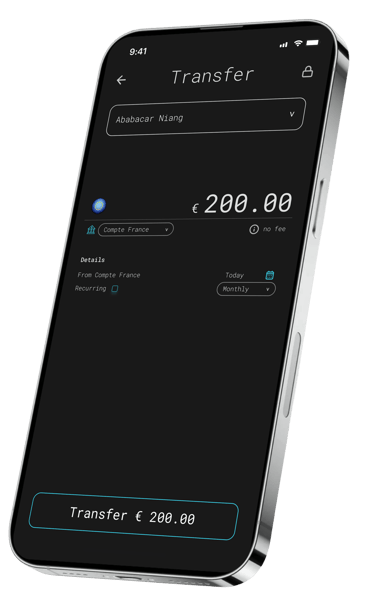
Bankeaz is a multi-country banking application
Understanding Transfers Across Borders
> Conclusion
Checking the recipient bank's fees is a distinct step from comparing transfer providers.
Before sending money abroad, identify the actual beneficiary institution, consult its current pricing, confirm how the intended payment will be processed and establish whether receiving-side conversion or account-specific charges may apply.
Separate confirmed charges from amounts that remain uncertain.
After the transfer, reconcile the bank's actual credit with the original expectation and retain the relevant records.
This procedure does not guarantee that every deduction can be predicted. It does, however, provide a clearer basis for understanding the amount received and for investigating differences.
For people managing money across countries, these checks can reduce avoidable uncertainty. International payments nevertheless remain dependent on multiple institutions, local banking practices and financial infrastructures that do not always operate as one integrated system.
> Related reads
Why Fees Change Between Transfers
Explains why similar payments can generate different costs.
Why International Payments Pass Through So Many Banks
Explains how correspondent and intermediary institutions participate in cross-border payment processing.
How to Check the Real Cost of an International Money Transfer
Provides a broader framework for comparing overall transfer costs.
How to Prepare Foreign-Issued Documents for Bank Verification
Learn how to prepare foreign-issued documents by checking their validity, format, and translation or authentication requirements before submitting them to your bank.
______________________________________________________________________________________________________________________________________________________
by BANKEAZ
On demand banking services for all


______________________________________________________________________________________________________________________________________________________
Learn more about Expat Banking

Global lives deserve simpler banking.





Download the BANKEAZ app for a 100% mobile banking experience. Available on iOS and Android - public testing by invitation.
Bankeaz is designed for people living between countries. Availability may vary depending on the user’s jurisdiction of residence.
The Bankeaz app is developed by Arcadia, a company currently being incorporated in Switzerland.
Bankeaz does not provide banking services in its own name. Financial services are provided by licensed and regulated partner institutions, in accordance with applicable laws and regulations.
Copyright © 2026 - Arcadia | Bankeaz - All rights reserved
Address
____________________






__________________________________________________________________________________________________________________________________________________


(- - -) - - - - - - - - - -
Zurich - CH
__________________________________________________________________________________________________________________________________________________
___________________________________________________________________________________________________________________________________________________
__________________________________________________________________________________________________________________________________________________
Learn
____________________