
How Remote Workers Can Prepare Cross-Border Income Evidence for Bank Verification
EXPAT BANKING
Blog > Expat Banking > How Remote Workers Can Prepare Cross-Border Income Evidence for Bank Verification
How Remote Workers Can Prepare Cross-Border Income Evidence for Bank Verification
EXPAT BANKING
BANKEAZ | Expats Team
11/07/2026 - 4 min read


A freelance designer receives three client payments from different countries. A bank asks where the deposits came from, but the designer has invoices in one folder, contracts in another and payment-platform statements in a third. The money is legitimate; the evidence simply does not tell a connected story.
For remote workers, bank verification may involve more than showing an employment letter. The institution might need to understand who paid you, for what work, through which intermediary and why the amounts reaching your bank account differ from the amounts originally invoiced. The Basel Committee’s guidance on customer due diligence explains why banks use information about their customers and activities in ongoing assessment. For a wider perspective on managing earnings and accounts internationally, see International Banking.
This guide shows how to build a practical, reusable evidence trail for foreign salary, freelance fees and platform payouts. It is about preparing truthful documentation, not circumventing KYC checks or predicting what any institution will accept.
Choose salary, freelance services or platform earnings before assembling evidence.
Identify Your Income Type


> Identify the income category before collecting files
Start by classifying each incoming payment. A monthly salary paid by a foreign employer, a freelance fee under a service agreement and a withdrawal from a creator platform may look similar on a statement, but their supporting records differ. Do not label all incoming money “salary” merely because it finances living expenses.
For employment income, collect the signed employment contract or engagement letter, recent payslips when issued and the employer’s payment reference. If work is performed through an employer-of-record provider, identify both the legal employer and the entity appearing on the payment. For freelance income, keep a signed contract, statement of work or accepted purchase order alongside invoices and proof of delivery where relevant. When relocation adds uncertainty about local documentation and account requirements, the Bank for Expats guide provides additional context.
For platform income, retain the platform’s account statement and payout report showing earnings, adjustments and withdrawal details. A screenshot of a balance is rarely as informative as the downloadable transaction record. For dividends, reimbursements or transfers between your own accounts, use the correct classification and collect different evidence rather than treating those amounts as service revenue.
Make a one-page income profile stating the type of work, payer names, countries, typical frequency, approximate value range and expected payment channels. Keep it factual and dated. This gives a reviewer a starting point without forcing them to infer your work arrangement from a collection of unrelated files.
Use an income register to link each payer, invoice and incoming transfer.
Connect Contract to Credit


> Link every payment to the contract and invoice
Build a simple payment evidence register with one row per incoming deposit. Record payment date, payer, contract or project reference, invoice number, invoice currency, gross amount, payment provider, net credited amount and the bank transaction reference. The register is an explanatory index, not a substitute for original records.
Consider a €2,000 design invoice issued to a company abroad. The client pays €2,000 to a payment platform; the platform deducts €35 in processing fees and converts the balance before settlement. Your bank receives an amount in a different currency. Without the platform payout report, the invoice and bank statement appear inconsistent. With a clear chain, the figures can be reconciled.
Keep original contracts and invoices unaltered. Match payment references exactly where available, including when the payer is a group treasury company rather than the client named in the contract. If the relationship is not obvious, obtain a genuine remittance advice or short confirmation from the client; do not create paperwork purporting to come from a third party.
This approach is more specific than general document preparation. Bankeaz’s guide to preparing foreign-issued documents addresses acceptance, formats and translations; the focus here is matching work evidence to actual funds received. For a broader view of how people navigate financial services across jurisdictions, consult Banking Beyond Borders.


Explain settlement fees, currency changes and partial payments with real reports.
Reconcile What Arrived


> Explain deductions, timing differences and multiple currencies
The amount on an invoice is not always the amount that reaches your account. Payment processors may deduct fees, clients may pay in instalments, banks may apply conversion, and payments may arrive days after the invoice due date. Prepare a reconciliation that explains each difference using documentary evidence.
For example, list gross invoice amount, withholding tax if documented, platform fees, currency exchange where applicable and final net amount credited. Where exact FX rates or individual fee allocations are unavailable, say so and attach the provider’s actual settlement record. Avoid inventing a conversion rate merely to make your spreadsheet balance.
When a foreign currency payment passes through two institutions, retain both the sender-side confirmation if available and the receiver-side statement. For batch payouts, use the platform’s underlying transactions report to show which client invoices were combined. If a client pays an advance for future work, record that it is an advance rather than backdating completed services. More examples of everyday cross-country payment and account friction appear in Money Problems Abroad.
Banks may seek information about the origin and purpose of funds based on risk and applicable rules. The EU anti-money-laundering framework provides examples of enhanced due diligence involving information about source of funds in specified circumstances. This does not mean every remote worker must produce an identical package; the bank’s actual request remains decisive.
Submit only relevant files through the institution’s trusted channel.
Prepare a Secure Evidence Pack


> Build a secure, reviewer-friendly evidence pack
Arrange documents by income stream and month rather than maintaining one unstructured upload folder. A useful set contains a short cover note, income register, relevant contract, invoices, platform settlement reports and bank statement pages that show the corresponding credits. Keep the full originals securely available if an institution subsequently requests them.
Use meaningful names such as 2026-09_ClientA_Invoice-018.pdf and 2026-09_Platform_Payout-472.pdf. Avoid putting passport numbers, account numbers or private identifiers into filenames. Review names, dates, currencies and payer references for consistency without editing the underlying evidence.
Only send what the institution asks for, using its authenticated portal or another verified secure channel. Do not email a full financial archive to an unverified address or share unrestricted cloud folders. Apply access controls and keep a record of which files were submitted and when. If redaction is permitted, follow the recipient’s instructions; unapproved redaction can make a document unusable.
If a document is in another language or issued abroad, first check the receiving bank’s accepted language, age and certification rules. The Bankeaz foreign-document preparation guide discusses this separate issue. A clear index reduces confusion, but neither a cover note nor a translation changes the legal status of the original evidence.
Maintain one monthly process for new payers, platforms and supporting records.
Stay Ready for New Requests


> Maintain a change log and prepare for targeted follow-up questions
Income evidence is not a one-time task. Remote workers change clients, switch payroll providers, move between countries and adopt new payout services. Create a brief monthly routine: download statements, match deposits to invoices, store contracts for new clients and flag any unusual amount or missing reference while the details are still fresh.
Keep a separate change log recording when your employer, business structure, residence or payment channel changes. Note the effective date and supporting document. A change in work location does not automatically determine tax residence, so do not present a travel itinerary as a tax determination. Where tax or immigration implications matter, seek qualified country-specific advice. Workers who also support relatives in a country of origin may find the separate Diaspora Banking guide useful for understanding that distinct financial context.
For a follow-up request, answer the specific question first. If the bank asks who made a single €4,500 transfer, provide the contract or invoice, payment reference and a concise explanation of the payer relationship. If it asks for a broader income history, request the period, acceptable document types and whether full or selected statements are required.
When a deposit cannot be reconciled immediately, be transparent about the missing link and request an authentic record from the payer or platform. Never manufacture an invoice, alter a bank statement or present an estimated figure as a confirmed transaction. Good cross-border banking documentation is an accurate account of what happened, including any genuine gaps.


______________________________________________________________________________________________________________________________________________________
> Key Takeaways
✓ Classify each incoming payment as salary, freelance revenue, platform earnings or another genuine category.
✓ Connect the payer, contract, invoice and bank credit in one evidence register.
✓ Explain payment platform fees, currency conversion and split settlements with authentic records.
✓ Keep original records unchanged and send only requested information through trusted channels.
✓ Review new clients and payment channels monthly, and answer follow-up questions specifically.
Bankeaz is developing tools for international finance.
Income documentation helps prepare for bank verification.
Availability and acceptance depend on each institution.
Understanding Verification Across Borders
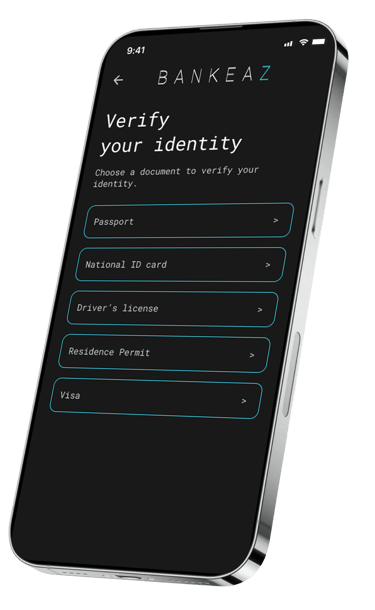
> Conclusion
Remote workers can prepare for income checks by identifying each type of income, linking contracts and invoices to deposits, explaining fees and currency movements, assembling a secure evidence pack and keeping a record of changes. A small monthly reconciliation often makes an unexpected request easier to answer than reconstructing a year of payments at once.
The goal is not to send more documents than necessary or to guarantee approval. It is to present genuine information in an order that an institution can evaluate. Even careful preparation cannot remove every delay: work and money move internationally, while banking abroad still depends on different institutions, country-specific requirements and systems that do not always share the same context.
> Related reads
Why remote worker can face more verifications
Discover why working remotely across countries can trigger additional banking checks on income, identity, and residency.
Why Digital Nomads Can Struggle With Proof of Address
Understand why frequent moves and temporary accommodation can make it difficult for digital nomads to provide acceptable proof of address.
How to Prepare Foreign-Issued Documents for Bank Verification
Learn how to prepare foreign-issued documents by checking their validity, format, and translation requirements before bank verification.
How to Prepare for Verification
Learn how to organize your identity, address, and financial documents to prepare for banking verification and avoid unnecessary delays.
______________________________________________________________________________________________________________________________________________________
by BANKEAZ
On demand banking services for all


______________________________________________________________________________________________________________________________________________________
Learn more about Expat Banking

Global lives deserve simpler banking.





Download the BANKEAZ app for a 100% mobile banking experience. Available on iOS and Android - public testing by invitation.
Bankeaz is designed for people living between countries. Availability may vary depending on the user’s jurisdiction of residence.
The Bankeaz app is developed by Arcadia, a company currently being incorporated in Switzerland.
Bankeaz does not provide banking services in its own name. Financial services are provided by licensed and regulated partner institutions, in accordance with applicable laws and regulations.
Copyright © 2026 - Arcadia | Bankeaz - All rights reserved
Address
____________________






__________________________________________________________________________________________________________________________________________________


(- - -) - - - - - - - - - -
Zurich - CH
__________________________________________________________________________________________________________________________________________________
___________________________________________________________________________________________________________________________________________________
__________________________________________________________________________________________________________________________________________________
Learn
____________________