Why Diaspora Family Finances Stay Fragmented
EXPAT BANKING
Blog > Expat Banking > Why Diaspora Family Finances Stay Fragmented
Why Diaspora Family Finances Stay Fragmented
EXPAT BANKING
BANKEAZ | Expats Team
7/30/2026 - 4 min read


Family money can cross borders every month, but the banking experience often stays broken.
That is the reality for many diaspora households. One person may earn abroad, support relatives back home, save in another currency, pay school fees locally, and manage emergencies across several countries. Yet most banks still organize financial life around one country, one address, and one domestic account.
This is why diaspora banking remains fragmented. The problem is not only sending money. It is managing family obligations across systems that do not connect well.
For diaspora communities, that fragmentation creates delays, transfer fees, repeated checks, unclear balances, and stress when money is needed quickly.


You live internationally. Your bank should too.
Manage your money across countries without hidden fees, delays, or complexity.
Simplify your financial life abroad with Bankeaz.
Banking built for life between countries
Free early access
> Why are diaspora finances split across countries?
Diaspora family finances are split because life itself is split across countries.
A person may live and work in France, the UK, Germany, Canada, or the US while supporting parents, children, siblings, or business projects in another country. Income arrives in one place. Expenses happen in another.
That creates a financial map that banks rarely see clearly.
One family may use a local bank account abroad, a mobile money wallet back home, a transfer provider, a savings account in the country of origin, and cash support through relatives. Each tool solves one problem. Together, they create fragmentation.
According to World Bank ↗, officially recorded remittances to low- and middle-income countries were expected to reach $685 billion in 2024.
That figure shows that diaspora family finance is not a side activity. It is a major part of global financial life.
> Why do banks struggle to see the full picture?
Banks struggle because most systems are built around domestic financial profiles.
They understand salary, rent, card spending, and local bills inside one country. They are less comfortable with a customer who earns in one country, supports family in another, keeps savings elsewhere, and sends money through different channels.
This is where cross-border banking becomes difficult. The customer sees one family budget. The bank sees scattered transactions.
A payment to a parent may look separate from school fees. A recurring transfer may sit outside the main banking app. A mobile wallet balance may not appear in the customer’s financial overview. A savings goal back home may be invisible to the bank abroad.
The result is simple: the family has one financial life, but the banking system turns it into pieces.
> How does fragmentation affect daily family support?
Fragmentation affects daily support by making money harder to track, time, and control.
A diaspora worker may need to send money for rent, food, medical bills, school fees, repairs, or emergencies. But each payment may depend on different providers, exchange rates, local payout options, and bank processing times.
That creates practical problems:
families may not know exactly when money will arrive;
senders may not know the final amount received;
urgent support may be delayed;
relatives may depend on cash pickup or local intermediaries;
records may be spread across several apps.
This is why diaspora banking needs to be broader than remittances. It should help families manage money across countries, not only move money once.
A transfer is just one moment. Family finance is continuous.
> Why do fees and currencies make things harder?
Fees and currencies make fragmentation worse because every layer can reduce visibility.
Diaspora families often deal with different currencies, exchange rates, transfer fees, receiving charges, and sometimes intermediary costs. Even when the sender knows how much they paid, the final amount received may still feel uncertain.
This creates pressure on both sides.
The sender may need to send more to cover the same expense. The recipient may receive less than expected. A school fee, rent payment, or medical bill may become harder to plan because currency conversion changes the real value.
This is one of the hidden costs of fragmented international banking. The family does not only lose money. It loses predictability.
When money supports a household, uncertainty is not a detail. It is the problem.
> Why do compliance checks add more friction?
Compliance checks add friction because diaspora financial activity often crosses borders, currencies, and institutions.
Banks and payment providers may ask for KYC, proof of identity, proof of address, source of funds, or explanations for recurring transfers. These checks are important for preventing fraud and financial crime.
But for legitimate diaspora families, the experience can feel repetitive.
A customer may verify identity with a bank, then again with a transfer provider, then again when payment patterns change. A family support transfer may be reviewed because it crosses a corridor the bank treats as higher risk. A perfectly normal payment can become delayed because the system does not understand the relationship behind it.
The customer is not moving suspicious money. They are maintaining a family life across borders.
Banking still treats many cross-border family patterns as exceptions, even when they are everyday reality.
______________________________________________________________________________________________________________________________________________________
> What could make diaspora family finance less fragmented?
Diaspora family finance could become less fragmented if banking systems were designed around multi-country lives.
Better tools could combine clearer transfer tracking, multi-currency visibility, reusable identity checks, family expense management, and stronger links between accounts in different countries. Customers should be able to understand where money is, what it costs, and when it will arrive.
Future progress may come from better financial mobility, faster cross-border payment infrastructure, digital identity, and more connected financial data. The goal is not to remove regulation. It is to reduce unnecessary repetition and make legitimate family finance easier to manage.
This is where international banking needs to evolve.
Diaspora families do not need more disconnected products. They need banking that understands connected lives.
You moved countries.
Your financial life shouldn't have to start from zero
International Transfers
> Conclusion
Diaspora family finances remain fragmented because banks were built for national lives, while diaspora families live financially across borders.
Money may move for rent, tuition, healthcare, savings, emergencies, and family support. But the tools used to manage that money often sit in separate countries, currencies, apps, and compliance systems.
The future of diaspora finance depends on banking that connects these pieces. Families already live across countries. Their banking should not make them manage that life in fragments.
______________________________________________________________________________________________________________________________________________________
by BANKEAZ
On demand banking services for all


______________________________________________________________________________________________________________________________________________________
Learn more about Expat Banking

Global lives deserve simpler banking.

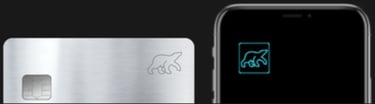




Download the BANKEAZ app for a 100% mobile banking experience. Available on iOS and Android.
Bankeaz is designed for people living between countries. Availability may vary depending on the user’s jurisdiction of residence.
The Bankeaz app is developed by Arcadia, a company currently being incorporated in Switzerland.
Bankeaz does not provide banking services in its own name. Financial services are provided by licensed and regulated partner institutions, in accordance with applicable laws and regulations.
Copyright © 2026 - Arcadia | Bankeaz - All rights reserved
Address
____________________






__________________________________________________________________________________________________________________________________________________


(- - -) - - - - - - - - - -
Zurich - CH
__________________________________________________________________________________________________________________________________________________
___________________________________________________________________________________________________________________________________________________
__________________________________________________________________________________________________________________________________________________
Learn
____________________