
Why Student Banking Abroad Breaks Easily
EXPAT BANKING
Blog > Expat Banking > Why Student Banking Abroad Breaks Easily
Why Student Banking Abroad Breaks Easily
EXPAT BANKING
BANKEAZ | Expats Team
8/17/2026 - 4 min read


A student can arrive with an admission letter, a visa and some money, yet still have a hard time opening a basic bank account.
This is a contradiction when it comes to banking abroad for many young people.
International students move to another country for education. Banks often want to see local documents, a local address and a local financial history that these students do not have yet.
The reason is simple: an international student can have trouble with banking because the student’s life has moved to a new country before their banking information has been updated.
This becomes a problem quickly.
Without a working bank account, it can be harder to pay rent, get money from family, buy a transport pass or pay for things related to tuition.
For students, banking problems are not only about paperwork.
They can affect the first few weeks of a new life in a new country.


You live internationally. Your bank should too.
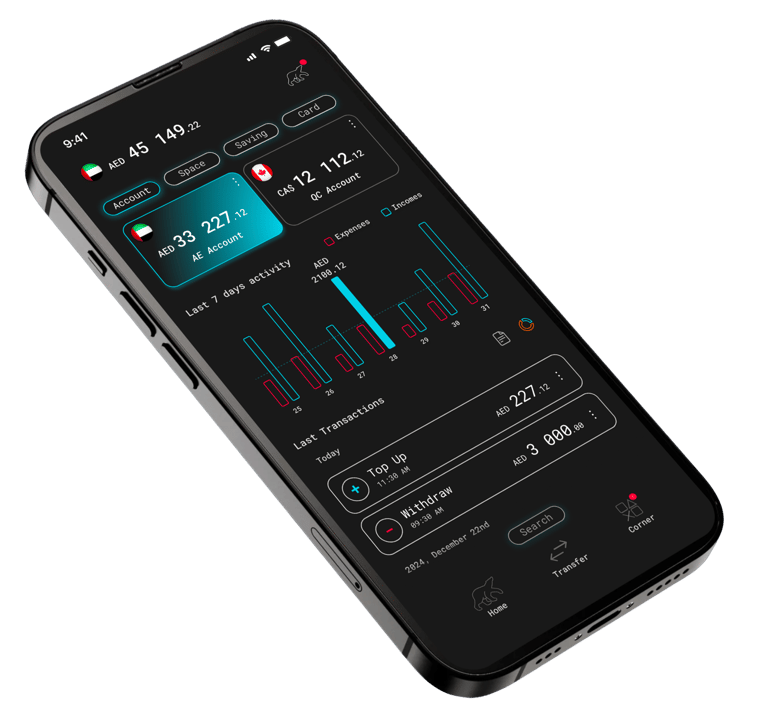
Manage your money across countries without hidden fees, delays, or complexity.
Simplify your financial life abroad with Bankeaz.
Banking built for life between countries
Free early access
> Why do international students have a hard time opening bank accounts?
Many students arrive in a country before they have all the documents that banks want to see.
A bank might ask for an address, a local phone number, proof that you are enrolled in a university, a residence permit, tax information or proof that you have some money.
Each of these things might seem reasonable on its own. Together, they can create a big problem.
The student needs a bank account to pay rent. The landlord wants a local bank account or a local way to pay.
The bank wants proof of address. The student cannot get this proof without a place to live.
This is one of the common banking problems that students face when they study abroad.
The student is not risky by default. They just do not have the right documents at the right time.
That is why banking for expats is also important for international students.
They are not tourists. They are residents who are trying to build a financial life from scratch.
> Why is proof of address a problem?
Proof of address is often seen as a simple document, but for a student abroad it can be very hard to get.
Some students live in temporary housing when they first arrive. Others stay with relatives, rent a room informally or wait for university housing.
In many cases, the utility bills are not in their name.
A bank might not accept a hostel booking, a foreign bank statement, a student residence letter or a shared housing document if it does not fit the format that they want.
This creates a problem because without proof of address, it can be hard to open a bank account.
Without an account, the student might have to rely on cash, foreign cards, expensive withdrawals or money transfers from family for longer than planned.
A document can be real and still not be accepted by the bank.
> How does identity verification affect students abroad?
Banks need to verify who their customers are. This can be hard for international students.
The problem is that identity verification often relies on systems that are built for local customers.
A domestic student might have an ID number, a local credit history, a local address history and familiar document formats.
An international student might have a passport, a visa, a foreign address history and limited local records.
This difference can trigger checks like asking for a translated document, a certified copy, a residence permit update, information about where the money comes from or proof that the student is allowed to stay in the country.
These checks can delay access to banking services even when the student has valid documents.
According to OECD ↗, international students have greatly contributed to the growth of enrolment in major study destinations, but they also face challenges from visas and housing to integration into society.
Banking is part of this journey, where education, migration, identity and money all come together.
> What kind of money problems can students face in the first weeks?
The first few weeks abroad are often the most expensive.
Students might need to pay a deposit, the first month’s rent, transportation costs, phone plans, health insurance, textbooks, food and university fees.
If they do not have access to banking services, every payment becomes more complicated.
A foreign card might not work everywhere. ATM withdrawals might include fees.
Currency conversion can reduce the value of money sent from home, and a delayed transfer can mean that rent is late.
A blocked payment can create stress before classes even begin.
This is where international finance becomes personal, because the issue is not just whether the student has money. It is whether they can access it in the right country, in the right currency, at the right time.
> Why do students often manage their money across two countries?
Many international students do not completely leave their home financial system behind.
They might receive money from family at home, keep savings in another currency, pay bills in their home country or receive scholarship money through international channels.
Some students also work part-time abroad while still depending on money from back home.
This creates a fragmented financial life, where one account is used for family transfers, another for rent, a foreign card for emergencies and a local account for salary or refunds.
That is why international banking is important for students, because their financial life is often cross-border before their career has even started.
The student might be living in one country. Their money might still be in several countries.
______________________________________________________________________________________________________________________________________________________
> How could student banking abroad be improved?
The future of student banking should be more portable, with digital onboarding, stronger document verification, reusable identity checks and more connected financial data.
These changes could reduce the need for students to repeat the same proof across different institutions.
But the future is not just about making better apps.
It is about financial continuity.
A student should not become financially invisible just because they moved to a new country.
Their identity, documents and financial history should be easier to understand across systems, with proper compliance and security.
Better cross-border banking will not remove every rule. It can make the rules less punishing for people who are legitimately mobile.
You moved countries.
Your financial life shouldn't have to start from zero
International Transfers
> Conclusion
International students can struggle with banking because banks often expect local proof from people who have just arrived.
The problem appears in account opening, proof of address, identity checks, transfers, rent payments and daily access to money.
It can cost time, create stress and make the first weeks abroad harder than they need to be.
As student mobility evolves, banking will need to become more portable, more connected and better suited to people who build their lives across borders.
Education crosses borders and banking must learn to follow.
______________________________________________________________________________________________________________________________________________________
by BANKEAZ
On demand banking services for all


______________________________________________________________________________________________________________________________________________________
Learn more about Expat Banking

Global lives deserve simpler banking.





Download the BANKEAZ app for a 100% mobile banking experience. Available on iOS and Android - public testing by invitation.
Bankeaz is designed for people living between countries. Availability may vary depending on the user’s jurisdiction of residence.
The Bankeaz app is developed by Arcadia, a company currently being incorporated in Switzerland.
Bankeaz does not provide banking services in its own name. Financial services are provided by licensed and regulated partner institutions, in accordance with applicable laws and regulations.
Copyright © 2026 - Arcadia | Bankeaz - All rights reserved
Address
____________________






__________________________________________________________________________________________________________________________________________________


(- - -) - - - - - - - - - -
Zurich - CH
__________________________________________________________________________________________________________________________________________________
___________________________________________________________________________________________________________________________________________________
__________________________________________________________________________________________________________________________________________________
Learn
____________________