
How to Update Tax-Residency Information Across Your Bank Accounts
EXPAT BANKING
Blog > Expat Banking > How to Update Tax-Residency Information Across Your Bank Accounts
How to Update Tax-Residency Information Across Your Bank Accounts
EXPAT BANKING
BANKEAZ | Expats Team
9/19/2026 - 4 min read


You move from one country to another and update the tax information in your main banking app.
Three months later, another institution asks you to confirm a tax identification number for the country you left.
The problem may simply be that the two institutions maintain separate records.
For internationally mobile people, updating tax-residency information is therefore not a single administrative action. A person may have a current account in one country, savings in another, an investment account elsewhere, and several payment providers. Each institution may need its own declaration or bank verification process.
Under the Common Reporting Standard, tax residence is determined under the domestic rules of the relevant jurisdictions, and financial institutions can collect tax-residency information through self-certifications. A person may also qualify as tax resident in more than one jurisdiction.
The practical task is to establish what information is correct, identify which institutions hold tax-related records about you, update them through official channels, and keep evidence of what you submitted.
This article explains how.
Do not choose a tax residence simply because it matches your current address or where you happen to be staying.
Confirm the Facts Before Editing Accounts


> Establish Your Tax-Residency Position First
Do not begin by opening five banking apps and changing every country field you can find.
First determine what tax-residency information you are actually supposed to provide.
Tax residence depends on the domestic rules of each jurisdiction rather than simply the country shown on your latest bank statement. The OECD notes that a person can, in some circumstances, be tax resident in more than one jurisdiction.
A recent move therefore does not necessarily mean your previous tax residence ended on the day you crossed the border.
Start by recording:
the country or countries in which you understand yourself to be tax resident;
the effective dates of any genuine change;
your relevant Tax Identification Number, or TIN, for each jurisdiction;
any official documentation you used to reach that conclusion.
If the position is unclear, use official tax-authority guidance or obtain qualified tax advice before telling different banks different versions of your status.
Do not use a banking form itself to decide your tax residence. The institution is collecting information about your status; the form does not necessarily determine that status for you.
This distinction is particularly important during relocation years, when old and new countries may both be relevant.
Your main bank is only the beginning. Create one inventory covering all relevant financial relationships.
Find Every Institution Holding Your Tax Data


> Build a Complete Account Inventory
Next, identify every institution that may hold tax-residency information about you.
Do not limit the exercise to accounts you use every week.
Your list may include:
current and checking accounts;
savings accounts;
investment or brokerage accounts;
joint accounts;
payment providers;
accounts retained in a previous country;
accounts with small balances that remain open.
For each one, record the institution, account reference, country, currently displayed residential information where visible, and whether you can find a separate tax-residency or tax-status section.
Do not assume that updating an address also updates tax residence.
A financial institution may maintain residential address, mailing address, nationality, country of residence and tax residence as separate data fields. Existing Bankeaz content likewise notes that relocation can affect several parts of a customer profile independently.
Create a simple status column:
Not checked → Update required → Submitted → Additional information requested → Confirmed
This transforms a vague administrative problem into a trackable process.
It also prevents a common mistake: updating the two institutions you remember while leaving an older account unchanged for another year.


Organize tax identifiers and personal information before starting several separate update processes.
Prepare the Data Banks Commonly Request


> Prepare Your Bank Verification Information
Different institutions can use different forms, but having one accurate source record reduces the risk of accidental inconsistencies.
Under the OECD’s CRS framework, an individual self-certification can include information such as the account holder’s name, residence address, jurisdiction or jurisdictions of tax residence, relevant TINs, and date of birth.
Prepare the underlying information before completing any account verification:
full legal name;
current residential address;
jurisdiction or jurisdictions of tax residence;
relevant TIN for each applicable jurisdiction;
date of birth;
current identification details if requested;
effective date of the change, where the institution asks for it.
Some providers may ask for additional documentation or explanations. Others may allow the change entirely through online banking.
Use the institution’s terminology rather than trying to force every form into the same format.
The objective is consistency in the facts, not identical paperwork.
Store documents securely. Avoid emailing tax documents, identification or account details to an address unless you have verified that it is an official channel provided by the institution.
Read what each institution is asking before copying answers from another bank’s form.
Treat Each Self-Certification Separately


> Submit Updates Without Oversimplifying Multiple Tax Residences
Now work through your institution list one provider at a time.
Use the bank’s official profile-update, secure-message, branch, or tax self-certification process.
Read every question carefully.
One area requiring particular attention is multiple tax residences. The current OECD CRS framework recognizes that an individual may be resident for tax purposes in two or more jurisdictions and states that applicable tax residences should be declared in the self-certification process.
That means you should not automatically remove one jurisdiction simply because you have added another.
Similarly, do not invent a TIN, reuse a number from the wrong country, or select “not applicable” merely to complete an online form. Follow the form’s instructions and, where necessary, ask the institution what evidence or explanation it requires.
Before submitting, compare the form with your source record.
Check especially:
country names;
TIN digits;
dates;
current address;
whether all applicable tax residences have been included;
whether the form is asking about tax residence or ordinary residence.
Save the submission confirmation where available.
Submission is not the same as completion. Record follow-up requests and final confirmation for every account.
Track the Update Until It Is Confirmed


> Reconcile the Accounts After the Updates
Once you have submitted the changes, do not delete the checklist.
Banks may process profile updates at different speeds or ask follow-up questions. A tax-residency update can also lead to requests for supporting bank documents, identification, address evidence, or clarification about another jurisdiction.
For each institution, record:
date submitted;
information declared;
supporting documents supplied;
reference or case number;
additional request received;
date confirmed.
Then review the accounts again after the updates have been processed.
Where the information is visible, compare the recorded country, address and tax details with your source record.
If something looks wrong, correct the discrepancy through the institution’s official process rather than repeatedly resubmitting different answers.
Keep prior confirmations for an appropriate period in your secure records. They can help you reconstruct what was reported if an institution asks about a historical change later.
Finally, add tax-residency information to your future financial-profile review. A new move, return home, dual-country situation or other material change may require another update.
For people using international banking across several countries, the useful habit is not simply “update my bank.” It is: identify every institution, update each one, and verify the result.
Keep a non-sensitive record of what changed, which institutions were informed, and which updates are still outstanding.
Create a Tax-Residency Change Log


______________________________________________________________________________________________________________________________________________________
> Key Takeaways
✓ Determine the correct tax-residency information before editing financial profiles.
✓ Do not assume your address, physical location and tax residence are automatically the same thing.
✓ Create an inventory of every relevant bank, investment account, savings provider and payment account.
✓ Prepare accurate TINs and supporting information before starting repeated update forms.
✓ Keep the underlying facts consistent while following each institution’s specific process.
✓ Declare multiple tax residences where applicable rather than arbitrarily choosing one.
✓ Use only official bank channels for sensitive tax and identity information.
✓ Record submission dates, case references, follow-up questions and confirmations.
✓ Review every account again after processing to identify remaining inconsistencies.
✓ Repeat the exercise whenever your genuine tax-residency position materially changes.
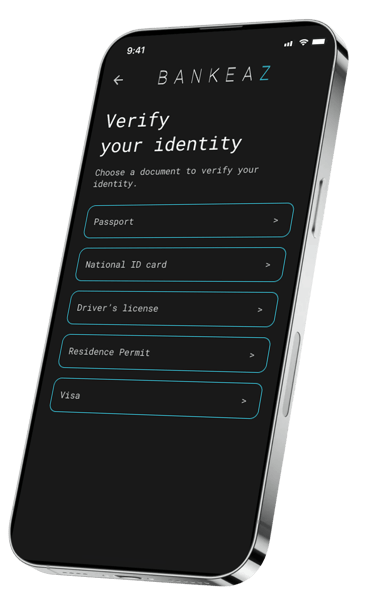
Organizing identity, residence and verification information in one clear view.
Any tax-residency determination should still come from the applicable rules and appropriate official guidance.
A digital interface should support organization, not decide your tax status.
Keep Verification Information Easier to Review
> Conclusion
A tax-residency change can affect several financial relationships at once, but the records usually have to be handled individually.
Begin by establishing the correct tax position rather than guessing from your current address. Build an inventory of every relevant account, prepare your tax identifiers and personal information, and follow each institution’s official update procedure.
Pay particular attention to situations involving more than one potential tax residence. Do not simplify a complex position merely because an online form seems easier to complete that way.
Then track every submission until you know what each institution holds.
This approach can make bank verification and banking abroad more orderly, but it cannot remove every cross-border administrative difficulty. Tax rules remain jurisdiction-specific, while banks operate separate reporting, compliance and customer-record systems. For internationally mobile people, those disconnected processes can continue to create friction even when the underlying information is accurate.
> Related reads
Why Moving Abroad Makes Banks Reassess Your Account
Explains why relocation can change the address, tax, income and compliance information associated with an account.
Why Old Bank Records Trigger New Verification
Explores how outdated residence, identity and tax information can lead to fresh verification requests.
How to Keep Your Financial Profile Consistent
Provides the broader profile-management framework covering identity, address, contact details and tax residency.
How to Reduce the Risk of Bank Account Restrictions When Living Abroad
Explains practical account-management steps after material changes including residence and tax status.
______________________________________________________________________________________________________________________________________________________
by BANKEAZ
On demand banking services for all


______________________________________________________________________________________________________________________________________________________
Learn more about Expat Banking

Global lives deserve simpler banking.






Download the BANKEAZ app for a 100% mobile banking experience. Available on iOS and Android.
Bankeaz is designed for people living between countries. Availability may vary depending on the user’s jurisdiction of residence.
The Bankeaz app is developed by Arcadia, a company currently being incorporated in Switzerland.
Bankeaz does not provide banking services in its own name. Financial services are provided by licensed and regulated partner institutions, in accordance with applicable laws and regulations.
Copyright © 2026 - Arcadia | Bankeaz - All rights reserved
Address
____________________






__________________________________________________________________________________________________________________________________________________


(- - -) - - - - - - - - - -
Zurich - CH
__________________________________________________________________________________________________________________________________________________
___________________________________________________________________________________________________________________________________________________
__________________________________________________________________________________________________________________________________________________
Learn
____________________