
Why the Same Payment Doesn’t Mean the Same Outcome
EXPAT BANKING
Blog > Expat Banking > Why the Same Payment Doesn’t Mean the Same Outcome
Why the Same Payment Doesn’t Mean the Same Outcome
EXPAT BANKING
BANKEAZ | Expats Team
5/04/2026 - 4 min read
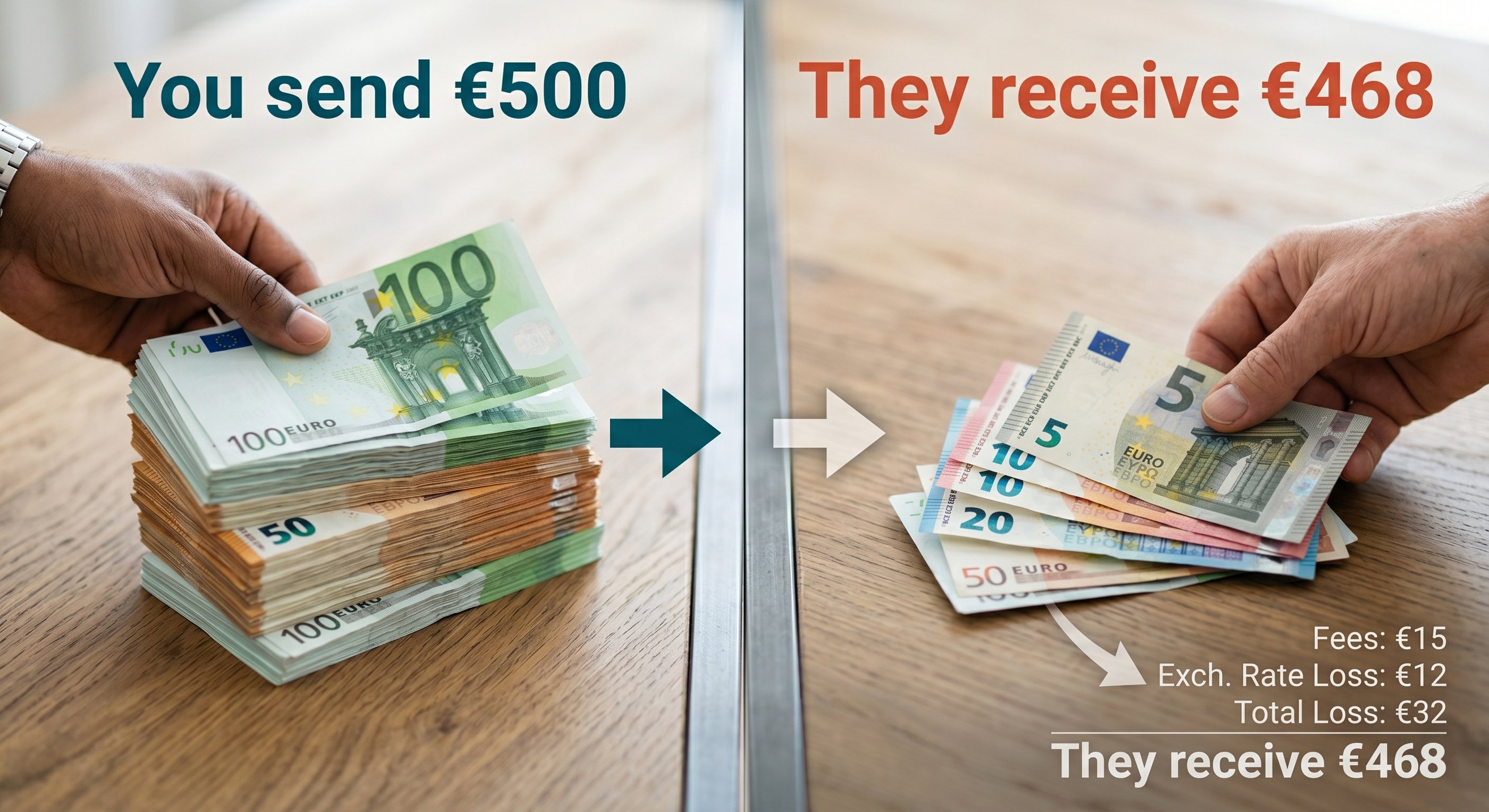
You send money abroad more than once, using the same amount and expecting the same result each time. The outcome, however, often changes without clear explanation.
This situation reflects one of the most common expat banking problems faced by globally mobile individuals.
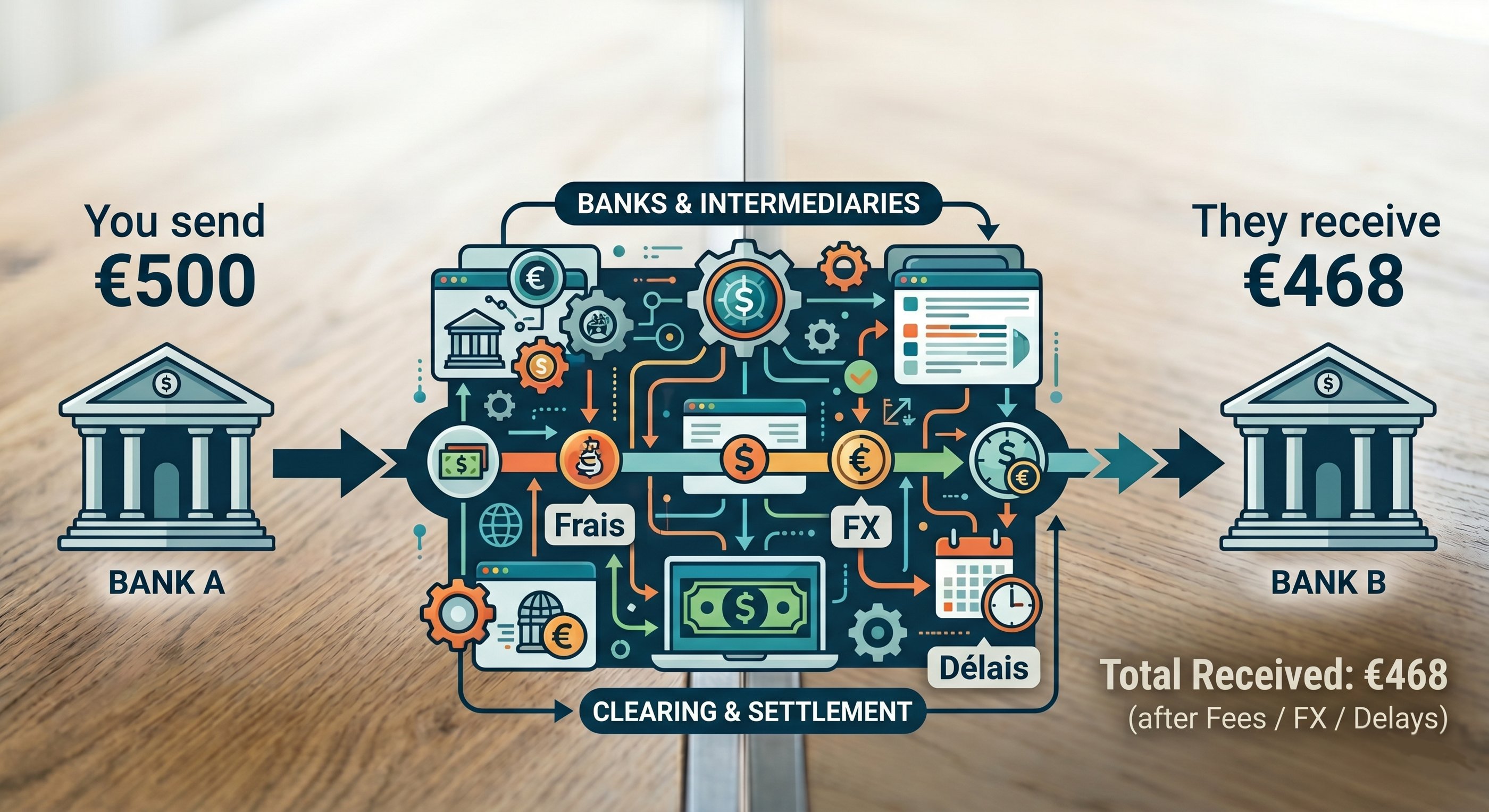
Behind each transaction, multiple invisible mechanisms influence the final result.
This is the operational reality of international banking and cross-border banking systems.
Even when inputs are identical, the financial infrastructure produces different outputs.
You live internationally. Your bank should too.
Manage your money across countries without hidden fees, delays, or complexity.
Simplify your financial life abroad with Bankeaz.
Banking built for life between countries
Free early access
> Exchange Rate Mechanisms Introduce Subtle but Significant Differences
The exchange rate displayed at the moment of transfer is rarely the exact rate applied to the transaction.
Financial institutions incorporate their own pricing margins, which can vary depending on timing, volume, and internal policies.
Within international banking, these variations are often not clearly disclosed to the user.
As a result, two transfers initiated under similar conditions can generate different converted amounts.
This hidden layer directly affects how much money is ultimately received.
Explore international banking.
> Multiple Intermediaries Gradually Reduce the Transferred Amount
International transfers frequently pass through a chain of correspondent banks before reaching the final destination.
Each intermediary involved in the process may apply its own service fee.
This layered fee structure is a major contributor to expat banking problems.
Senders typically do not have visibility into how many institutions will process their transaction.
As the payment moves forward, incremental deductions accumulate and reduce the final value received.
Learn more about banking for expats.
> Fragmented Payment Infrastructures Create Inconsistent Processing Conditions
Global financial systems are not built on a single unified infrastructure.
Different regions rely on distinct networks such as SWIFT, SEPA, or domestic clearing systems.
In the context of cross-border banking, this fragmentation introduces variability in how payments are handled.
Processing standards, settlement times, and fee structures differ across networks.
Consequently, identical transfers may follow different technical paths and produce inconsistent results.
> Transaction Timing Plays a Critical Role in Determining Final Value
The moment at which a transfer is processed can significantly influence its outcome.
Delays may occur due to operational cut-off times, weekends, or intermediary handling.
Within international banking, these delays can expose transactions to fluctuating exchange rates.
Even a short timing difference can alter the conversion rate applied.
This makes time an essential variable in the final amount received.
> Regulatory and Compliance Procedures Introduce Additional Variability
Cross-border payments are subject to strict regulatory requirements, including anti-money laundering and fraud prevention checks.
These controls vary between jurisdictions and financial institutions.
In cross-border banking, compliance reviews can temporarily interrupt the payment flow.
Such interruptions may lead to delays, additional checks, or even extra costs.
As a result, two seemingly identical payments can evolve differently depending on regulatory scrutiny.
______________________________________________________________________________________________________________________________________________________
> Limited Transparency Prevents Users from Predicting Outcomes Accurately
One of the most persistent challenges in global finance is the lack of end-to-end visibility.
Users are rarely provided with a complete breakdown of fees, exchange rates, and intermediaries involved.
This opacity reinforces many expat banking problems by making outcomes difficult to anticipate.
Without clear information, senders cannot accurately estimate the final amount that will be received.
According to the World Bank ↗ the global remittance market continues to face significant transparency issues across payment corridors.
The global financial system continues to evolve, yet it remains deeply fragmented across regions and institutions.
As global mobility increases, individuals rely more heavily on systems that are not fully standardized.
This structural complexity explains why identical payments often lead to different results.
A more unified and transparent approach to cross-border banking is becoming necessary.
You send money.
You lose part of it.
But you never see exactly where.
International Transfers
______________________________________________________________________________________________________________________________________________________
by BANKEAZ
On demand banking services for all


______________________________________________________________________________________________________________________________________________________
Learn more about Expat Banking

Global lives deserve simpler banking.






Download the BANKEAZ app for a 100% mobile banking experience. Available on iOS and Android.
Bankeaz is designed for people living between countries. Availability may vary depending on the user’s jurisdiction of residence.
The Bankeaz app is developed by Arcadia, a company currently being incorporated in Switzerland.
Bankeaz does not provide banking services in its own name. Financial services are provided by licensed and regulated partner institutions, in accordance with applicable laws and regulations.
Copyright © 2026 - Arcadia | Bankeaz - All rights reserved
Address
____________________






__________________________________________________________________________________________________________________________________________________


(- - -) - - - - - - - - - -
Zurich - CH
__________________________________________________________________________________________________________________________________________________
___________________________________________________________________________________________________________________________________________________
__________________________________________________________________________________________________________________________________________________
Learn
____________________