Why Diaspora Money Stays Split Across Systems
EXPAT BANKING
Blog > Expat Banking > Why Diaspora Money Stays Split Across Systems
Why Diaspora Money Stays Split Across Systems
EXPAT BANKING
BANKEAZ | Expats Team
8/13/2026 - 4 min read


Diaspora families often manage one financial life through five different tools.
A salary may arrive in one country. Family expenses may happen in another. Savings may sit in a local account back home. Transfers may pass through a payment provider. Emergency support may depend on mobile money, cash pickup, or a relative’s bank account.
This is why diaspora banking often feels disconnected. The problem is not that families are disorganized. It is that banking systems were not designed for people whose financial responsibilities cross borders every month.
For diaspora households, disconnected systems create real pressure: delayed support, unclear balances, repeated checks, transfer fees, currency uncertainty, and less control over long-term planning.


You live internationally. Your bank should too.
Manage your money across countries without hidden fees, delays, or complexity.
Simplify your financial life abroad with Bankeaz.
Banking built for life between countries
Free early access
> Why do diaspora families use so many financial tools?
Diaspora families use many financial tools because no single system usually covers the full relationship between home and host country.
One bank may be useful for salary abroad. Another may be needed for savings back home. A transfer app may be faster for family support. A mobile wallet may be easier for relatives to use locally. Cash may still matter when digital access is limited.
Each tool solves one part of the problem.
Together, they create a fragmented financial life.
According to IFAD ↗, remittances support hundreds of millions of people globally and are especially important for households managing food, health, education, and resilience.That scale shows why this issue matters. Diaspora money is not occasional. It is a major part of how families manage daily life across countries.
> Why do banks fail to connect the full picture?
Banks fail to connect the full picture because most banking infrastructure still thinks nationally.
A bank usually sees the customer through one account, one country, one address, one currency, and one regulatory environment. But diaspora families often live financially across several countries at once.
The sender may have a salary account abroad. The family may use a local bank account at home. A sibling may manage household payments. A parent may receive money through mobile money. A business contribution may move through another provider.
To the family, this is one budget.
To the banking system, it is scattered activity.
That gap is one reason diaspora banking needs to be built around relationships, not only transactions.
> How does disconnection affect family support?
Disconnection affects family support by making money harder to coordinate.
A diaspora worker may send money for rent, tuition, groceries, healthcare, home repairs, or emergencies. But each expense may depend on a different provider, payout method, currency, and local access point.
This creates practical problems:
the sender may not know when funds are fully available;
the recipient may need to use several accounts or wallets;
records may be spread across different apps;
fees may be unclear until after the transfer;
emergency payments may depend on the provider that works fastest that day.
The problem is not only moving money. It is managing responsibility at distance.
A family can be financially connected by love and obligation, while its banking tools remain completely disconnected.
> Why do currencies and fees make the system harder?
Currencies and fees make disconnected systems harder because every handoff can reduce visibility.
A sender may earn in euros, pounds, dollars, or Canadian dollars while relatives spend in another currency. The transfer may involve an exchange rate, a visible fee, a receiving charge, or a margin hidden inside conversion.
This makes planning difficult.
A family may expect one amount and receive another. A school fee may require an extra transfer. A medical bill may become more expensive because the exchange rate moved. A recurring support payment may lose value over time because costs repeat every month.
In cross-border banking, the real issue is not only cost. It is uncertainty.
When families cannot see the full cost clearly, they cannot plan with confidence.
> Why do compliance checks repeat across systems?
Compliance checks repeat because banks, payment providers, wallets, and local institutions often do not share customer information.
A diaspora customer may complete KYC with one bank, verify identity with a transfer provider, upload documents to a wallet, and then answer questions again when a payment pattern changes. Each institution may need its own record.
This creates duplicated effort.
A sender may be asked for proof of identity abroad. A recipient may need local identification back home. A transfer provider may ask about source of funds. A bank may ask why payments are recurring.
None of these checks are automatically wrong. Banks and providers need to prevent fraud and financial crime.
But for legitimate families, repeated identity verification turns ordinary support into paperwork.
The system does not remember the relationship. It only reviews the transaction.
______________________________________________________________________________________________________________________________________________________
> What would connected diaspora finance look like?
Connected diaspora finance would help families see, move, and plan money across countries with less friction.
It could include clearer transfer tracking, multi-currency visibility, reusable verification, shared family goals, better links between accounts and wallets, and tools that show the real cost before money moves.
The future of international banking should not treat every cross-border payment as a separate event. It should understand that diaspora finance is continuous.
This does not mean one bank will replace every local system. Local banking, mobile money, and domestic payment networks will still matter.
But better infrastructure could connect the experience. Families should be able to understand where money is, what it costs, who received it, and how it supports longer-term goals.
That is the promise of better financial mobility: not just money that moves, but money that stays understandable across borders.
You moved countries.
Your financial life shouldn't have to start from zero
International Transfers
> Conclusion
Diaspora families manage money across disconnected systems because their lives are international, while most banking tools remain local.
They may use banks, transfer apps, mobile wallets, cash networks, and relatives’ accounts to support one family budget. That fragmentation creates delays, fees, repeated verification, uncertainty, and weaker long-term control.
The future of diaspora finance will depend on systems that connect accounts, identities, currencies, and family responsibilities across countries. Families already manage life across borders. Their money should not have to travel through confusion.
______________________________________________________________________________________________________________________________________________________
by BANKEAZ
On demand banking services for all


______________________________________________________________________________________________________________________________________________________
Learn more about Expat Banking

Global lives deserve simpler banking.

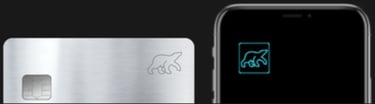




Download the BANKEAZ app for a 100% mobile banking experience. Available on iOS and Android.
Bankeaz is designed for people living between countries. Availability may vary depending on the user’s jurisdiction of residence.
The Bankeaz app is developed by Arcadia, a company currently being incorporated in Switzerland.
Bankeaz does not provide banking services in its own name. Financial services are provided by licensed and regulated partner institutions, in accordance with applicable laws and regulations.
Copyright © 2026 - Arcadia | Bankeaz - All rights reserved
Address
____________________






__________________________________________________________________________________________________________________________________________________


(- - -) - - - - - - - - - -
Zurich - CH
__________________________________________________________________________________________________________________________________________________
___________________________________________________________________________________________________________________________________________________
__________________________________________________________________________________________________________________________________________________
Learn
____________________