
Why Banks Struggle With African Diaspora Banking
EXPAT BANKING
Blog > Expat Banking > Why Banks Struggle With African Diaspora Banking
Why Banks Struggle With African Diaspora Banking
EXPAT BANKING
BANKEAZ | Expats Team
7/23/2026 - 4 min read


African diaspora money moves with urgency, but banking often moves with suspicion.
The African diaspora supports families, pays bills across countries, invests back home, and manages financial obligations in more than one currency. Yet many banking systems still treat this activity as unusual.
That is why diaspora banking remains difficult. The problem is not that diaspora customers are hard to serve. It is that traditional banking was built around local lives, local addresses, local income, and local payments.
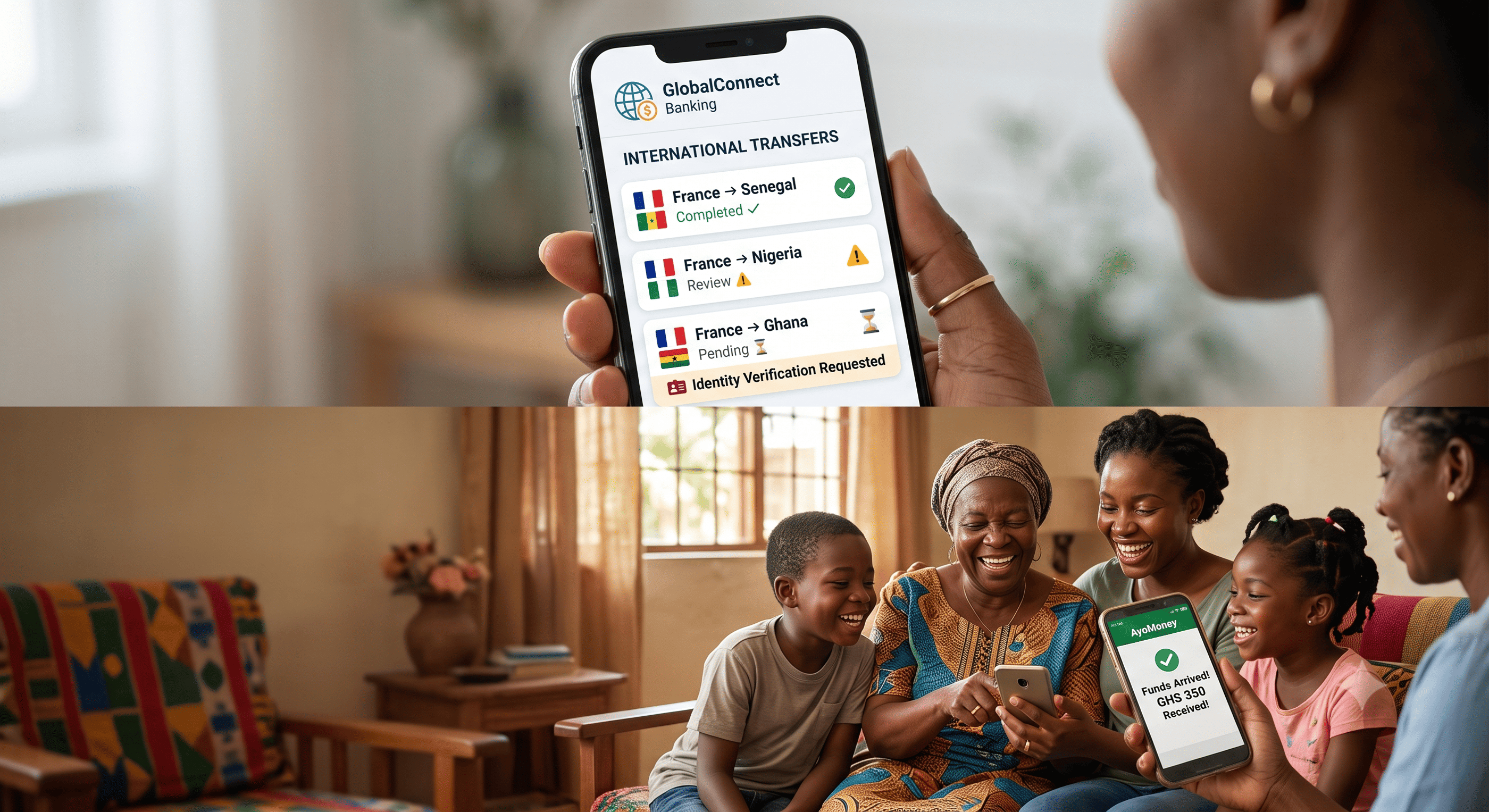
For African diaspora communities, this creates real friction: delayed transfers, repeated KYC checks, high transfer fees, blocked payments, and fragmented accounts across countries.
You live internationally. Your bank should too.
Manage your money across countries without hidden fees, delays, or complexity.
Simplify your financial life abroad with Bankeaz.
Banking built for life between countries
Free early access
> Why is African diaspora banking different?
African diaspora banking is different because the customer’s financial life is usually split between at least two countries.
Someone may earn in France, the UK, Canada, or the US while supporting family in Senegal, Nigeria, Ghana, Côte d’Ivoire, Cameroon, Morocco, Kenya, or another African country. They may pay rent where they live, school fees back home, healthcare costs for relatives, and business expenses across borders.
To the customer, this is normal family finance.
To a traditional bank, it can look complex.
The account may show frequent international transfers, changing currencies, foreign beneficiaries, and activity across several jurisdictions. This can trigger monitoring, questions, or delays.
According to World Bank Data ↗, personal remittances received in Sub-Saharan Africa reached more than $57 billion in 2024.
That scale shows why African diaspora finance is not a niche. It is part of everyday economic life.
> Why do traditional banks struggle with diaspora customers?
Traditional banks often struggle because their systems are designed around domestic banking behavior.
They expect one main country, one main address, one main income source, and one predictable payment pattern. African diaspora customers often do not fit that model.
A customer may live abroad but keep financial responsibilities in their country of origin. They may send money every month, pay family expenses directly, or move funds between accounts before exchange rates change.
This is where cross-border banking becomes difficult. The bank sees cross-border activity. The customer sees family duty, mobility, and financial continuity.
Many systems are technically digital, but their logic remains local.
That is the contradiction: people live across borders, while banks still evaluate them country by country.
> Why do transfers home get delayed or blocked?
Transfers home can be delayed because cross-border payments pass through more checks than domestic payments.
A payment may involve the sender’s bank, intermediary institutions, payout partners, compliance screening, currency conversion, and local banking rails. Each layer can add time or uncertainty.
For African diaspora users, the consequences are practical. A delayed transfer may mean a family member cannot pay school fees on time. A rent payment may arrive late. Medical support may be postponed. A small banking delay can become a real-life problem.
Blocked or reviewed transfers may also happen when the bank does not understand the pattern. Regular payments to relatives, business partners, or community obligations can look unusual if the system is not built for diaspora behavior.
This is why diaspora banking needs more than a transfer button. It needs systems that understand why money moves.
> Why are fees and exchange rates still painful?
Fees are painful because diaspora customers often face several cost layers at once.
There may be visible transfer fees, currency conversion margins, receiving fees, intermediary charges, or unclear payout costs. Even when the fee looks small, the final amount received can be lower than expected.
This matters because diaspora transfers are often not optional. They may support food, rent, tuition, healthcare, emergencies, or small businesses.
When the exchange rate is weak or fees are unclear, families receive less. The sender may need to send more. The real cost is not only financial. It is emotional pressure.
For African diaspora communities, money transfer is not just a transaction. It is a bridge between households.
A system that hides the cost weakens that bridge.
> Why does identity verification become repetitive?
Identity verification becomes repetitive because banks often cannot reuse customer information across countries and services.
A diaspora customer may verify identity with one bank, then again with a transfer provider, then again with another financial institution. They may be asked for proof of address, proof of income, source of funds, or documents from both the country where they live and the country they support.
This repeated identity verification creates time loss and uncertainty.
It can be especially difficult when documents do not match the bank’s expected format. A foreign address, local ID, residence permit, tax document, or income source may be valid but still require manual review.
The customer feels known. The system starts from zero
That gap is one of the biggest weaknesses in modern international banking.
______________________________________________________________________________________________________________________________________________________
> What needs to change for the African diaspora?
Banking systems need to recognize that African diaspora finance is not exceptional. It is structural.
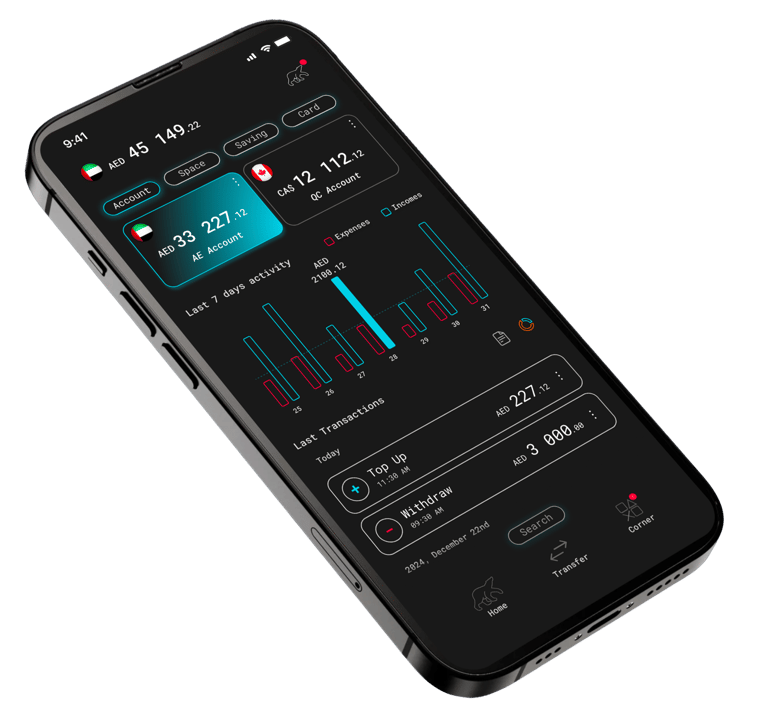
Better systems should support international identities, clearer transfer costs, faster payment rails, multi-country account visibility, and smoother compliance checks. Customers should not have to explain the same life pattern every month.
Future progress may come from reusable KYC, better cross-border payment infrastructure, stronger digital identity, and banking tools designed around financial mobility.
This does not mean removing compliance. Banks still need to prevent fraud, money laundering, and financial crime.
But compliance should not make legitimate diaspora customers feel like their normal financial life is suspicious.
The future of international banking belongs to systems that understand movement, family responsibility, and money across borders.
You moved countries.
Your financial life shouldn't have to start from zero
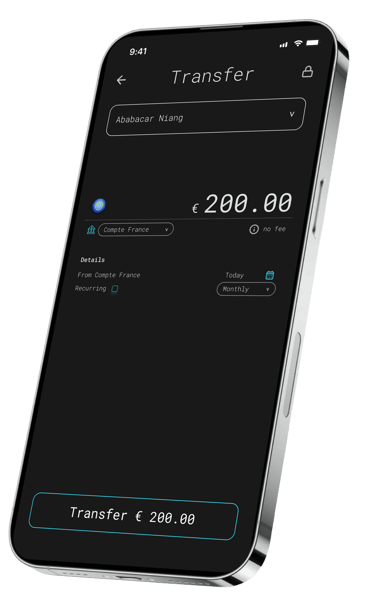
International Transfers
> Conclusion
Banking systems still struggle to serve the African diaspora because they were built for local financial lives, not cross-border realities.
African diaspora customers often manage income, family support, payments, savings, and obligations across countries. Traditional banking turns that mobility into friction: delays, blocked transfers, repeated verification, unclear fees, and fragmented accounts.
The future will belong to banking systems that treat diaspora finance as normal, not unusual. Money already moves across borders. Banking needs to understand why.
______________________________________________________________________________________________________________________________________________________
by BANKEAZ
On demand banking services for all


______________________________________________________________________________________________________________________________________________________
Learn more about Expat Banking

Global lives deserve simpler banking.






Download the BANKEAZ app for a 100% mobile banking experience. Available on iOS and Android - public testing by invitation.
Bankeaz is designed for people living between countries. Availability may vary depending on the user’s jurisdiction of residence.
The Bankeaz app is developed by Arcadia, a company currently being incorporated in Switzerland.
Bankeaz does not provide banking services in its own name. Financial services are provided by licensed and regulated partner institutions, in accordance with applicable laws and regulations.
Copyright © 2026 - Arcadia | Bankeaz - All rights reserved
Address
____________________






__________________________________________________________________________________________________________________________________________________


(- - -) - - - - - - - - - -
Zurich - CH
__________________________________________________________________________________________________________________________________________________
___________________________________________________________________________________________________________________________________________________
__________________________________________________________________________________________________________________________________________________
Learn
____________________